Walls can be measured in bricks, mortar, and steel. But true walls are measured in absence.
Months bleed into one another when you are tucked away from the light of ordinary days. For someone existing inside the heavy orbit of high-stakes political detention, time does not move forward; it loops. Every morning brings the same gray light, the same heavy silence, and the same vast, echoing distance from the people who hold your story.
Then, a piece of paper changes the geometry of existence. A court order arrives.
Consider what happens next. The frantic coordination, the sudden tightening in the chest, the rare permission granted by an authority that usually says no. For the first time all year, the iron door swings open not to another investigator, not to another guard, but to family.
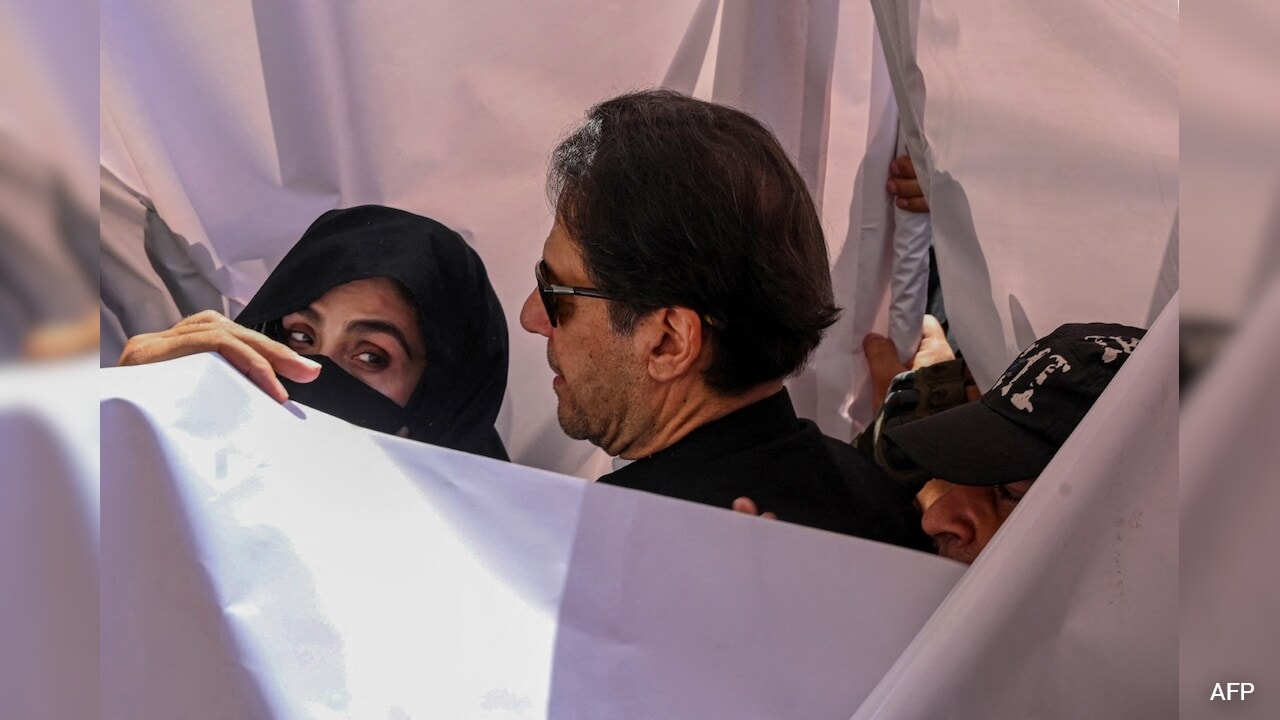
Imran Khan sat across from his wife, Bushra Bibi, and his sister.
It sounds simple on paper. A meeting. A legal compliance. A standard check-in. But anyone who has ever waited behind a visitor's glass knows that nothing involving enforced separation is ever standard. The air in the room carries the weight of unsaid words. Every second is precious, heavily monitored, and fleeting.
Separation strips away the trivialities of daily life. When you cannot text your spouse, share a meal spontaneously, or walk down a familiar street together, human connection becomes an acute, burning ache. For months, news trickled out through lawyers and sparse official channels. Rumors filled the vacuum. Whispers of health, isolation, and legal battles formed a fog over the reality of his confinement.
Silence is a weapon. Isolation is a strategy.
When power structures seek to neutralize a figure, they do not just lock a body away; they attempt to sever the psychological tether connecting that person to the outside world. They try to make them forget the sound of familiar laughter, the cadence of a shared joke, the comforting touch of a sibling's hand.
That is why a court-ordered visit matters far beyond the headlines. It is a crack in the fortress of solitude.
Imagine sitting in that sterile room. The clock ticking loudly against the wall. The guards standing at attention, watching every micro-expression. You have so much to say, yet your mind goes blank. You want to summarize an entire season of life, of court dates, of political shifts, in the span of a few guarded moments.
Instead, you look at each other. You anchor yourselves in the present.
The legal battles surrounding Pakistan Tehreek-e-Insaf and its leadership have turned the nation's political arena into a high-pressure cooker. Every maneuver is scrutinized. Every hearing is packed with anxious supporters hoping for a breakthrough. Yet, beneath the grand political theater, human beings are enduring personal endurance tests.
Lawyers brief. Judges rule. Reporters file dispatches from courthouse steps. But inside that visiting room, politics dissolved into raw, human endurance.
We often consume news as spectators at a distance. We scroll past updates on court orders and detention statuses as if they are scores in a sports game. We forget the flesh and blood behind the bullet points. We forget the psychological toll of uncertainty.
When a man who once commanded millions sees his wife and sister for the first time in an entire calendar year, it reminds us of the relentless human cost of political polarization. Systems clash, institutions bend, but families bear the quiet, heavy fractures.
The meeting ended, as all such meetings must. The door closed again. The silence rushed back in to fill the void.
Yet, something had shifted. A year of absolute absence was punctured by a few hours of shared reality. In the grand arc of history, a single visit is nothing. In the internal world of a prisoner, it is everything.
The heavy iron door shuts, but the echo remains.