Every coastal pundit and Beltway newsletter spent the last three weeks hyperventilating about the exact same fairy tale. Gina Hinojosa beat Greg Abbott by 7.1 points. She won 52.8% of the vote. She became the first Democrat to capture the Texas Governor’s Mansion since Ann Richards in 1990. Therefore, the consensus chorus sings, demographic destiny finally arrived, Texas flipped blue, and the national Democratic playbook just found its magic formula.
Garbage. Complete, unadulterated garbage. For an alternative perspective, see: this related article.
If you buy that narrative, you missed the entire structural collapse that actually happened on November 3, 2026. Hinojosa did not win because Texas suddenly fell in love with national progressive orthodoxy. She won because three terms of single-party hubris collided with an infrastructure crisis—specifically, unchecked AI data centers draining rural aquifers and spiking residential power bills—while an incumbent governor spent twelve years acting like gravity did not apply to him.
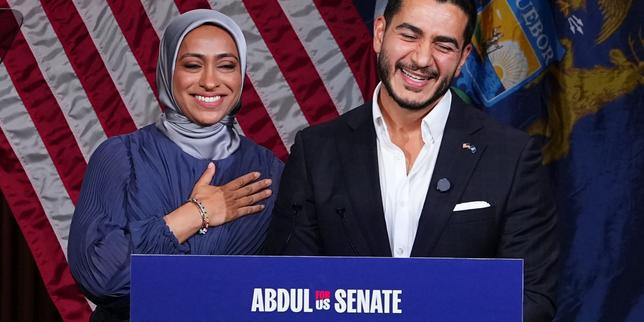
Even Hinojosa herself warned the national press on election night that they were misreading the scoreboard. "The same national pundits and political class who ignored and then misunderstood this campaign will declare this a victory for Democrats — they continue to misunderstand," she told supporters in Austin. "We did not end one era of single party rule just to usher in another". Related analysis regarding this has been published by TIME.
She was right. The media ignored her anyway.
The Lazy Consensus About Demographic Destiny
For twenty years, Democratic consultants burned hundreds of millions of dollars chasing a mirage in Texas. I have watched campaign after campaign hire out-of-state strategists who stared at Census spreadsheets, saw a growing Latino population, and assumed automatic blue margins were a mathematical certainty. They treated voters like demographic blocks instead of human beings with utility bills.
Then 2024 happened. Donald Trump carried Texas by 13.7 points, sweeping border counties like Starr, Zapata, Maverick, Hidalgo, and Webb that Democrats once treated as family heirlooms. The consultant class panicked, swung wildly to the other extreme, and declared Texas permanently out of reach for a generation. By October 2025, when Hinojosa entered the race, national donors barely returned her calls. Prediction markets gave Abbott better than 60% odds days before polls closed, and the RealClearPolling average still showed Abbott up 2.5 points heading into Election Day.
Both extremes—the "inevitable blue wave" crowd of 2018 and the "Texas is dead" crowd of 2025—suffer from the exact same analytical blindness. They view Texas elections through a national cable-news lens rather than a local kitchen-table lens.
The 2026 wipeout was not a national ideological endorsement. It was a localized consumer revolt against a state government that stopped governing and started catering exclusively to corporate subsidies and culture-war theater.
Why Voters Actually Fired Greg Abbott
When an incumbent who won his previous three elections by double digits—20.4 points in 2014, 13.3 points in 2018, and 10.9 points in 2022—suddenly loses by more than 700,000 votes, you do not look at party registration. You look at what broke in voters' daily lives.
Three specific failures detonated the Republican coalition simultaneously:
- The AI Data Center Backlash Cracked the Rural Wall. Texas accounts for more than 25% of planned U.S. data center capacity through 2030. For years, Abbott rolled out the red carpet for hyperscale server farms with minimal guardrails on water extraction or grid strain. By October 2026, a University of Houston Hobby School survey revealed that 69% of likely Texas voters were extremely or very concerned about data centers driving up electricity prices, and 69% were equally alarmed about water supply depletion. Nearly four-fifths—79%—wanted strict limits on new data center construction. In deep-red rural and exurban counties like Caldwell, Lamar, and Navarro, lifelong Republicans looked at massive server warehouses sucking down local aquifers while their own electric bills climbed, and they defected. Abbott tried to pivot in August and September with a late audit and permit pause, but voters saw straight through an election-year conversion. Hinojosa promised an immediate moratorium until the Legislature passed real consumer protections, and rural landowners rewarded her for listening.
- Public School Vouchers Alienated Small-Town Conservatives. You cannot understand Texas politics if you think public schools are a purely liberal issue. In rural Texas, the local high school is the Friday-night town square, the largest employer, and the glue holding small communities together. Abbott spent years strong-arming reluctant rural Republicans to pass private school vouchers, viewing opposition from small-town lawmakers as a personal insult. Hinojosa, a former Austin Independent School District board president who entered politics in 2012 specifically to fight school closures, framed her campaign around protecting neighborhood schools rather than fighting abstract ideological battles. Rural voters did not suddenly become Austin progressives; they voted to save their local school districts.
- Economic Exhaustion Replaced Culture-War Distraction. Hinojosa summed up her entire strategy in one brutal line during the campaign: "They want to run an entire campaign saying that I'm too woke. I plan to spend an entire campaign focused on the fact that working people are too broke". Outspent more than four-to-one, she hammered property tax relief, healthcare access, and a $1,500 rebate proposal while Abbott relied on legacy attack ads and an assumption that anti-Democratic muscle memory would carry him across the finish line.
Look at the down-ballot carnage to confirm this was an anti-incumbent wave rather than a fluke. Democrats did not just squeak out the governor's mansion. Vikki Goodwin ousted three-term Lieutenant Governor Dan Patrick. Nathan Johnson won Attorney General. Sarah Eckhardt captured Comptroller. Democrats flipped 21 seats in the Texas House to seize an 83–66 majority. When voters toss out the entire executive branch and flip the lower chamber in a single night, they are not tweaking policy. They are fumigating the building.
Dismantling the Questions Everyone Is Getting Wrong
Did Latino Voters Return to the Democratic Party Permanently?
No. Stop treating Latino voters as a monolith that swings on a permanent pendulum.
Hinojosa, a Rio Grande Valley native who becomes Texas's first Latina governor, indeed reclaimed Starr, Zapata, Maverick, Hidalgo, and Webb counties—the exact border stretch that swung hard toward Trump in 2024. Why? Not because border voters suddenly embraced national Democratic orthodoxy on every social issue, but because South Texas families felt the exact same squeeze on healthcare, public school funding, and utility costs as everyone else, and Hinojosa spoke to them in their own economic language rather than lecturing them from Washington.
Those voters are ticket-splitters and pragmatic swing voters now. They are rented, never owned. If Democrats govern like South Texas is a guaranteed safe deposit box, those counties will snap right back in 2028.
Does a Democratic Trifecta-Lite Mean Progressive Legislation Is Easy Now?
Not even close. Look at the actual math in Austin before popping champagne.
Yes, Hinojosa will take office on January 19, 2027, alongside a Democratic House majority and a Democratic Lieutenant Governor in Vikki Goodwin, who presides over the Texas Senate. That strips Republicans of the procedural chokehold Dan Patrick wielded for over a decade.
However, Republicans still hold a 19–12 majority in the Texas Senate. In Texas, passing bills through the Senate requires navigating committee structures and floor votes where conservative senators still hold massive leverage. Worse, expectations among the Democratic base are now stratospheric. If Hinojosa tries to govern like a coastal progressive rather than the pragmatic, pocketbook-focused coalition builder who won rural crossover votes, Senate Republicans will happily turn the 90th Legislature into a partisan trench war and hand the state back to the GOP in 2030.
Was Abbott's Loss Caused by Donald Trump?
Only indirectly, and blaming Trump lets Texas Republicans off the hook for their own decay.
Midterm elections almost always punish the party holding the White House, and national anti-GOP headwinds certainly helped lift Democratic turnout across suburbs in Harris, Fort Bend, and Dallas-Fort Worth. Notice, however, that Abbott tried to keep his distance from Trump in the final stretch—and still lost by more than seven points. Even Trump mocked Abbott's late campaign pivot afterward. Abbott lost because after twelve years in office, he ran out of answers for problems his own administration helped create.
The Uncomfortable Downside Nobody Wants to Admit
Here is the honest catch to my own argument—the part partisan cheerleaders on both sides refuse to acknowledge.
Governing on an anti-infrastructure, populist pocketbook coalition is infinitely harder than campaigning on one.
Hinojosa won big by promising a moratorium on new data centers, tougher water and electricity rules, and an end to corporate tax giveaways. That message united Austin environmentalists, Valley working families, and rural ranchers. Now she actually has to run the eighth-largest economy in the world.
If her moratorium freezes billions of dollars in capital investment without a fast, predictable regulatory framework to replace it, business groups will spend the next four years blaming every delayed factory, missed job target, and economic slowdown on "California-style overregulation." Meanwhile, lowering residential electric bills does not happen overnight when power plants, transmission lines, and grid interconnects take years to permit and build.
Voters who crossed party lines to fire Abbott for high costs and grid anxiety will not wait four years for relief. They gave Hinojosa a mandate for competence, not an ideological blank check.
What Political Strategists Must Do Immediately
If you work in politics, policy, or corporate government affairs, throw away your 2024 post-mortems tonight. They are worthless.
- Audit local resource pain before polling national culture issues. Whether it is AI server farms draining municipal water tables, property insurance spikes, or grid reliability, localized material pain overrides partisan loyalty every single time. Find the physical bottleneck hurting voters' wallets and build your platform around fixing it.
- Stop running nationalized ads in state races. Abbott spent four times as much money running stale ideological attack ads against an opponent voters saw as a pragmatic mom and school-board veteran. Voters have developed total immunity to cable-news buzzwords. Speak plainly about costs, schools, and water.
- Treat every rural and border voter as an independent contractor. Abandon the lazy myth of permanent party alignment. Show up in small towns, listen without talking down to people, and prove you respect their communities before asking for their ballots.
Texas did not turn blue on November 3. Texas fired an arrogant monopoly and put a new management team on probation. If Democrats mistake a performance review for a lifetime contract, they will find out in four years just how fast Texas voters fire people who stop listening.
More context on how the data center backlash reshaped the 2026 gubernatorial map is covered in Voters made curbing data centers a core issue in Tuesday's elections, which breaks down the specific utility and water pressures that drove voters across party lines.