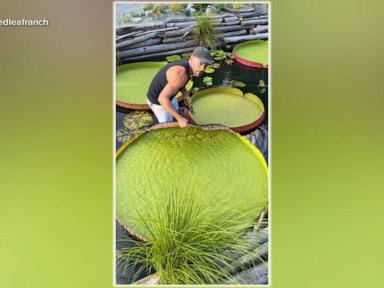
Scrolling through your feed lately, you’ve probably stopped on a video of someone floating effortlessly in a pond on top of a massive, dinner-table-sized leaf. It looks like digital magic. It isn't. Ordinary homeowners are turning backyard water features into botanical spectacles, and the internet can't look away.
Growing giant lily pads—specifically Victoria amazonica or Victoria cruziana—isn't just a quirky hobby. It's an exercise in horticultural obsession. These aren't the polite little pink water lilies sitting quietly in a suburban pond. These aquatic monsters feature leaves spanning up to seven feet across, featuring upturned rims that look like giant green pie crusts.
Let's talk about what it actually takes to cultivate these beasts, because the viral videos leave out the messy, expensive reality.
The Botanical Engineering Behind the Leaves
You see a giant leaf and think it's just a plant floating on water. Mother Nature built a structural masterpiece. The underside of a Victoria lily pad looks like a suspension bridge designed by an architect on a caffeine binge. A heavy network of ribs, packed with air spaces, gives the leaf incredible buoyancy. Sharp, defensive thorns cover the entire underside, keeping hungry fish and turtles from taking a bite out of your investment.
People always ask how much weight a giant lily pad can actually hold. Botanists love testing this. A single mature leaf can support anywhere from fifty to over a hundred pounds if the weight distributes evenly across its surface using a piece of plywood. No, you shouldn't put your toddler on one. Yes, people still try it anyway.
Managing a plant this size requires an absurd amount of space. A standard decorative pond won't cut it. You need thousands of gallons of water, specialized heating elements, and a ridiculous amount of sunlight.
Why Most Backyard Attempts Fail
Most people buy seeds online, drop them in a bucket of water on a sunny patio, and wonder why nothing happens. Success requires replicating the Amazon basin in your backyard, which gets expensive fast.
Temperature control remains the ultimate hurdle. These plants demand warm water year-round. If you live anywhere with actual winters, you're either draining your setup, moving massive tubers indoors, or paying a fortune to heat an outdoor pond through chilly nights.
Nutrient management poses another trap. Giant lily pads are heavy feeders. They will suck a standard decorative pond dry of nutrients in days. Without a heavy, rich clay-based soil mixed with organic fertilizer at the bottom of their container, they simply stunt and die.
I’ve watched well-meaning gardeners try to force these plants into small water gardens. It's like putting a great white shark in a decorative fountain. The scale is completely wrong. If your pond is under ten feet across, don't even bother.
Setting Up Your Own Aquatic Monster
If you have the space, the budget, and the sheer stubbornness required, growing them properly changes your entire property.
- Start with the right species. Victoria cruziana handles cooler temperatures slightly better than its Amazonian cousin, making it the safer bet for beginners who want to test the waters without installing industrial-grade pond heaters.
- Invest in proper filtration. A plant that grows this fast creates organic waste just as quickly. A standard submersible pump won't keep the water clear. You need a robust biological filter moving water constantly.
- Secure deep containers. Don't plant them directly into the pond liner. Use half-whiskey barrels or specialized aquatic planting tubs filled with heavy topsoil.
The payoff is undeniable. Sitting by your water feature on a warm summer evening while a colossal leaf unfurls right in front of you offers a strange, prehistoric thrill. It transforms a boring patch of grass into a tropical jungle. Just remember that the viral fame lasts for thirty seconds, but keeping the pump running takes all summer.
Stop treating your backyard like a sterile patch of turf. Dig the hole, heat the water, and let the giant pads take over.