Standing on the sixty-eighth floor of a glass tower in Futian, the humid air of the Pearl River Delta feels miles away, even though you can practically see the salt spray rising off Shenzhen Bay. Below, autonomous electric buses glide down tree-lined boulevards without a driver’s hands anywhere near a steering wheel. Neon signs flicker to life across hundreds of skyscrapers that weren’t even blueprints forty-five years ago.
It is dizzying. If you liked this article, you should check out: this related article.
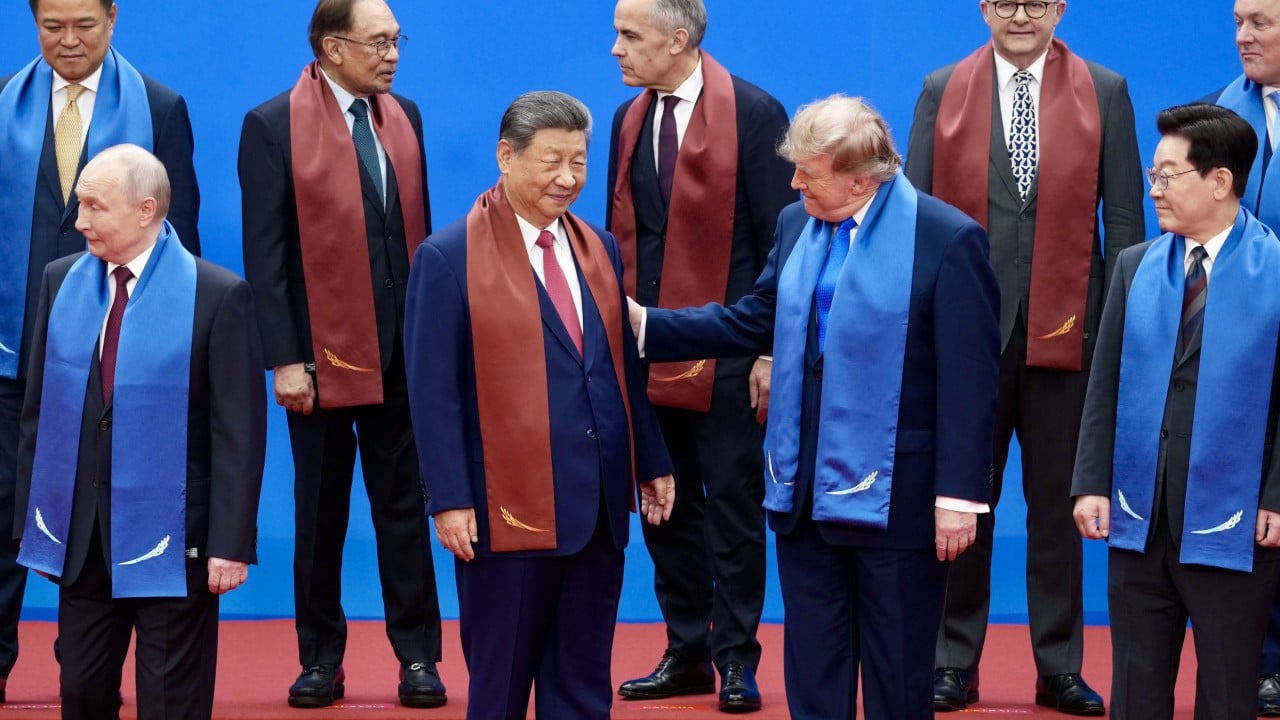
If you walk out of that lobby and head three blocks east, the smell of wet concrete and fresh asphalt still hangs in the air, mingling with the sharp, metallic tang of soldering irons from a thousand tiny hardware workshops. For decades, international economists treated this city as an anomaly—a freakish outlier of rapid urbanization that could never be replicated anywhere else on earth. Yet, during the recent Asia-Pacific Economic Cooperation (APEC) meetings, Beijing placed this exact city at the dead center of its diplomatic pitch to twenty-one Pacific Rim economies.
Why would a superpower use a single, hyper-specific metropolis as its primary calling card for regional trade? For another angle on this development, refer to the latest coverage from MarketWatch.
To understand the stakes behind China’s APEC cooperation push, you have to stop looking at trade summits as boring rooms filled with gray suits and thick policy binders. Instead, look at what happens when a supply chain breaks, or when a border closes, or when a middle-class family in Santiago, Manila, or Seattle suddenly pays thirty percent more for a refrigerator. The story of how China showcased the "Shenzhen miracle" at APEC isn't really a story about diplomacy. It is a story about survival in a fracturing global economy, told through a city that was literally invented to solve a crisis.
A Mudflat With No Roads
Let’s rewind to 1979.
To grasp how absurd Shenzhen’s rise truly is, picture a hypothetical young engineer named Lin—let’s say he was twenty-four years old, fresh out of a technical institute in Guangzhou, stepping off a rattling diesel bus in a place called Bao’an County. Back then, there were no subways. There were barely paved roads. Lin would have smelled stagnant brackish water, duck manure from the surrounding farms, and the coal smoke of a sleepy fishing town of roughly thirty thousand people. Across the narrow Sham Chun River lay Hong Kong, glittering with capital and skyscrapers, separated from Lin by barbed wire and decades of ideological isolation.
When Deng Xiaoping designated Shenzhen as China’s first Special Economic Zone (SEZ) in 1980, critics both inside and outside the country called it a reckless gamble. How do you build a modern industrial engine out of rice paddies?
You treat the city like a laboratory.
In those early years, Shenzhen operated under a simple, brutal logic: if a rule stopped factories from opening, break the rule. Foreign investors from Hong Kong and Taiwan brought sewing machines, plastic molds, and assembly lines across the border. Millions of migrant workers poured in from rural provinces, sleeping six to a room in corrugated-iron dormitories, working twelve-hour shifts to turn raw plastic and copper wire into cassette players, toys, and cheap digital watches.
By 2023, that sleepy fishing county had exploded into a metropolis of over 17.5 million residents, generating a gross domestic product exceeding 3.46 trillion yuan—roughly $480 billion—surpassing the entire economy of Hong Kong, the very city whose wealth it once pressed its nose against the glass to admire.
The Hardware Gravity Well
If Shenzhen had stayed a city of cheap assembly lines, nobody at APEC would care about it today. Factories chasing cheap labor always leave; they pack up and move to Vietnam, Bangladesh, or Mexico the moment wages rise.
Shenzhen didn't die when wages rose. It mutated.
Think of a modern supply chain like a massive orchestra. In most countries, the violinists live in one state, the percussionists live three thousand miles away, and the sheet music has to clear customs every time someone changes a note. If a startup founder in California needs a custom aluminum casing milled, a circuit board printed, and a lithium battery tested, she might wait six weeks just for prototypes to bounce back and forth via air freight.
In Shenzhen’s Huaqiangbei district, that entire orchestra sits inside a single four-block radius.
Walk through the fluorescent-lit stalls of SEG Electronics Market on a Tuesday afternoon and your senses get overwhelmed within thirty seconds. The air hums with the buzz of testing rigs. Men in faded polo shirts sit behind glass counters stacked with millions of micro-capacitors, OLED screens, tiny brushless motors, and ribbon cables. If an engineer needs a specific sensor at 10:00 AM, she buys it over the counter at 10:15 AM, walks two blocks to a machine shop to have a housing milled by 1:00 PM, and tests a working prototype before dinner.
Economists call this an "agglomeration effect." I call it a hardware gravity well. Once enough component suppliers, mold makers, firmware coders, and logistics brokers cluster in one zip code, breaking free becomes nearly impossible. Even when tariffs rise or politicians demand decoupling, the sheer physical convenience of having every screw, chip, and battery within a twenty-minute taxi ride keeps global manufacturing anchored to the Pearl River Delta.
This is the exact mechanism Chinese officials wanted APEC delegates to see up close.
Selling a Blueprint at APEC
During the APEC engagements, China didn’t just hand out brochures bragging about skyscraper counts. Beijing framed the Shenzhen miracle as an open-source operating system for the Asia-Pacific region.
Consider the timing. Global trade has grown fractious. Protectionism is back in fashion, supply chains are being rerouted under banners like "friend-shoring," and developing economies across Southeast Asia and Latin America feel squeezed between competing superpowers. Many of these nations desperately want to industrialize, build green energy grids, and upgrade their digital infrastructure, yet they lack the capital and technical know-how to do it alone.
Enter the Shenzhen pitch.
By spotlighting Shenzhen during APEC discussions—and tying it directly to China's upcoming turn as APEC host in 2026—Beijing delivered a clear message to neighboring economies: You don't have to remain stuck at the bottom of the global value chain.
Look at the specifics China brought to the table:
- Industrial Park Diplomacy: China isn't just exporting finished goods anymore; it is exporting the Special Economic Zone model itself. From the China-Malaysia Qinzhou Industrial Park to manufacturing hubs in Thailand and Indonesia, Shenzhen-born companies are building miniature versions of their home ecosystem abroad.
- The Green Transition Engine: Shenzhen became the first major city in the world to electrify 100 percent of its public bus fleet—over 16,000 buses—and nearly all of its taxis. Companies headquartered in the city, like BYD, now dominate global electric vehicle and battery supply chains. At APEC, Beijing positioned Shenzhen’s green tech not merely as commercial exports, but as affordable climate solutions for developing Pacific Rim nations.
- Digital Trade and Cross-Border E-Commerce: While traditional shipping containers still move millions of tons of cargo through Yantian Port, Shenzhen has quietly become the nerve center of cross-border e-commerce. Logistics giants and fast-fashion or gadget brands use automated customs clearance systems piloted in Shenzhen to ship single parcels directly from Chinese factories to doorsteps in Lima, Sydney, and Vancouver in under five days.
The Invisible Stakes for Everyone Else
It is easy to dismiss summit rhetoric as polished propaganda. Frankly, any healthy skeptic should pause whenever a government holds up its brightest jewel and claims everyone can have one just like it.
Shenzhen’s ascent carried brutal human and environmental costs that rarely make it into diplomatic speeches. Millions of early migrant workers built those towers without access to urban healthcare or public schools for their children under China’s strict hukou household registration system. Rivers in the Pearl River Delta turned black with industrial runoff for twenty years before strict environmental crackdowns finally forced factories to clean up. Land prices skyrocketed so violently that young graduates today joke about working ninety-nine hours a week just to rent a closet-sized apartment an hour outside the city center.
You cannot simply copy-paste Shenzhen into a developing economy without reckoning with those realities.
Yet, dismissing the APEC showcase as mere theater misses why the pitch is resonating across the Pacific. For a trade minister in Peru or a port operator in Malaysia, the ideological debates dominating Washington headlines feel detached from daily urgency. Their constituents need jobs, reliable electricity, paved ports, and affordable smartphones now.
Consider a hypothetical small-business owner named Mateo, who runs an agricultural export cooperative outside Lima. For years, Mateo lost nearly a quarter of his perishable fruit harvest because cold-storage logistics were too expensive and port clearance took days. When Chinese firms backed by Shenzhen-style logistics tech helped modernize Peru’s Chancay megaport—a centerpiece of Pacific trade connectivity showcased alongside APEC—shipping times across the Pacific dropped from over thirty-five days to twenty-three. For Mateo, that isn't geopolitics. That is the difference between bankruptcy and sending his daughter to university.
And what does it mean for a consumer in North America or Europe?
When Shenzhen innovates, prices drop globally—and competitors scramble. Whether it is consumer drones (where Shenzhen’s DJI commands over seventy percent of the global market), portable power stations, or lithium-iron-phosphate batteries, the city’s relentless iteration cycle sets the baseline cost for modern hardware. If APEC economies integrate more tightly with Shenzhen’s industrial standards, green tech platforms, and digital trade protocols, the center of gravity for twenty-first-century commerce shifts further toward the western Pacific—whether Western policymakers like it or not.
The Friction Beneath the Glass
Still, standing in Shenzhen today, you can feel a quiet tension humming beneath the polished surface.
The miracle was built on openness—on goods, capital, and ideas flowing freely across borders. Deng Xiaoping’s original gamble worked precisely because Shenzhen acted as a bridge between mainland China and the global market. Today, that bridge faces heavier tolls than at any point in four decades.
Export controls on advanced semiconductors mean Shenzhen’s tech titans—companies like Huawei and Tencent—can no longer buy the highest-end Western chips without navigating a minefield of sanctions. Foreign direct investment into China has cooled compared to its roaring 2010s peak as multinational boards diversify their risks. Meanwhile, domestic consumption inside China remains sluggish after a prolonged real estate slump, forcing Shenzhen’s factories to look even more aggressively toward Southeast Asia, Latin America, and the Middle East to absorb what they make.
That is the unspoken desperation fueling the APEC charm offensive.
China needs APEC just as much as APEC economies want access to China’s market. When Beijing holds up Shenzhen as proof that open trade creates shared prosperity, it is fighting to keep the doors of global commerce propped open at a moment when powerful forces want to slam them shut. The city that once needed the world’s capital to escape poverty now needs the world’s customers to sustain its sprawling technological machine.
Rain on the Bay
Late at night, when the stock markets close and the container cranes at Yantian Port finally slow their rhythmic clanking, a warm mist rolls off Shenzhen Bay.
Down near the waterfront promenade, families walk their dogs beneath towering banyan trees, passing joggers wearing smartwatches assembled ten miles away. Across the dark water, the faint glow of Hong Kong’s New Territories shimmers through the fog. Forty-six years ago, young men and women risked drowning in these exact currents, swimming past patrol boats in the dead of night just to reach the lights on the other side.
Today, the lights on both sides burn with equal intensity, linked by bridges, high-speed rail tunnels, and fiber-optic cables carrying trillions of dollars in digital transactions.
No government can bottle lightning and sell it at a diplomatic summit. The Shenzhen miracle was born from a rare collision of timing, geography, raw human grit, and a willingness to tear up the rulebook when the old rules stopped working. Whether APEC’s twenty-one economies can turn that history into a shared future remains an open, fiercely contested question—one that will be decided not in banquet halls, but on factory floors, container docks, and kitchen tables across two oceans.
The concrete in Futian is still drying. The cranes are still moving. And the rest of the world is still deciding whether to build alongside them, or build a wall against the tide.