Rust does not sleep. It waits.
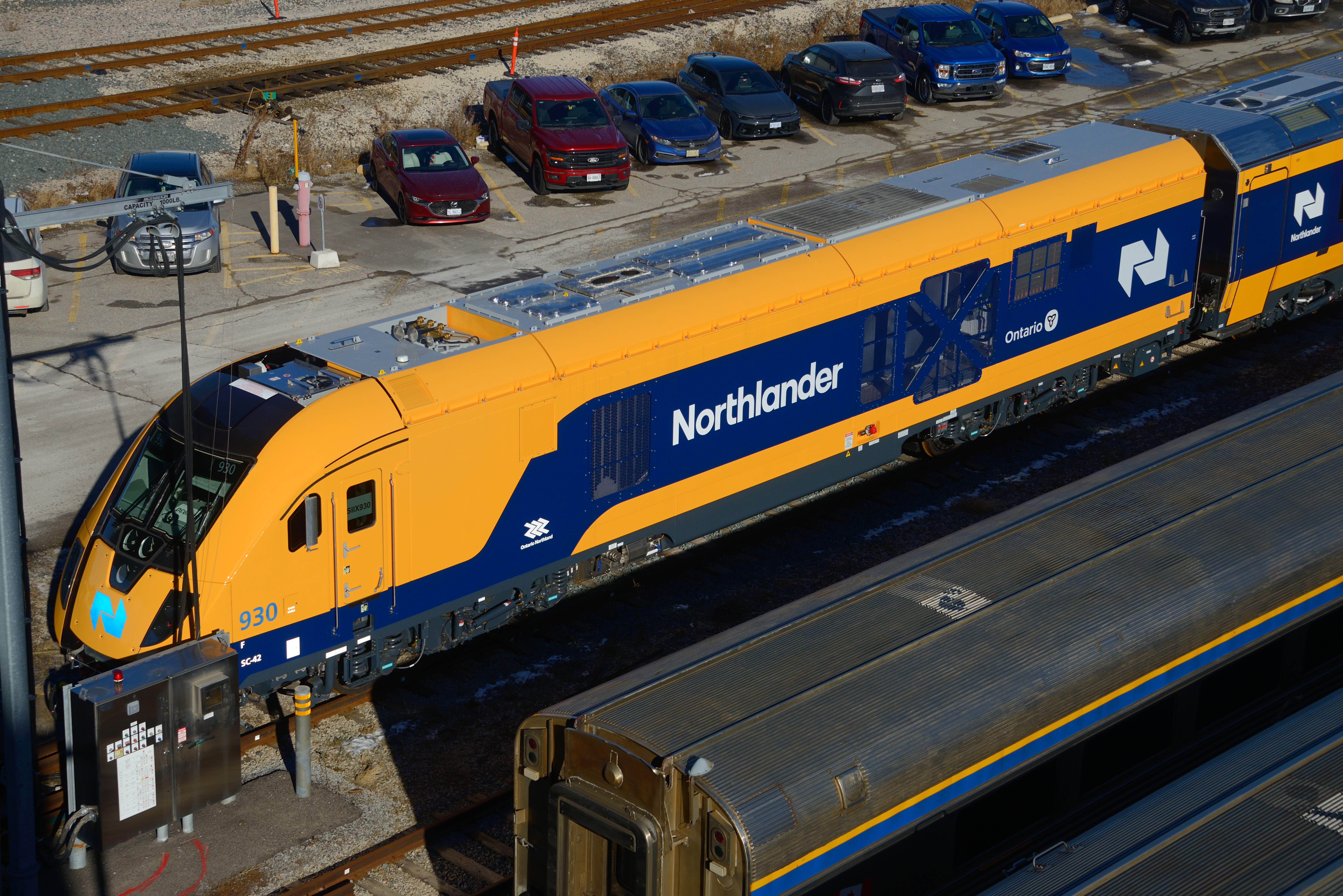
In a quiet maintenance facility, far from the roar of the rails and the hurried footsteps of commuters, a piece of modern machinery sits in silent limbo. It is a train. Not just any train, but a promise made on steel wheels—the Northlander. Months have dissolved into the calendar since a sudden, violent collision during routine testing bruised its sleek exterior and fractured its schedule.
Outside the high chain-link fences, the world keeps moving. People check their watches on cold platform edges. They mutter about delays, about promises unkept, about a northern route that feels increasingly distant. But inside the shed, time has stretched. Sensors glow with quiet diagnostic errors. Technicians trace hairline fractures with magnifying glasses and laser scanners, searching for invisible grief in the alloy.
To understand why this train matters, you have to look at a map of distance.
Northern Ontario is not a place you simply cross; it is a expanse that demands endurance. For communities tucked far beyond the urban sprawl, the railway is not a luxury option or a weekend scenic excursion. It is a lifeline. It carries medicine, mail, elders, students, and groceries. When the passenger rail service was promised a revitalization—a modernized fleet designed to brave sub-zero temperatures and rugged wilderness—it sparked a rare kind of hope.
Then came the crash.
It happened during a routine test run, the kind of rigorous vetting meant to catch disasters before they ever touch the public. Details from the incident remain technical and dry on paper: a collision, structural impacts, damaged control systems, component integrity compromised. But translation is necessary. Imagine sitting in the driver’s seat of a prototype car you have spent five years designing, only to hit a hidden wall at fifty miles an hour. The metal crumples. The glass shatters. The timeline vaporizes.
That is what happened to the Northlander equipment. And so, the repair bay became its home.
Fixing a modern train is nothing like patching up an old truck. These vehicles are rolling supercomputers wrapped in aerospace-grade aluminum. Every single bolt, sensor, and cable talks to a central nervous system. When a crash disrupts that system, you cannot simply hammer it back into place. You have to trace the nervous impulses. You have to order custom parts forged in distant foundries, wait weeks for shipping, and then re-test every single subsystem to ensure that safety margins are not just met, but exceeded.
This meticulous caution is necessary. No one wants a rushed train hurtling down a remote track at eighty miles an hour. Yet, caution breeds delay, and delay breeds frustration.
Consider the perspective of someone living in Timmins or Cochrane. They have heard the political announcements. They have seen the artist renderings of bright, comfortable passenger cars slicing through snowy evergreen forests. They have planned their lives around the anticipated return of an affordable, reliable transit option that respects their geography. Every month the train stays docked for repairs is another month of isolation, another month of relying on aging highways or expensive regional flights.
The irony is stark. The very testing meant to guarantee safety is what benched the equipment. It is the paradox of progress. We push boundaries to make travel safer and more efficient, but the friction of reality always pushes back.
Engineers understand this tension intimately. There is a heavy psychological weight that comes with heavy machinery. You measure tolerances down to the micron. You look at data logs until your eyes burn under fluorescent lights. You know that somewhere out there, people are waiting. The pressure is suffocating, yet rushing is a luxury you cannot afford. One missed calibration could mean catastrophe miles away from the nearest paved road.
So, the work crawls forward, slow and deliberate.
Welders spark brilliant, blinding arcs of blue light in the dim interior of the maintenance shed. Diagnostic screens flicker with lines of green code, confirming whether a replaced dampener is absorbing shock the way it should. Piece by piece, the Northlander is being stitched back together.
But the damage goes deeper than bent metal and fried circuit boards. It touches trust. In a world where infrastructure projects routinely slip behind schedule, every month of delay chips away at public faith. People stop believing in the timeline because the timeline has broken too many times before.
To rebuild that trust, the final product cannot just be fixed. It has to be flawless. It has to roll out of that shed and prove, on its very first run through the northern wilderness, that the wait was worth it.
The rails are still cold. The passengers are still waiting. But deep inside the facility, the lights are on, and the work continues.