The water does not care about our blueprints.
It never has. It arrives from the Atlantic with a cold, heavy pulse, slamming into the concrete bulkheads of the coast with an ancient indifference. For decades, engineers have stood on those massive concrete platforms, listening to the steady, bass-heavy thrum of the intake valves. They trust the math. They trust the steel. They trust the sheer, overwhelming force of human engineering designed to harness the raw fury of a river to cool the burning heart of an atom.
Then comes the gelatinous tide.
Imagine standing inside the cavernous control room of France's largest nuclear plant, miles of cabling humming beneath your boots, coffee growing cold beside a glowing monitor. To your left, a cluster of digital graphs dips slightly. Nothing dramatic. Just a minor fluctuation in water pressure. A blip.
Jean-Luc, a senior operations engineer with twenty years on this floor, frowns. He adjusts his glasses. He watches the numbers bleed downward, a slow, unnatural hemorrhage of flow rate. Outside, stretching out across the dark expanse of the water intake channels, something incomprehensible is happening.
Millions of them.
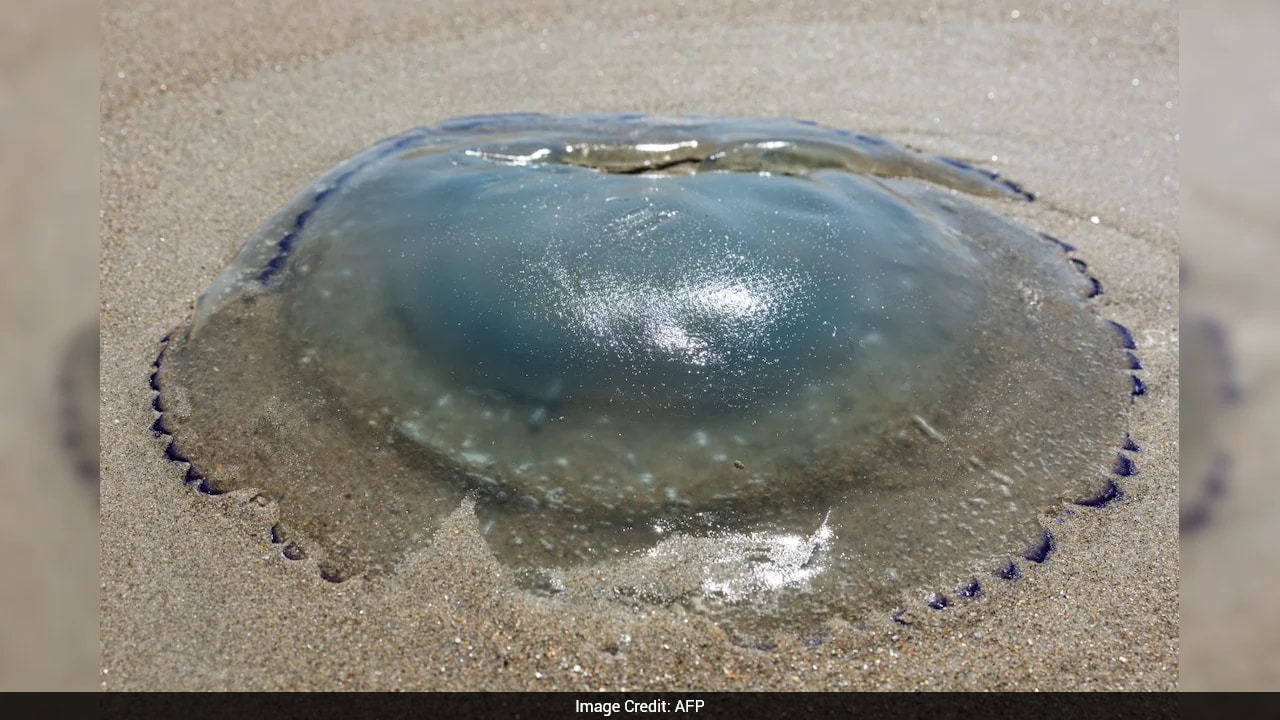
They have no brains, no bones, no enemies, and no plan. They are simply carried by the current—pulsating bells of translucent pink and pale blue, drifting in an effortless, ghost-like ballet. Aurelia aurita, the common moon jellyfish, accompanied by their less gentle cousins. Individually, they are fragile, collapsing into a puddle of saltwater if they touch the dry air. But numbers change everything. In biology, scale is a weapon.
When a swarm hits a coastal industrial facility, it doesn't arrive as an army with banners. It arrives as a blanket. A suffocating, living sludge that chokes the massive intake pumps responsible for feeding millions of gallons of cooling water to the reactor core every single minute.
Quiet. Then, chaos.
The alarms do not start with a scream. They start with a polite, persistent chime. Then another. Then the board turns a bruised, angry red.
"Pressure drop in loop three," a younger technician says, his voice tightening.
Jean-Luc doesn't answer immediately. He is already calculating the invisible stakes. A nuclear reactor is not a light switch. You cannot simply flick it off when something gets in the way. Even after the fission chain reaction is halted—scrammed, in the violent parlance of the control room—the core continues to generate intense radioactive decay heat. It demands water. Unending, uninterrupted torrents of water. Without it, the unthinkable waits just over the horizon.
This is the vulnerability of our modern monuments. We build towering cathedrals of science to conquer nature, only to find ourselves brought to our knees by creatures that predate the dinosaurs by hundreds of millions of years.
Outside, maintenance crews scramble out onto the concrete docks under a biting wind. The air smells of salt, ozone, and dead marine life. Peering down into the intake screens is like looking into an alien soup. The rotating drum screens, designed to filter out seaweed and debris, are utterly overwhelmed. They are jammed solid, groaning under the sheer weight of millions of pounds of gelatinous biomass. The motors whine, smell of hot insulation, and trip their breakers.
Stop. Breathe. Look closer at what is happening beneath the surface.
We forget that energy production is fundamentally an ecological relationship. Every kilowatt-hour pulsing through the grid of Paris or Lyon is tethered directly to the biological pulse of the sea or the river it draws from. For years, marine biologists have issued quiet warnings that warmer waters, shifting nutrient cycles, and overfishing of natural predators are creating the perfect breeding grounds for unprecedented population explosions. These massive blooms are not anomalies anymore. They are the new baseline.
When a facility like the Paluel or Gravelines nuclear plant draws in cooling water, it acts as an accidental magnet. The sheer volume of suction creates a localized current that pulls everything within a wide radius directly toward the facility. On a normal day, the trash racks and automated cleaning systems handle the load. But a dense aggregation of gelatinous organisms acts like wet cement packed into the machinery.
The plant's automated safety systems do exactly what they were engineered to do. They step in. They throttle back the power output, and when the pressure drops cross a critical threshold, operators initiate a controlled shutdown.
A collective sigh echoes across the grid. Millions of homes experience nothing—the intricate web of European interconnectors smoothly rerouting power from neighboring facilities, buffering the sudden drop. But inside the control room, the tension is palpable. The plant is offline. The silent giant is sleeping, its thermal output slowly decaying, while outside, cranes and divers battle a tide of creatures that have no idea they just brought a superpower to a standstill.
There is a strange poetry to it.
For centuries, humanity has sought to distance itself from the wild, chaotic fluctuations of the natural world. We paved over the wetlands, built seawalls, and tamed rivers. We built nuclear fortresses designed to withstand earthquakes, extreme weather, and mechanical failure, operating under the hubristic assumption that the elements had been conquered.
Yet, here we are. Defeated by creatures made of ninety-five percent water.
As the sun sets over the French coast, casting long, bruised shadows across the cooling towers, the massive pumps are slowly cleared, one by one. High-pressure hoses wash away the pink mounds. Technicians bleed the air from the lines. The frantic chatter of the control room subsides into a low, steady hum once more.
The reactor will restart. The grid will stabilize. But the ghost remains in the pipes.
Next time you flip a light switch in the dead of winter, consider the invisible theater playing out where the land meets the sea. Somewhere out there in the dark, the current is moving, carrying millions of silent, pulsing travelers toward the steel gates. And the water keeps rising.