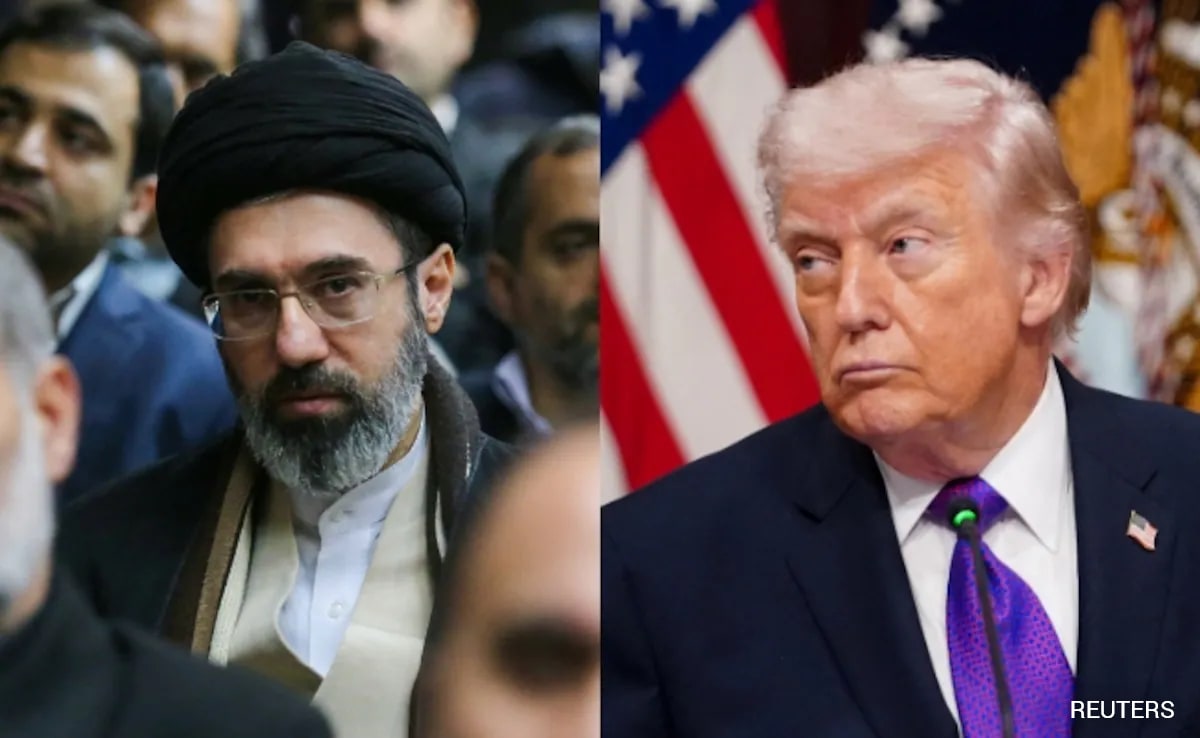
The headlines are screaming. Social media is a furnace of speculation. Donald Trump drops a claim that Mojtaba Khamenei is dead, and suddenly, every desk-bound analyst in Washington and London is drafting the obituary of the Islamic Republic. They are obsessed with the "Crown Prince" of Tehran. They think the removal of one man from the chessboard topples the entire regime.
They are wrong.
The Western obsession with "Great Man Theory"—the idea that history is shaped solely by individual titans—is a cognitive bug that makes us blind to how modern authoritarian systems actually function. Whether Mojtaba is breathing, intubated, or buried in a secret plot in Qom is secondary to a much more uncomfortable reality: The Iranian Deep State has already moved past the need for a Khamenei.
The Myth of the Indispensable Heir
The competitor narratives focus on a Game of Thrones style succession. They tell you that without Mojtaba, the supreme leadership collapses into a vacuum of power. This is lazy analysis. It treats a 21st-century military-clerical complex like a 15th-century monarchy.
In reality, the Office of the Supreme Leader is no longer just a person. It is a corporate entity. Over the last two decades, the Islamic Revolutionary Guard Corps (IRGC) has cannibalized the state. They don't need a charismatic visionary; they need a rubber stamp. If Mojtaba is gone, the IRGC doesn't panic. They simply recalibrate the selection process for a candidate who is even more beholden to the security apparatus.
The IRGC isn't looking for a leader. They are looking for a mascot. By focusing on the health of one man, Western intelligence and media are chasing a ghost while the machinery of the state hardens into a military junta that doesn't care about lineage.
Trump, Signal, and the Noise of Information Warfare
When a US President makes a claim about the death of a foreign leader, we treat it as a binary: True or False. That is the wrong way to look at information in 2026.
Information is a weapon system. Whether the claim is factually accurate matters less than the chaos it sows within the Iranian bureaucracy. If you want to flush out a target, you throw a stone into the pond and watch where the ripples go. By claiming Mojtaba is dead, the US creates a "verification crisis" inside Tehran.
- Paranoia: Who leaked the health status?
- Purges: Which faction stands to gain from the rumor?
- Protocol: Does the regime rush Mojtaba in front of a camera, potentially exposing his actual frailty?
This is the "Schrödinger’s Successor" gambit. Until he is seen, he is both dead and alive, and that uncertainty is more damaging to the regime’s internal stability than a confirmed funeral. However, the Western media falls for it every time, reporting the claim as "news" rather than identifying it as a psychological operation.
Why "Regime Change" is a Flawed Metric
People also ask: "Will Mojtaba's death lead to the fall of the regime?"
The answer is a brutal "No."
I have watched analysts predict the "imminent collapse" of the Islamic Republic for thirty years. They point to protests, currency devaluation, and succession crises. They miss the fact that the regime has built a "Hydra" architecture.
In a centralized system, you cut off the head and the body dies. In a Hydra system—which Iran has perfected through the integration of the IRGC into every facet of the economy—the "head" is largely symbolic.
- Economic Resilience: The IRGC controls the ports, the telecommunications, and the black-market oil trade. They don't need a Supreme Leader to sign checks.
- Internal Security: The Basij militia and the intelligence services operate on a decentralized model. They are programmed to suppress dissent regardless of who is sitting in the big chair in Tehran.
- The Assembly of Experts: This body of 88 clerics is often dismissed as a group of old men. In reality, they are the board of directors. If the CEO (the Supreme Leader) dies, the board appoints a new one. The business continues.
The Silicon Shield: Surveillance as the New Succession
The competitor article ignores the role of technology in maintaining the status quo. We aren't in 1979 anymore. The regime has spent billions on a "National Information Network"—a domestic internet that allows them to kill connectivity the moment a protest starts.
The death of a leader used to be the moment of greatest vulnerability because information moved slowly. Now, the state controls the speed of light. If Mojtaba is dead, the regime controls the announcement, the mourning period, and the digital narrative. They use AI-driven surveillance to identify "high-node" agitators before they can even reach a town square.
The transition won't happen in the streets; it will happen in encrypted rooms and military barracks. The idea that a single death triggers a popular revolution is a Hollywood trope that has no basis in the current technological reality of total state surveillance.
The Intelligence Trap: Ignoring the "Second Tier"
While everyone is looking at Mojtaba, they are ignoring the men who actually hold the keys. Names like Alireza Tangsiri or the various commanders of the Quds Force are far more relevant to the survival of the state than a middle-aged cleric with a famous last name.
The real danger isn't a power vacuum; it's a power consolidation. A "leaderless" Iran or a transition period gives the IRGC the excuse to declare a state of emergency, effectively ending the charade of the clerical republic and transitioning into a full military dictatorship. This would actually make the regime more stable and more aggressive, as they would no longer have to balance the interests of the traditional clergy.
Stop Asking if He's Dead—Start Asking Who Benefits
If you are waiting for a DNA sample or a photo of a casket to decide your foreign policy, you have already lost. The "Dead or Alive" debate is a distraction.
The hard truth is that the Islamic Republic has spent forty years preparing for this exact moment. They have institutionalized the transition. They have hardened their infrastructure. They have turned the Supreme Leadership into a brand rather than a person.
If Mojtaba Khamenei is dead, the regime loses a son, but the system keeps its grip. The IRGC doesn't want a king; they want a shadow. And shadows are notoriously hard to kill.
The West is playing checkers with personalities. Tehran is playing Go with institutions. Until we stop obsessing over the health of individuals and start dismantling the mechanics of the IRGC’s economic and digital stranglehold, it doesn't matter who is buried in the next state funeral.
The machine is bigger than the man. Deal with the machine.