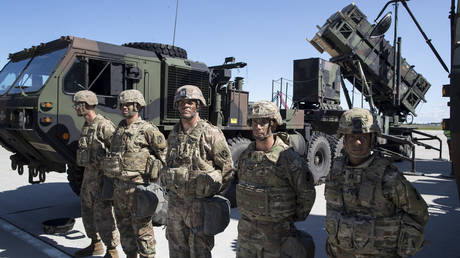
The wind in the desert does not care about borders. It carries the fine, biting dust across checkpoints that no longer exist, sweeping over concrete barriers left behind by departing convoys.
To understand what happens when a superpower packs its bags and exits a theater of war, you cannot look at a map. Maps are static things, colored in neat blocks of blue and red. Instead, you have to look at the empty chairs in a courtyard in Mosul. You have to listen to the quiet hum of a generator turning off for the very last time, leaving behind a silence so absolute it feels heavy.
For two decades, the global conversation about modern conflict has been anchored to a singular, terrifying acronym. We watched the black flags rise on grain-filled television screens. We tracked troop movements, drone strikes, and coalition surges. We treated the Islamic State group as a localized cancer that could be excised if the scalpel was sharp enough.
Then came the departure announcements. The cargo planes groaned off the tarmac, heading west. The headlines shifted to other continents, other crises, other flashpoints.
Yet, history does not simply pack up and leave when the uniforms vanish. It lingers in the shadows of abandoned compounds. It breathes in the vacuum.
The Geography of Absence
Consider what happens when a vacuum is created in a region that has known nothing but instability for generations. Nature
The Long Shadow Left Behind When Empires Pack Their Bags
news
The map looks clean in a briefing room. A black pen draws a neat perimeter, a red stamp marks a date, and a logistics officer checks a clipboard. Departure. Withdrawal. The end of a chapter.
To a satellite miles above the desert, it looks like an orderly dance of cargo planes and heavy armor rolling toward a C-17's gaping maw. But maps do not bleed, and satellites cannot hear the silence that settles over a valley once the engines stop roaring.
Consider a village in the Syrian interior. Let us call him Tariq, though his name could be whispered in a dozen dialects from Deir ez-Zor to the edges of the badia. For years, Tariq watched the distant hum of coalition drones cut through the burning noon heat. He knew what they meant: a protective shield, an invisible roof keeping the black-bannered ghosts at bay. When the news trickled down through local cell phones that the Americans were pulling out, that the heavy patrols would thin and finally cease, the air in the marketplace changed. It did not explode. It simply grew very, very cold.
This is the hidden weight of a significant US departure. It is not just about lines on a ledger or the reallocation of a brigade to another theater of geopolitical competition. It is about the sudden, terrifying vacuum left when an anchor is pulled from a turbulent sea.
For a decade, the Islamic State group was battered, squeezed, and pushed into the darkest corners of the Syrian and Iraqi landscapes. They were driven out of their brick-and-mortar caliphate, stripped of their crude oil refineries, and forced back into the subterranean shadows from which they originally crawled. The world breathed a collective sigh of relief. The monster was slain, or so the headlines declared.
Monsters of that scale rarely die. They hibernate. They wait.
And what do they wait for? They wait for the perimeter lights to go out. They wait for the local forces—brave, overextended, and chronically under-resourced—to find themselves standing alone in the dark, tasked with holding a line that stretches across hundreds of miles of empty sand.
When an army leaves, it takes its intelligence networks, its logistics trains, and its immediate deterrence. What remains is a fractured mosaic of local militias, weary populations, and sleeper cells that never truly went away. They just changed their clothes. They traded the distinctive black uniforms for civilian sandals and melded back into the towns they once terrorized, burying their weapons beneath sheep barns and orchard soil.
Think of an ember under deep ash. To a casual observer walking past the hearth, the fire is out. The grey powder looks dead. The air is cool. But dig an inch beneath the surface, past the cold grey crust, and you find a pinpoint of concentrated, glowing red heat. Feed it dry wood, give it a breath of fresh oxygen, and the whole room erupts.
That is the geometry of the Islamic State group's resurgence strategy. They do not need to defeat a standing superpower. They simply need the superpower to grow tired, look inward, and turn its gaze toward newer, shinier crises across the globe. They need the vacuum.
History is littered with the wreckage of premature declarations of victory. We love tidy endings. We want our conflicts to resemble Hollywood films, complete with a definitive final battle, a vanquished villain, and a hero riding off into the sunset. Geopolitics refuses to cooperate with Hollywood.
When the last transport plane lifts off, the real test begins for the people who cannot leave. For Tariq, who runs a dusty spare-parts shop with bullet-scarred walls, the departure means he must weigh every word he speaks to a stranger. It means calculating whether the local security forces can protect his family when the midnight knock on the door inevitably returns. Because the threat from extremist cells is not just ideological; it is transactional. It feeds on fear, isolation, and the absolute absence of a credible alternative.
When state authority recedes, protection becomes a currency. If the government or its international partners cannot guarantee safety, alternative power structures fill the void. Extortion networks re-emerge disguised as taxes. Justice is replaced by summary executions in public squares. The cycle spins once more, fueled by the same grievances that birthed the insurgency a generation ago.
This is why a military departure is never just a military decision. It is a profound moral and strategic gamble. It bets that the local foundations built over years of blood and treasure are strong enough to stand without the crutch of foreign intervention. Sometimes, miraculously, they are. More often, they crack under the strain.
The dust kicked up by retreating wheels settles back onto the tarmac. The officials in distant capitals turn their attention to the next summit, the next election, the next urgent flashing light on the strategic dashboard. But out on the jagged edges of the desert, the wind blows through empty watchtowers, and down in the dark, beneath the roots of the ancient thorns, something stirs.