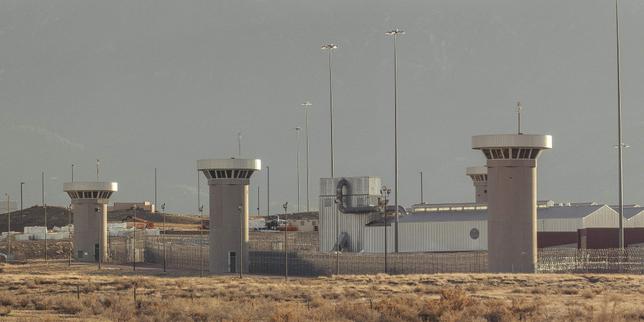
Silence has a weight. In the high-security corridors of a maximum-security French penitentiary, that weight presses down twenty-four hours a day, punctuated only by the heavy metallic clank of a steel door sealing off another year of human existence. Twenty-five years. A quarter of a century has bled away since the autumn morning when the world stopped turning, when towers of glass and steel crumbled into ash, and the map of human fear was redrawn forever.
Most of the names from that catastrophic chapter have calcified into history. We remember the heroes, the victims, the architects of ruin whose faces dominated television screens for weeks on end. Yet tucked away in the footnotes of collective memory sits a ghost. Zacarias Moussaoui. The twentieth hijacker who never made it to the plane. The French citizen whose solitary trial in a Virginia courtroom laid bare the agonizing intelligence failures of a superpower, and who now sits entirely forgotten by the country that birthed him.
Think back to the humidity of August 2001. Minnesota. Flight training schools where a quiet, intense man demanded to learn how to steer a commercial airliner through the sky, but showed zero interest in learning how to land it. Instructors grew uneasy. Authorities were notified. Bureaucracy ground its gears, slow and heavy, while the shadow lengthened across the Atlantic. When Moussaoui was arrested weeks before the attacks, officials believed they had intercepted a minor player. They had no idea they were holding a jagged piece of a puzzle that was already falling from the sky.
Then came the courtroom drama in Alexandria. A spectacle of legal defiance. Moussaoui grinning, shouting, demanding to represent himself, treating a capital murder trial like a political theater of the absurd. He wanted martyrdom. He wanted the theatrical validation of the electric chair. Instead, the American judicial system handed him something far more punishing. Time. Six consecutive life sentences without the possibility of parole, served in the most isolated confines of the federal prison system before his eventual transfer to a French facility. Not a swift end. Just an endless, empty middle.
Time erodes outrage. That is the quiet tragedy of long-term incarceration. The public moves on because the human mind cannot sustain white-hot fury for twenty-five years. We build memorials, we mourn the dead on anniversaries with solemn speeches, and then we return to our commutes. But what happens to the architect of a nightmare when the nightmare becomes yesterday's news?
He rots in plain sight. Or rather, he vanishes. In France, the silence surrounding Moussaoui is deafening. To the French state, he is an administrative inconvenience, a national embarrassment wrapped in a passport, a reminder of a radicalization pipeline that began quietly in the suburbs of London and the prayer halls of European cities long before anyone knew what Salafi-jihadism truly meant for the West. Paris does not talk about him. Families of victims do not invoke his name. He occupies a strange, liminal space—too notorious to ignore, too irrelevant to the current geopolitical landscape to feature in daily discourse.
Consider what it means to survive oneself. Moussaoui’s grand design collapsed before it began, leaving him stranded in a lifetime of irrelevance. He traded his youth for an ideology that ultimately discarded him, and now he exists as a historical artifact trapped in a living body. Every morning he wakes up inside concrete walls, knowing that the world outside has changed beyond recognition. Smartphones, pandemics, shifting empires, the rise of new digital wars—none of it touches him. He is frozen in the amber of a single, catastrophic Tuesday in September.
There is a profound lesson hidden in this quiet oblivion. We often fear that villains will be immortalized by their infamy, that their names will echo forever in the halls of dark legend. Yet reality is far more banal and much colder. History does not reward monsters with eternal relevance; it buries them in indifference.
The jet fuel has long since washed away from the soil of Manhattan, Shanksville, and the Pentagon. New generations walk through the museums built over the scars, reading plaques with the detached curiosity of people looking at ancient history. And somewhere in the dark, behind locks that never open from the inside, a forgotten Frenchman paces his cell, forgotten by the nation that birthed him, ignored by the country he tried to destroy, haunting a world that long ago learned how to live without him.