The desert wind of Las Vegas carries a lot of things, but it has never quite managed to blow away the phantom of September 1996. For nearly three decades, the shooting of Tupac Shakur remained an open wound wrapped in myth, a street-corner tragedy that morphed into a global obsession. Everyone had a theory. Everyone had a documentary. Everyone had a favorite ghost story about where he really went.
Then came the courtroom silence.
Quiet. Heavy. The kind of silence that settles over a room when decades of secrets finally run out of places to hide.
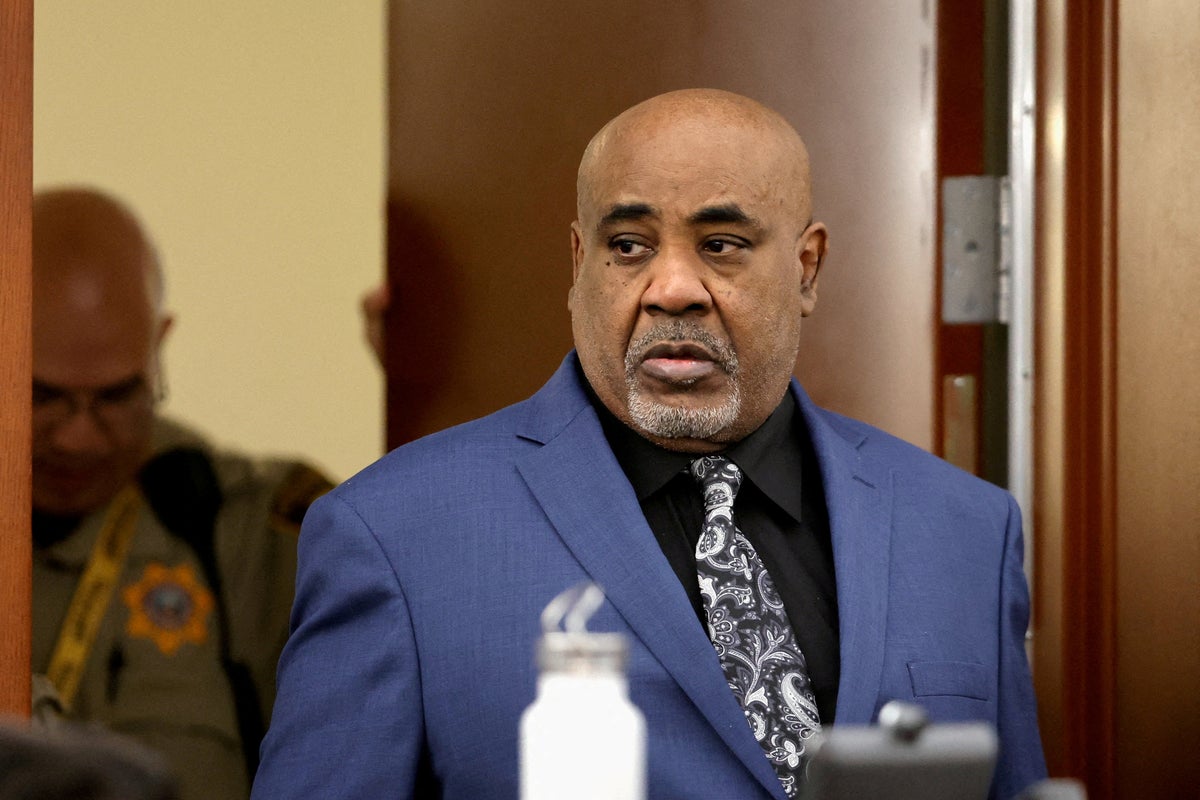
As closing arguments began in the trial of Duane Davis, the air inside the courtroom shifted. This was not about the myth anymore. It was not about the platinum records, the bandana tied just so, or the poetry books left behind. It was about words. Specifically, the words of Duane Davis himself.
Imagine sitting across from a tape recorder, decades after the fact, believing the statute of limitations on your own bravado had expired. Imagine leaning into a microphone, thinking the story you are telling makes you look like a mafia don, a central architect of history rather than a defendant in a murder case. Davis had spent years doing interviews, writing a memoir, and talking to police task forces under proffer agreements. He courted the spotlight. He invited the cameras in. He treated his own alleged orchestration of a drive-by shooting like a badge of honor earned on the asphalt of Paradise Road.
He forgot a fundamental rule of human nature. The things you say to impress an audience in your sixties will eventually be read aloud to a jury tasked with deciding whether you die in a cell.
The prosecutors did not need to invent a narrative. They simply played the tape. They read the pages. They let Davis narrate his own undoing.
To understand the weight of these closing arguments, you have to step away from the legal briefs and look at the anatomy of human ego. Picture a man sitting in a leather armchair, illuminated by studio lights, chuckling as he recounts the logistics of a night that altered American music forever. He talks about a gun. He talks about a retaliation. He talks about who was in the white Cadillac. He speaks with the casual detachment of a retired general reviewing an old campaign, entirely blind to the prosecutors who were listening with legal pads open and pens poised.
That is the tragedy here. Not just the loss of a twenty-five-year-old artist who was just beginning to scratch the surface of his intellect, but the sheer, blinding vanity that keeps old men talking when the smartest thing they could possibly do is disappear into the wallpaper.
For years, the public narrative was paralyzed by institutional failure and street code. The Las Vegas Metropolitan Police Department fumbled initial interviews. Witnesses clammed up. Fear was a currency that spent very well in the nineties. The case calcified into folklore because the official machinery simply stopped turning. People grew old waiting for an arrest. Children who were not born when a black BMW riddled with bullets stalled on Flamingo Road grew up to become detectives, lawyers, and journalists investigating the cold case.
And then Davis spoke up.
He thought he was securing his legacy. He thought he was ensuring that when the history books were written, his name would be etched right alongside the legends he circled. He wanted authorship. He wanted to be the man who pulled the strings behind the curtain, the ultimate insider who knew how the machine worked.
Instead, he wrote his own indictment.
The courtroom during closing arguments is a strange theater. It is devoid of the dramatic music and fast cuts of television dramas. It is fluorescent lighting, shuffling feet, and the rhythmic clicking of keyboards. The prosecutor stands at a lectern, projects a transcript onto a screen, and highlights a sentence. Then another.
I was the shot-caller.
Those words, uttered by Davis in past interviews, echoed off the wood-paneled walls. They do not sound glamorous when read by a deputy district attorney in a gray suit. They sound final. They sound like a cage door clicking shut.
When you strip away the conspiracy theories involving federal agents, rival record labels, and elaborate underworld vendettas, what remains is remarkably human, painfully mundane, and utterly devastating. It is a story about bruised pride. It is about a fight in a casino lobby after a Mike Tyson fight, a frantic phone call, the retrieval of a firearm from the trunk of a car, and a decision made in thirty seconds that reverberated across generations.
The defense tried to pivot. They argued that Davis was just spinning tall tales, selling a Hollywood version of himself to podcasters and documentary crews for a quick paycheck. They painted him as an aging storyteller inflating his own importance, a guy trying to stay relevant in a culture that had long since moved on.
It is a fascinating defense. I was lying then, but I am telling the truth now. Or rather, I was telling the truth to make money, but it was a lie in the eyes of the law.
The jury stared at him. Davis sat quietly, aging rapidly under the harsh lights, watching his own bravado dismantled sentence by sentence. The man who once bragged about orchestrating a hit now sat behind a defense table, flanked by attorneys, reduced to a spectator in his own destruction.
We look for grand designs in historical tragedies. We want conspiracies that match the scale of the icons who fall. But the closure of the Tupac Shakur murder trial reminds us that history is rarely built by masterminds. It is built by human flaws. Impatience. Arrogance. The irresistible urge to tell the story, even when the story is the rope around your own neck.
The transcripts are closed now. The arguments have faded into the deliberation room. Outside, the Las Vegas heat shimmers off the pavement of Flamingo Road, indifferent to verdicts, transcripts, and old ghosts. The music still plays, louder than any courtroom record, outliving the guns, the lies, and the men who thought they could control the narrative forever.