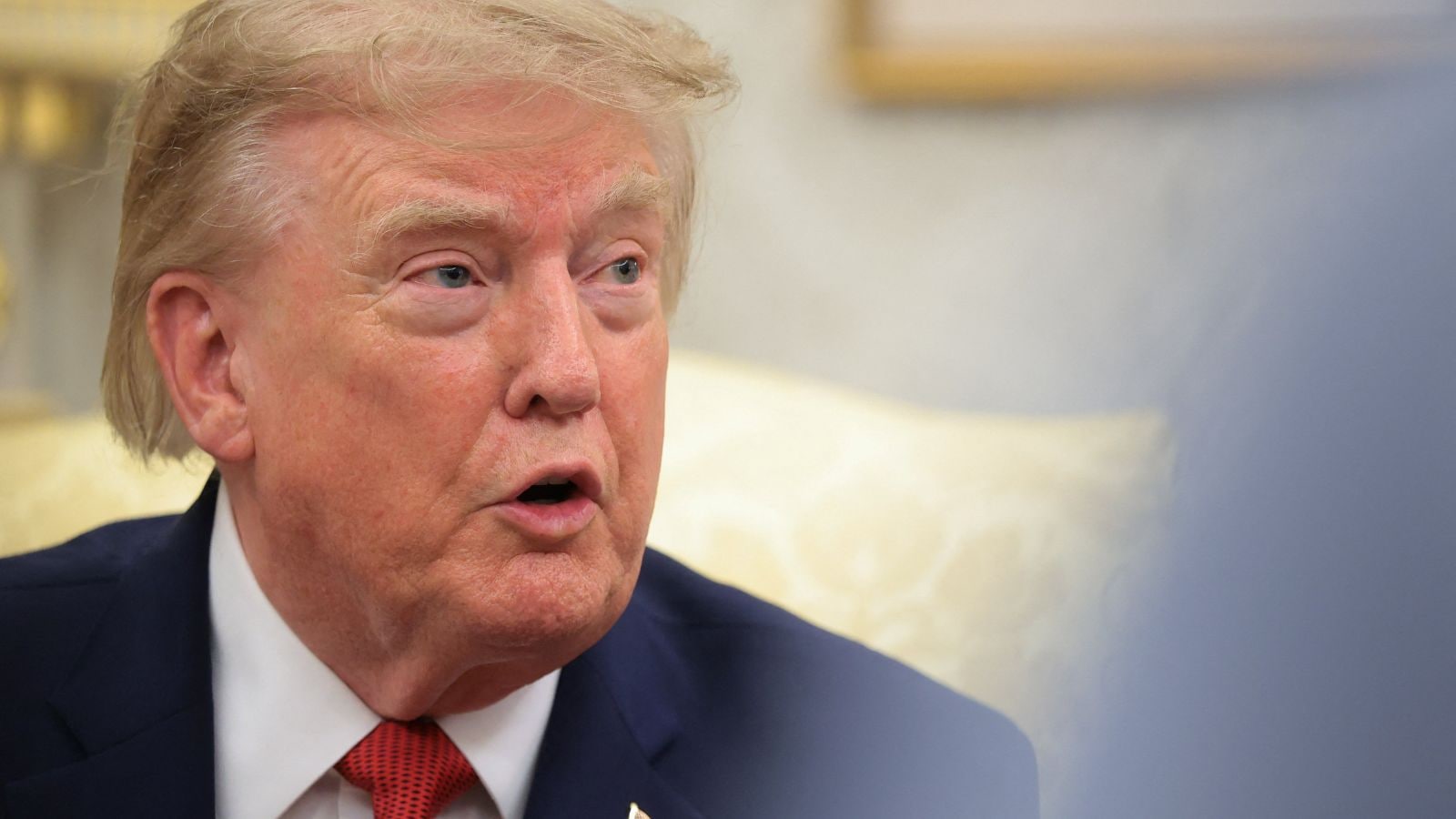
Static crackles through the telephone line. A room somewhere in Florida smells of stale coffee and leather. Donald Trump sits back, scrolling through a printed brief, his thumb grazing the edge of a paper that purports to know the future of human labor, human thought, and human art. Across the country, engineers in sterile server rooms watch millions of lines of synthetic code compile themselves into coherent prose, generated imagery, and logic that mimics consciousness.
The gap between those two realities is wider than an ocean.
When Trump looks at artificial intelligence, he does not see a revolutionary tide rewriting the social contract. He sees a conspiracy. Not a cabal of Silicon Valley programmers plotting world domination through neural networks, but something more mundane and peculiarly political: a manufactured panic. A narrative designed to distract, to diminish human achievement, and to elevate machines to a status they have not earned.
To understand why a former president would shrug off the most disruptive technological shift since the printing press, we have to look past the cable news chyron. We have to look at how power perceives leverage.
Consider the construction worker in Ohio staring at a robotic arm laying bricks twice as fast as any human crew. Or the junior copywriter in Chicago watching a large language model draft an entire campaign pitch in twelve seconds. To them, the threat is not a conspiracy. It is a rent check. It is the hollow sensation in the chest when you realize your livelihood can be replicated for fractions of a cent per query.
Yet, Trump’s dismissal taps into a different kind of American exhaustion. For decades, we have been promised utopias that turned into subscription fees. We were told the internet would liberate us, only to find ourselves tethered to algorithmic attention economies that monetize our outrage. When technology promises the moon and delivers targeted advertisements, skepticism stops looking like ignorance and starts looking like survival.
Trump calls it a conspiracy because, in his worldview, every grand cultural narrative serves a master. If the establishment is hyperventilating about artificial intelligence taking over the world, it must be because they want you looking at the screen while something else happens in your pocket. It is a calculated pushback against the technocratic elite who believe every new server rack brings humanity closer to obsolescence.
There is a strange, paradoxical truth hidden inside his dismissal.
The technology isn’t magic. It is statistics disguised as speech.
Walk into any data center in Northern Virginia. The air is sub-zero, smelling faintly of ozone and heated silicon. Row upon row of black metal monoliths hum with a relentless, low-frequency roar. There is no soul in that room. There is no intent. There are only matrix multiplications running at speeds that defy human comprehension, trained on the accumulated digital exhaust of human civilization—every forum post, every legal brief, every bad poem, and every digitized painting.
When a machine generates a paragraph that sounds like a weary philosopher, it hasn't felt a heartbreak. It has calculated the most probable next token in a sequence.
Trump senses this hollowness. His dismissal of artificial intelligence as a conspiracy stems from a fundamental distrust of systems he cannot bully, charm, or out-negotiate. If a machine can write a speech, what happens to the rally? If a algorithm can synthesize a political persona, what happens to the cult of personality? For a man whose entire political existence is built on raw, unfiltered, unpredictable human theater, the cold predictability of a neural net is both an insult and a irrelevance.
But downplaying the threat does not make it evaporate.
History is littered with powerful men who laughed at the steam engine, the telegraph, and the personal computer, convinced they were expensive toys for academics. They missed the inflection point because they confused the novelty of the tool with the permanence of the disruption.
When we pretend artificial intelligence is just another tech bubble—just another crypto crash waiting to happen—we misread the human equation. The danger of artificial intelligence is not that the machines will wake up and decide to wage war on humanity. The danger is much quieter, much more insidious, and infinitely more boring.
The danger is that we will surrender our agency to systems we do not understand because it is easier than thinking.
Imagine a courtroom five years from now. A judge sits behind a mahogany bench, listening to arguments drafted by one proprietary model, rebutted by another, summarized by a third, and ruled upon by an algorithmic sentencing guideline. The lawyers are there only to bill hours. The litigants are footnotes in a dataset. No one is conspiring. No mustache-twirling villain is orchestrating the descent. It is simply the path of least resistance, paved by efficiency and maintained by compliance.
That is what Trump misses when he waves his hand and calls the panic a conspiracy. He is fighting yesterday’s political battles against yesterday’s media elite, while an entirely new infrastructure of authority is being poured into the foundation of global commerce.
You cannot tweet your way out of a mathematical shift in productivity. You cannot dismiss a structural reorganization of human labor as fake news when the pink slips start landing in the mail.
And yet, his skepticism holds a grain of defensive wisdom. We do overhype the machine. We grant it a mystical aura of omniscience it has not earned. We look at a chatbot that can pass a bar exam and we tremble, forgetting that passing a multiple-choice test is not the same as wisdom, courage, or moral conviction. The machine knows the law, but it has never stood in an empty courtroom wondering if justice was done.
The billionaires funding the server clusters want you to be afraid. Fear opens checkbooks. Fear passes deregulation bills. Fear makes governments hand over public grids to private enterprise under the frantic banner of national security. When the tech barons warn that artificial intelligence might destroy human civilization, they are subtly branding themselves as the gods who hold the thunderbolts.
Trump’s rejection of that narrative is crude, self-serving, and analytically shallow. But it is also a refusal to bow at the altar of Silicon Valley’s favorite mythology.
He looks at the high priests of deep learning and sees carnival barkers. Sometimes, they are.
The truth lives in the friction between those two extremes. Artificial intelligence is neither a sentient god nor a harmless conspiracy. It is a mirror. A massive, distorting, hyper-efficient mirror reflecting the brilliance and the garbage of the civilization that built it.
The servers keep humming in the cold dark. The coolant pumps cycle. Somewhere in a cubicle, a developer types a prompt, waiting to see what the ghost in the circuit will say next. The president plays golf, issues a dismissal on social media, and moves on to the next grievance. But the code compiles anyway. The gears turn, indifferent to whether we believe in them or not, reshaping the world one token at a time.