The desert at midnight does not care about geopolitics. It only knows the biting chill of the wind and the sudden, violent rupture of silence. For years, families fleeing the collapse of Caracas walked through that dark, carrying nothing but frayed backpacks and the terror of what they left behind. But they were not just running from a broken economy. They were running from a shadow.
That shadow had a name: Tren de Aragua.
What began inside the overcrowded walls of the Tocorón prison in Venezuela eventually stretched its fingers across an entire continent, snaking through Colombia, piercing the Darién Gap, and settling into the apartment complexes of American suburbs. It became a phantom menace invoked in stump speeches and cable news chyrons. Then, with the suddenness of a lightning strike, a single military operation changed the narrative entirely.
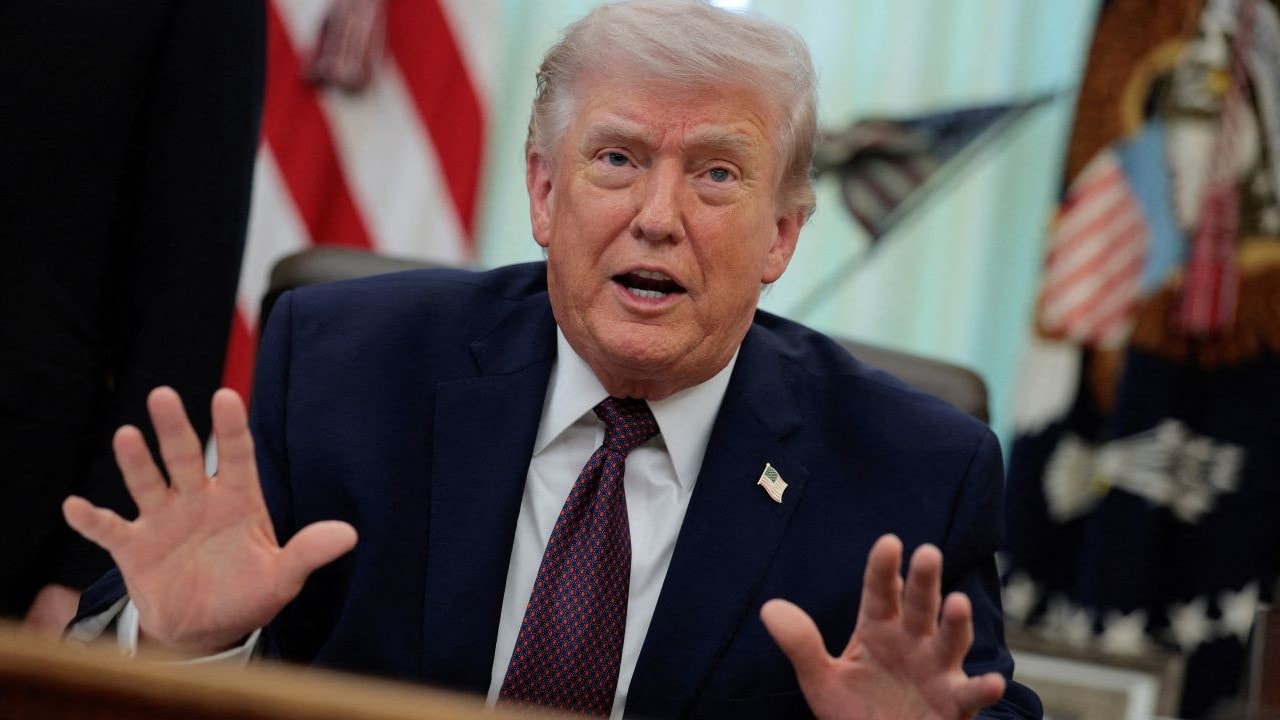
Donald Trump announced that a targeted US military strike had eliminated the top leader of the transnational gang. The announcement was delivered with the expected bravado of a commander-in-chief claiming total victory over a foreign threat. On paper, it reads like a checklist item ticked off in a war room.
The reality on the ground is infinitely more complicated, jagged, and human.
The Anatomy of a Phantom
To understand the weight of a missile strike in a remote corner of the world, you have to understand the terror that necessitated it. Let us step away from the political podiums and look at a hypothetical storefront in Aurora, Colorado, or a street corner in Santiago, Chile. We will call the shop owner Maria.
Maria left Venezuela in 2018. She survived the extortion of local gangs, built a small bakery abroad, and thought she was safe. Then came the knock on the door. It was not the local police, and it was not a tax collector. It was a young man with a specific tattoo and a smartphone, demanding a vacuna—a health tax. A protection fee.
This is how Tren de Aragua operated. They did not just traffic in illicit substances; they trafficked in human misery, exploiting the very migrants who had fled their homeland. They built an empire on the backs of the vulnerable, using digital networks, encrypted messaging apps, and untraceable cryptocurrency transfers to manage an underworld syndicate from thousands of miles away.
They were a modern, decentralized franchise of terror. They were agile.
When a traditional cartel operates, it relies on fixed territory—a drug route, a mountain range, a port. Tren de Aragua relied on human currents. They embedded themselves in the migrant pathways, turning the desperate search for a better life into a highly lucrative revenue stream.
The Shockwave in the Dark
When the news broke of the US military operation, the immediate reaction was fractured along predictable political fault lines. One side cheered the demonstration of absolute American power. The other questioned the legality and the long-term strategic wisdom of launching a lethal strike against a non-state actor on foreign soil.
But consider what happens next in the quiet spaces where policy meets flesh and blood.
The elimination of a kingpin rarely results in immediate peace. In the brutal mathematics of transnational crime, a vacuum is simply an open invitation. When the head of a multi-tiered syndicate is removed, the lower-level captains do not suddenly seek honest employment. They scramble for the crown.
Imagine a boardroom where the CEO is suddenly gone, but instead of a corporate restructuring, the regional managers pull out firearms to decide who takes the corner office. That is the immediate aftermath of a high-value targeting strike. The fragmentation of a gang often leads to localized, hyper-violent turf wars as factions vie for control over extortion rings and human trafficking corridors.
The strike may have severed the head, but the nervous system of the organization is deeply embedded in communities that are already living on the margins.
The Digital Invisible War
We often view military actions through the lens of twentieth-century warfare—tanks, troops, clear borders. This operation represents something entirely different. It highlights a strange, unsettling convergence of traditional military might and advanced intelligence gathering.
The US military did not find this target by marching an army through the jungle. They found him through a digital footprint. Every encrypted call, every wire transfer, every social media post by low-level foot soldiers left a breadcrumb trail in the digital ether. Satellites and cyber-surveillance tools mapped the invisible networks, tracking the flow of illicit capital until it converged on a single coordinate.
It is a sobering reminder of the world we now inhabit. No matter how deeply a criminal network hides within the chaos of a humanitarian crisis, the unblinking eye of modern intelligence technology can pinpoint a target with terrifying precision.
Yet, this technological supremacy masks a deeper, more stubborn truth. You cannot shoot an ideology with a drone. You cannot eliminate a systemic socioeconomic collapse with a precision-guided munition.
The conditions that created Tren de Aragua remain entirely untouched.
The Unresolved Ledger
Venezuela remains an economic wasteland, a place where the average monthly wage cannot buy a week’s worth of groceries. As long as desperate people are forced to flee across borders with nothing but hope, there will be predatory syndicates waiting to exploit them.
If the United States and its regional allies treat this strike as a final victory, they misunderstand the nature of the enemy. The gang was a symptom of a deeper rot, a virus that mutated because the host organism—regional stability and rule of law—was profoundly compromised.
True security is not achieved when the missiles hit their targets. It is built slowly, painfully, in the unglamorous work of reinforcing local judiciaries, securing borders with compassionate efficiency, and dismantling the financial networks that allow illicit wealth to be laundered into legitimate economies.
The applause in Washington will fade. The headlines will shift to the next political crisis, the next economic report, the next campaign rally.
But on the dirt paths of the border, the wind still howls through the canyons. A mother tightly holds her child’s hand, stepping forward into the dark, her eyes scanning the shadows for the next monster waiting to take the place of the one that just fell.


