Dust settles differently on porcelain than it does on wood. On the curved, heavy porcelain of a vintage Koken barber chair, dust gathers in the crevices like frost on an old tombstone, waiting for someone warm to wipe it away.
For decades, a quiet storefront in Quincy, Illinois, sat behind glass clouded with time, holding onto that exact kind of stillness. Outside, cars rushed down Hampshire Street, drivers glancing past the faded brick without a second thought. To the untrained eye, it was just another dormant piece of Midwestern real estate—a relic of small-town commerce that had outlived its usefulness.
They were wrong.
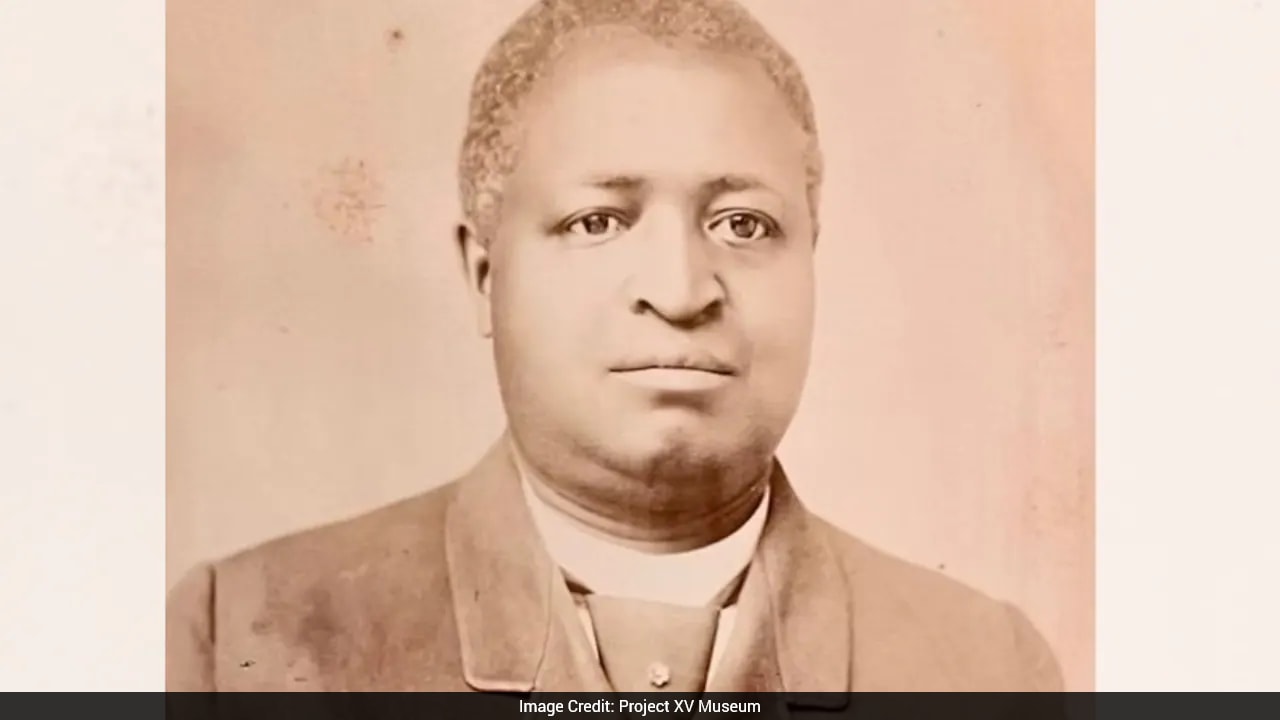
Beneath the peeling paint and behind the locked deadbolt lived the echo of a man who stared down a hostile nation, walked up to a ballot box in 1870, and changed the trajectory of American democracy forever. His name was Thomas Elmore. Most people in Illinois have never heard of him. Even fewer know that the very room where he once lathered faces and trimmed beards was nearly lost to obscurity, until a group of local students decided that history shouldn't stay locked behind dusty glass.
The Architecture of Erasure
History rarely disappears in a dramatic blaze. Usually, it fades. It gets boxed up, shoved into a basement, or paved over for a parking lot because nobody realizes what they are standing on.
To understand why this small barbershop in Quincy matters so much, you have to strip away the comfortable, sanitized version of Civil War history we often tell ourselves. We like to think of the North as a monolithic sanctuary of freedom, a place where the passage of the Fifteenth Amendment in February 1870 instantly swung open the doors of civic power for Black men.
Reality was far uglier.
In the mid-nineteenth century, Illinois was a deeply divided border state with notoriously harsh "Black Laws" that restricted the movement, testimony, and rights of African Americans. Quincy sat directly across the Mississippi River from Missouri, a slave state. Freedom here was precarious. You could smell the woodsmoke drifting over from slave territory on a quiet evening, a constant reminder of how thin the line between liberty and bondage really was.
Inside that volatile climate, a Black barbershop wasn't just a place to get a shave. It was a sanctuary, a newsroom, and a command center.
Think about the intimacy of a straight razor. When a white politician, a riverboat captain, or a local judge sat in Thomas Elmore’s chair, the power dynamic of the entire town inverted for twenty minutes. With a steel blade resting against their throat, men talked. They shared gossip, debated legislation, and revealed their true intentions. Barbers like Elmore were the ultimate intelligence gatherers of the nineteenth century—men who held the literal and figurative pulse of their communities in their hands.
Elmore used that proximity to build a life of quiet defiance. Born into slavery in Virginia, he bought his own freedom, moved to Quincy, and established himself as a respected businessman and community leader. When the Fifteenth Amendment was ratified, granting Black men the constitutional right to vote, the legal barrier fell. The social barrier, however, remained a wall of concrete.
Imagine walking toward that polling place in 1870. Picture a hypothetical composite of the men watching from the street corners—dockworkers with their arms crossed, local toughs spitting tobacco into the dirt, men who believed the ballot box belonged exclusively to them. Every step Elmore took toward that table carried the weight of centuries. One wrong word, one aggressive glance, and the fragile peace of a river town could shatter into violence.
Yet he walked up anyway. He gave his name. He cast his ballot, becoming the first Black man to vote in the state of Illinois.
The Weight of a Forgotten Room
Fast forward more than a century and a half. The cheers—or the stunned silences—of 1870 have long since evaporated.
When I first started digging into how local communities preserve civil rights history, I expected to find grand monuments, state-funded plaques, and well-cataloged archives. Instead, I found a pattern of accidental neglect. Across the Midwest, the physical sites where ordinary people did extraordinary things are crumbling. Not out of malice, necessarily, but out of exhaustion. Small historical societies run out of money. Older generations pass away, taking the oral histories with them.
That is precisely what was happening in Quincy.
The building tied to Thomas Elmore’s legacy wasn't a sprawling mansion or a grandiose courthouse. It was humble. And because it was humble, it was vulnerable. Without intervention, a piece of brick-and-mortar proof—the actual physical space anchoring Illinois's first Black voter to the earth—risked becoming a footnote in a dusty county ledger, completely invisible to the kids walking past it on their way to school.
This is where the story shifts from a tragedy of forgetting to an act of rescue.
Enter a group of students from Quincy High School and local youth initiatives who refused to let the story die in the dark.
When teenagers take on a historical restoration project, adults often pat them on the head, expecting a cute poster board presentation or a weekend cleanup. We underestimate what happens when young people realize that history isn't something that happened to other people in black-and-white photographs. It happened right here, on their street, by someone who breathed the same river air they breathe every morning.
Sweeping Away the Silence
Restoring a historic space isn't glamorous work. There is no swelling orchestral soundtrack when you are scraping decades of grime off floorboards or hauling out rusted debris.
It smells like damp plaster, old cedar, and mouse droppings. Your knees ache. Your hands turn gray with soot. You spend hours staring at faded census records, property deeds, and microfilmed newspapers until your eyes blur, trying to verify a single address or confirm the exact spelling of a name.
But step by step, the students began peeling back the layers of neglect.
They didn't just clean the room; they interrogated it. They researched Elmore’s life, tracing his journey from Virginia to the banks of the Mississippi. They studied the political tremors of 1870, piecing together what that first municipal election in Quincy actually looked like. They tracked down period-accurate artifacts, authentic barbering tools, and archival documents that could turn four empty walls into a narrative engine.
Consider what happens when a sixteen-year-old holds a nineteenth-century straight razor or reads an 1870 newspaper editorial debating whether Black men deserved the franchise.
The abstract suddenly becomes concrete. Voting stops being a boring chapter in an AP Government textbook—a dry recitation of amendments and Supreme Court cases—and transforms into a visceral, high-stakes human drama. You start to see the ballot not as a routine civic chore, but as an heirloom bought at an unimaginable price.
Why Physical Spaces Still Matter in a Digital Age
We live in an era where almost every fact on earth is available in three seconds on a glass screen. So, why pour sweat, money, and countless hours into turning an old barbershop into a physical museum? Why not just build a website and call it a day?
Because screens flatten everything.
On a phone, a tragedy, a triumph, a meme, and a grocery list all occupy the exact same sensory plane. They are weightless. You scroll past them with a flick of your thumb, and five minutes later, the emotional residue is gone.
A room, however, demands your body.
When you step across the threshold of Thomas Elmore’s restored barbershop, the acoustics change. The light hits the floor at a specific, nineteenth-century angle. You see the height of the ceiling, the width of the doorframe, the exact footprint of space a man occupied while waiting for his turn to be treated as a full human being under the law.
Psychologists and historians call this "place-based memory," though a simpler analogy works better. Reading about a storm is just data; standing in a house with the shutters rattling while the wind howls outside is an experience. Physical spaces rattle the shutters of our imagination. They force us to confront the reality that the people who built our rights were flesh and blood—men and women who felt fear, brushed lint off their coats, and worried about paying their bills.
For the students involved in building this museum, the process reversed the traditional flow of education. Usually, institutions tell young people what is important and ask them to memorize it. Here, the students became the curators. They decided what mattered. They took ownership of a neglected narrative and forced their city to look at it.
The Uncomfortable Mirror of 1870
There is a temptation, whenever a community opens a museum like this, to wrap the ribbon-cutting in self-congratulation. We love a tidy redemption arc. We want to clap our hands, take a photo in front of the restored storefront, and feel good about how far we have come.
That would be a betrayal of Thomas Elmore.
If you look closely at the story the Quincy students uncovered, it doesn't let anyone off the hook. Elmore’s 1870 vote wasn't the end of a struggle; it was the opening bell of a fight that stretched through Jim Crow, the Great Migration, the Civil Rights Movement of the 1960s, and right into the voting battles of our own decade.
The museum stands as a quiet challenge to everyone who walks through its doors. It asks an uncomfortable question: If a man born into slavery could risk his livelihood and his safety to cast a single vote in 1870, what is your excuse for staying home?
Even more pointedly, it asks what else we are walking past every day without seeing. How many other Thomas Elmores are buried beneath the weeds of small-town America? How many barbershops, church basements, kitchen tables, and storefronts hold the real architecture of our democracy, waiting for someone young enough and stubborn enough to unlock the door?
The students in Quincy didn't just save a building. They proved that memory isn't passive. You don't inherit history the way you inherit eye color; you have to claim it, scrub the dust off it, and fight to keep the lights on.
Walk down Hampshire Street in Quincy today, and the storefront no longer looks like a forgotten ghost. The glass is clear. Inside, the tools of a barber’s trade sit beside the story of a citizen’s triumph, catching the afternoon sun. The chair is empty, yet the room feels entirely full.