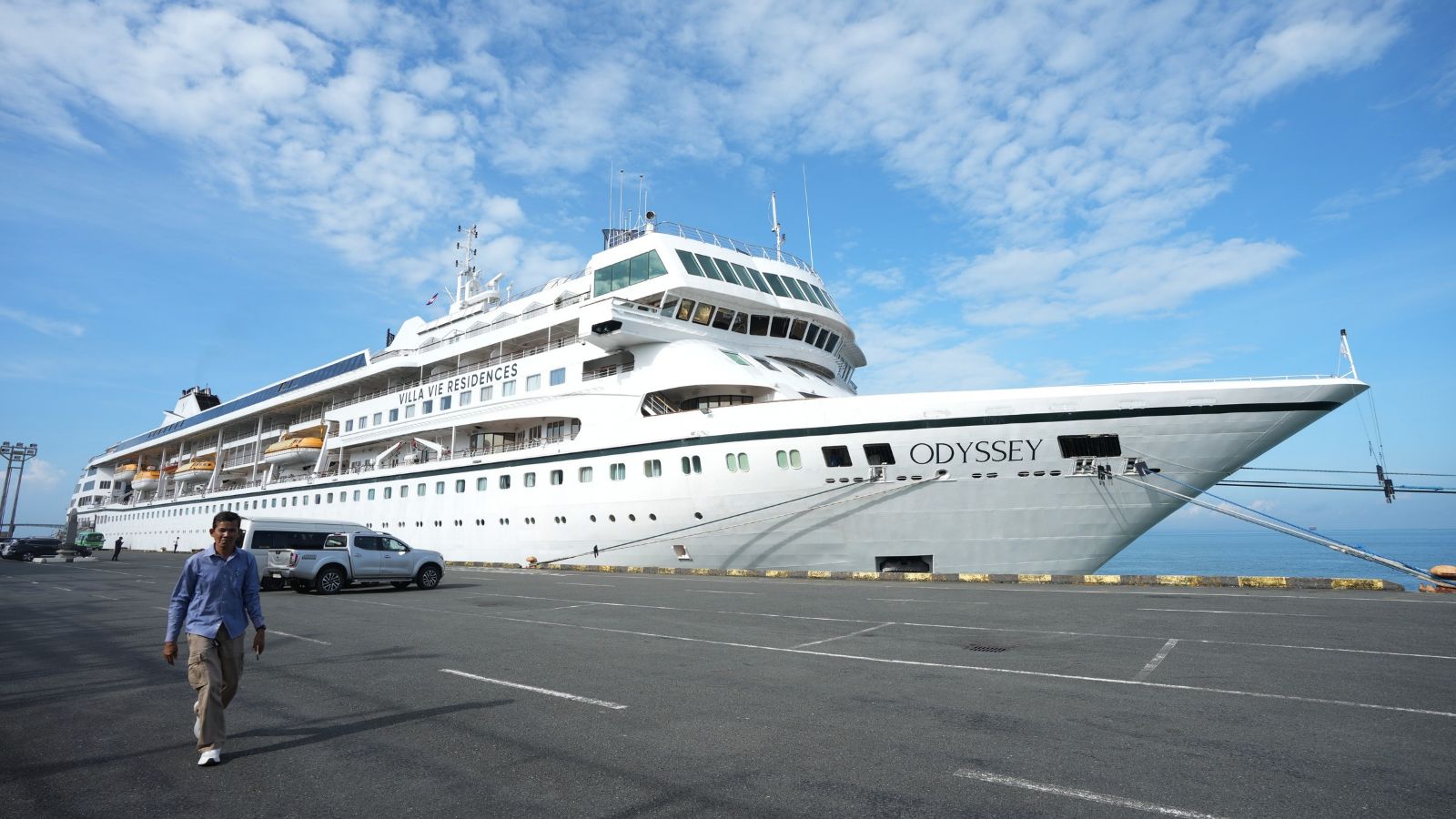
They paid five figures for white-glove service, fine dining, and an exotic itinerary across Asia. Instead, they got handed a disembarkation notice in Sihanoukville, Cambodia, right before the ship was supposed to sail for India.
Cue the outrage. The mainstream travel press loves a good "stranded luxury passenger" sob story. It plays right into the lazy consensus that cruise lines are greedy, incompetent villains who abandon high-paying guests the second logistics get messy. You read the headlines and picture wealthy retirees left weeping on a humid Cambodian dock while executives count their cash in Miami. For a different view, see: this related article.
That narrative is pure fiction.
If you understand how maritime law, sovereign immigration enforcement, and ultra-luxury cruise economics actually operate, being forced off a ship in Cambodia before entering Indian waters isn't a corporate failure. It is an emergency evacuation from a bureaucratic nightmare that would have been ten times worse had the captain kept sailing. Related analysis on this trend has been shared by Travel + Leisure.
The Lazy Consensus About Cruise Disruptions
Every time a luxury liner alters an itinerary or terminates a voyage early, the commentary follows a predictable script. Journalists interview one angry passenger who spent $15,000 on a suite, highlight the ruined bucket-list dream of seeing the Taj Mahal, and frame the cruise operator as uniquely heartless.
They miss the entire mechanical reality of international maritime operations.
A cruise ship is not a magic carpet that floats above national borders. It is a floating city subject to the strictest, most unforgiving regulatory frameworks on earth. When a ship moves from Southeast Asia into South Asia—specifically crossing from the Gulf of Thailand and the Malacca Strait into Indian territorial waters—the legal friction spikes dramatically.
India maintains some of the most rigid maritime immigration, customs, and cabotage enforcement protocols in the world. Unlike many Caribbean or European ports where cruise lines enjoy streamlined bulk-manifest clearances, Indian port authorities routinely demand granular, individual biometric verification, strict e-Visa compliance, and exhaustive vessel security audits before a single gangway touches concrete.
If a vessel has a mechanical hiccup, a sudden shift in regional security clearances, or a regulatory mismatch on its manifest, sailing toward India isn't brave. It is reckless.
Why Cambodia Was a Strategic Lifeboat
Let's look at the geography and the operational math. Sihanoukville, Cambodia, is a deep-water port with direct international flight connections via Phnom Penh and nearby regional hubs like Bangkok and Singapore.
Now, imagine a scenario where the cruise line ignored the warning signs and pushed forward toward Chennai or Mumbai anyway.
If Indian authorities reject a vessel's entry clearance or place a ship under administrative quarantine due to documentation discrepancies or technical non-compliance, passengers don't get to casually stroll off the boat to catch a flight home. You are trapped on a steel hull anchored three miles offshore in sweltering heat, burning through provisions, with zero legal right to step foot on dry land.
I have seen maritime operators try to "power through" port clearance bottlenecks in South Asia and the Middle East. It blows millions of dollars in fuel, port demurrage fees, and emergency legal retainers—and it ends with passengers locked inside their cabins for days while diplomats argue over fax machines.
By pulling the plug in Cambodia, the cruise line did the only rational thing available. They terminated the voyage in a jurisdiction where passengers could legally disembark, clear customs in hours, access international airports, and get routed home or onto alternative land tours.
Was it inconvenient? Yes. Was it being "stranded"? Only if you define being stranded as having an airline ticket booked for you out of an international hub with a full refund and future cruise credit in your inbox.
The Myth of the All-Inclusive Guarantee
Passengers buy luxury cruises because they want friction removed from hard travel. Traveling through Cambodia, Vietnam, Thailand, and India independently requires relentless logistical stamina. You deal with chaotic traffic, visa paperwork, currency exchanges, and questionable sanitation.
A luxury cruise sells the illusion that you can experience the grit and majesty of developing nations from the sterile comfort of a teak balcony with a chilled glass of Sancerre.
Here is the uncomfortable truth the cruise industry won't print in its glossy brochures, and the travel media is too timid to explain: you cannot outsource geopolitical and infrastructural friction.
When you buy a ticket on a ship, you are not buying a guaranteed itinerary. You are buying transport on a specific vessel, subject to the Contract of Carriage. Every single cruise ticket on earth—from Carnival to Seabourn, Silversea, and Regent Seven Seas—explicitly states that the carrier reserves the right to alter, skip, or terminate any port of call at any time for operational, safety, or regulatory reasons.
The heavy hitters in maritime law, including organizations like the Cruise Lines International Association (CLIA) and international maritime insurers under the Athens Convention, build the entire industry around this principle. Without the absolute authority of the master of the vessel to divert or terminate a voyage without facing existential liability, no insurer would underwrite a passenger ship.
If cruise lines were legally forced to hit every advertised port regardless of diplomatic, mechanical, or weather-related headwinds, tickets wouldn't cost $15,000. They would cost $150,000, and half the fleet would end up impounded in foreign ports.
Dismantling the "People Also Ask" Fallacies
Whenever an incident like the Cambodia disembarkation hits the news cycle, anxious travelers flood search engines with the exact same predictable questions. Almost all of them are built on flawed assumptions.
"Are cruise lines legally required to get you home if they cancel a cruise mid-voyage?"
No, not automatically under statutory maritime law in every scenario, though commercial reality forces their hand. Under standard maritime contracts, if a voyage is terminated early due to an operational fault of the carrier, the line typically provides repatriation transport and a pro-rata refund. However, if the disruption stems from force majeure—sudden border closures, diplomatic disputes, or severe weather—their strict legal obligation shrinks dramatically. Luxury lines pay for your flights out of Cambodia not because a judge forces them to, but because brand equity in the ultra-luxury tier dies overnight if they don't.
"Does standard travel insurance cover being kicked off a cruise early?"
Rarely, unless you bought the right policy. Most travelers buy the cheap add-on policy offered at checkout without reading the exclusions. Standard trip interruption insurance covers medical emergencies, natural disasters, or bankruptcies. It frequently excludes "carrier operational decisions" or "itinerary changes." If the cruise line cancels the leg to India because of an internal regulatory snag, your basic insurance policy will reject your claim for those non-refundable private shore excursions you booked in Cochin.
"Should you avoid Asian cruise itineraries because of port instability?"
Asking whether Asian cruises are "too unstable" is the wrong question. Every region carries distinct operational risks. In the Mediterranean, port workers strike without warning and shut down harbors for 48 hours. In Alaska, fog and glacial ice cancel excursions daily. In South and Southeast Asia, the friction is bureaucratic and infrastructural. If you want clockwork predictability, book a river cruise on the Rhine. If you want the raw, vibrant chaos of Asia, accept that schedules there are written in pencil.
Where the Cruise Lines Actually Deserve the Heat
Defending the operational decision to disembark passengers in Cambodia does not mean giving luxury cruise operators a free pass. They earned plenty of legitimate criticism—just not for the reason the headlines claim.
The real failure in these incidents is almost always information asymmetry and delayed communication.
Cruise lines operate on a strict, top-down command structure. When an operational problem brews—whether it is a propulsion issue slowing the ship down or a visa clearance breakdown with Indian authorities—the bridge and corporate headquarters know about it days before the passengers do.
Yet, onboard management routinely enforces radio silence until the last possible second. Why? Because keeping passengers calm keeps the bars open, the spa booked, and the onboard shops ringing up sales. Telling 600 wealthy guests on Tuesday that their Friday arrival in India is dead in the water ruins the mood immediately.
So they wait until the anchor drops in Cambodia. Then they slide a sterile, corporate-speak letter under cabin doors at midnight, giving guests twelve hours to pack their bags and clear out.
That is where the industry deserves every ounce of scorn it gets. Treat ultra-luxury guests like adults. Tell them the truth the moment the risk crosses a 50 percent threshold. Give them options while they still have time to call their own travel advisors, book their own preferred business-class seats, and salvage their vacation on their own terms.
The Downside of My Own Argument
Let's be brutally honest about the flaw in praising an early disembarkation as a "best-case scenario."
Even when a cruise line makes the right logistical call to protect passengers from a worse fate down the line, the execution on the ground in secondary ports is frequently terrible. Sihanoukville is not Singapore Changi Airport. It is a developing port city heavily shaped by rapid, uneven foreign investment, with limited direct long-haul aviation capacity.
Dumping hundreds of elderly, mobility-limited luxury travelers into a port with limited five-star hotel inventory and sparse international flight connections creates genuine physical stress. For an 80-year-old passenger who specifically chose a cruise to avoid hauling luggage through chaotic airports, an emergency repatriation from Cambodia isn't an adventure—it is an ordeal.
Operational logic does not cure physical exhaustion. Even when the captain makes the smartest maritime decision possible, the human cost on the ground remains real.
How to Bulletproof Your Next Complex Cruise
If you are spending serious money on long-haul, multi-country cruises—especially across Asia, Africa, or South America—stop acting like a passive tourist. Operate like an experienced logistics planner.
- Never rely on cruise-line airfare. Cruise air departments book bulk, restricted consolidator tickets. When a cruise terminates early in a place like Cambodia, passengers who booked independent, flexible tickets with major airline alliances get rebooked onto the next flight out via mobile apps in five minutes. Passengers relying on the cruise line's emergency desk stand in a hotel lobby for nine hours waiting for a charter bus.
- Buy "Cancel For Any Reason" (CFAR) and comprehensive interruption coverage. Stop buying the cruise line's in-house waiver. Go to an independent broker and secure a policy that explicitly covers itinerary deviations, missed ports, and carrier operational delays. Ensure it includes high limits for independent repatriation transport.
- Treat the ship as a floating hotel, not a guaranteed transit system. When booking private, non-refundable guides or domestic flights in places like India, build a 24-hour buffer or demand a 100% port-cancellation refund clause from your local operator. Legitimate private tour operators in Mumbai and Delhi know how unpredictable cruise ships are; if they refuse a port-cancellation clause, find another guide.
- Keep your own visa paperwork redundant. Never assume the ship's purser desk has your entry clearances handled seamlessly. Print physical copies of every e-Visa, passport bio page, and vaccination certificate. When things go sideways in a foreign port, having hard copies in your hand puts you at the front of the immigration line while everyone else fumbles with dead phone batteries.
Luxury travel isn't the absence of problems. It is having the leverage, preparation, and perspective to pivot when reality hits the itinerary.
The passengers who walked off that ship in Cambodia didn't get robbed of a vacation—they got spared from a far uglier maritime standoff off the coast of India, and if they knew how the industry actually works, they would have thanked the captain on their way down the gangway.