German Chancellor Friedrich Merz vowed in Berlin on October 7 to confront what he called rising political extremism after his Christian Democratic Union suffered a string of devastating state and local election losses to the far-right Alternative for Germany and the far-left Linke party. Speaking to supporters as his approval ratings sank, Merz framed the battle against anti-establishment forces as a collective duty for German society, insisting he intends to remain in office to steer Europe’s largest economy through an existential democratic test. Yet behind the tough rhetoric in the capital, the governing coalition is hemorrhaging support on both ideological flanks, raising urgent questions about whether the 70-year-old chancellor can survive politically until the 2029 federal election.
A Squeezed Center Collapses in the States
The numbers tell a stark story. Across three brutal regional contests in September 2026, German voters delivered a coordinated rebuke to the mainstream parties that have governed the country since reunification.
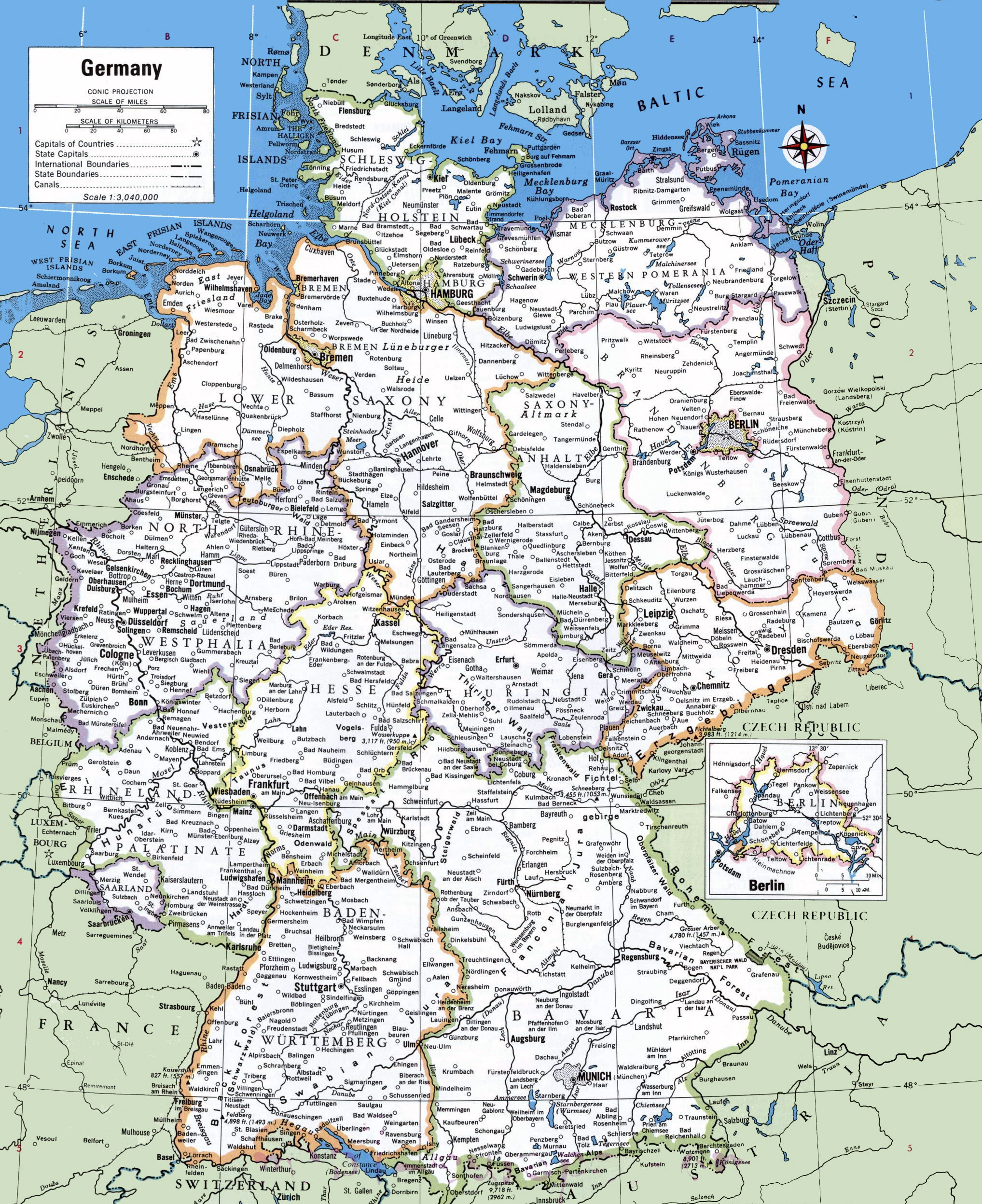
In Saxony-Anhalt, the far-right Alternative for Germany (AfD) surged to a landslide victory under lead candidate Ulrich Siegmund. Weeks later, the political earthquake spread north and straight into the nation's capital. In Mecklenburg-Western Pomerania—once a reliable stronghold for the center-right—the AfD captured 38.2 percent of the vote. Merz’s Christian Democratic Union (CDU) collapsed to just 4.9 percent, slipping beneath the mandatory 5 percent threshold required to enter a state parliament for the first time since German reunification.
Meanwhile, in the Berlin city-state election on September 20, the center collapsed from the opposite direction. The far-left Linke party finished first with 25.7 percent, putting lead candidate Elif Eralp in position to potentially become the capital's first Turkish-born mayor. The CDU fell to second place at 18.8 percent, while Merz’s junior coalition partner, the center-left Social Democratic Party (SPD), plunged to 12.1 percent—a humiliating result for a party that treated Berlin as its political home turf for decades.
Why Merz’s Economic Shock Therapy Backfired
To understand why voters are abandoning the center in droves, you have to look at the economic squeeze gripping Germany's industrial heartland. Merz entered the Chancellery 16 months ago promising a Wirtschaftswende—an economic turnaround designed to pull Germany out of stagnation and shrink the AfD's protest vote.
Instead, the government’s austerity-minded reform agenda triggered widespread anger. Facing tight fiscal constraints alongside mounting defense and industrial commitments, the coalition moved forward with unpopular structural changes, including planned cuts to statutory pension and healthcare systems. By September 2026, hundreds of thousands of demonstrators marched in the streets against the cuts, while tens of thousands of autoworkers staged nationwide protests over waves of layoffs at major manufacturers like Volkswagen and its network of suppliers.
Political analysts point out that the crisis is as much about persuasion as policy. Thomas Biebricher, a political scientist at Frankfurt's Goethe University, noted in The Guardian that Merz has struggled with a fundamental requirement of leadership: explaining why short-term economic sacrifices are necessary so voters accept them. Merz, a former BlackRock executive, has leaned into blunt, unapologetic messaging. Addressing German Employer's Day in October, he declared he had no intention of becoming "the nation's darling," a posture critics within his own party warn reads as aloofness rather than resolve.
Even his longtime intra-party rival, former Chancellor Angela Merkel, broke her usual reserve to describe the September results as a "real turning point" in the history of the Federal Republic.
The Firewall Dilemma
For decades, Germany’s post-war political stability rested on the Brandmauer—the "firewall" agreement under which mainstream democratic parties refuse to cooperate or form coalitions with the far right. That barrier is now buckling under simple parliamentary math.
When a party wins nearly two-fifths of the vote in an eastern state, excluding it leaves mainstream parties scrambling to cobble together fragile, ideologically mismatched coalitions just to reach a majority. In Saxony-Anhalt, AfD lawmaker Tobias Rausch was elected president of the state parliament, igniting fierce debate over whether the firewall is holding in practice or eroding from the inside out.
Merz’s strategy for neutralizing the AfD—adopting tougher rhetoric on migration and deportations to win back conservative defectors—has yielded diminishing returns. Critics argue that echoing hardline talking points only validates the AfD's framing while alienating moderate voters, driving progressive and working-class residents toward Die Linke in urban centers like Berlin. On the foreign policy front, both the AfD and the populist Sahra Wagenknecht Alliance (BSW) have capitalized on voter fatigue over inflation and energy costs, pushing parliamentary motions challenging Berlin's posture toward Russia and Ukraine.
Internal Mutiny and the Road to North Rhine-Westphalia
The external pressure from opposition parties is matched by growing restlessness inside Merz’s own coalition. Earlier in the summer of 2026, a personnel controversy surrounding parliamentary leader Jens Spahn and a rocky July cabinet reshuffle prompted private discussions among Union lawmakers about whether Merz was the right leader to carry the party forward.
Although senior CDU figures held off on any leadership challenge prior to the autumn state elections, the breathing room is shrinking fast. The CDU's youth wing, the Young Union, used its October gathering in Bonn to demand faster, more decisive action from the Chancellery. Meanwhile, SPD figures have openly warned after the Berlin and Mecklenburg defeats that the coalition cannot simply carry on with business as usual.
Merz has brushed aside speculation about a confidence vote or early exit, arguing that toppling the government would only hand a victory to anti-democratic forces. Yet every governing party in Berlin knows the clock is ticking toward April 2027, when voters in North Rhine-Westphalia—Germany’s most populous state and Merz’s own political home—head to the polls.
Vowing to fight extremism from a podium in Berlin is easy. Convincing anxious German workers and pensioners that the political center still works for them before April arrives is the only test that matters.


