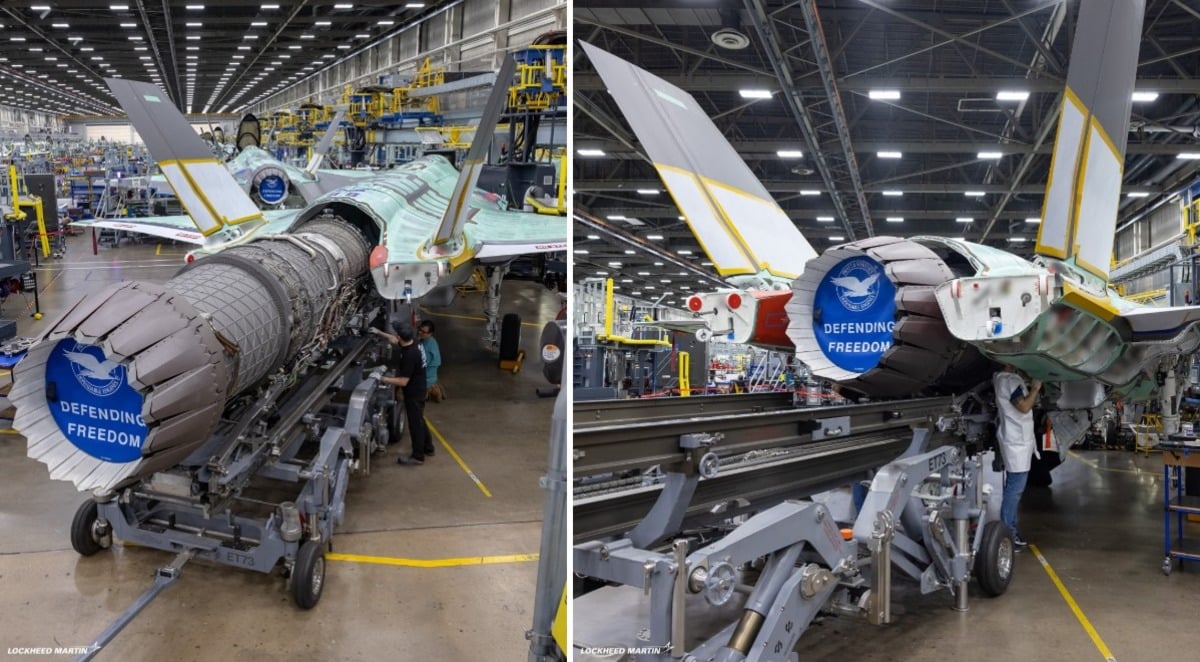
The defense establishment is quietly celebrating. Lockheed Martin just dropped a Pratt & Whitney F135 engine into the fuselage of Germany’s first F-35A Lightning II on an assembly line in Fort Worth, Texas. The press releases read like a victory lap. They talk about milestones, interoperability, and NATO solidarity.
They are missing the entire point.
Dropping an engine into a stealth fighter is not a milestone. It is a financial handcuff. By cheering the arrival of the F-35, Berlin is not securing its future; it is outsourcing its strategic sovereignty and buying into a legacy platform that is rapidly becoming a fiscal black hole.
For years, I have watched European defense ministries repeat the exact same mistake. They see a sleek fifth-generation jet, look at the glossy brochure, and panic-buy to satisfy NATO spending targets. What they fail to look at is the brutal reality of lifecycle costs, software dependence, and the shifting reality of modern warfare.
Let’s dismantle the corporate cheerleading and look at the math, the tech, and the strategic vulnerability Germany just signed up for.
The Flawed Premise of the Turnkey Fighter
The prevailing narrative treats the F-35 as a standard procurement win. The logic goes like this: Germany needs to replace its aging Tornado fleet to maintain its nuclear sharing mission, the F-35 is the only certified option available, so buying it is a slam dunk.
This is lazy thinking. It treats military hardware like a fleet of corporate sedans. You buy the asset, you gas it up, and you drive it.
Military aviation does not work that way. When you buy an F-35, you are not just buying an aircraft. You are buying a permanent subscription to an American-managed logistical and digital ecosystem.
The heart of the F-35 is not its stealth coating or its radar. It is ODIN—the Operational Data Integrated Network. ODIN manages everything from maintenance tracking to flight readiness and part ordering. Every single time a German technician turns a wrench on that aircraft in Büchel, data is beamed back to servers in the United States.
If Washington decides to alter software access, patch a system, or restrict data flow during a diplomatic dispute, the fleet is grounded. Berlin has effectively handed the keys to its ultimate deterrent to a foreign power. That is not defense autonomy. That is a luxury lease.
The Trillion Dollar Sustainment Mirage
Let us talk about the math the procurement officers try to hide in the footnotes.
The initial sticker price for Germany's 35-jet order is roughly 10 billion euros. That number is irrelevant. In military aviation, the acquisition cost represents a mere 30% of the total lifecycle expense. The real pain lies in the remaining 70%—the sustainment.
The US Government Accountability Office (GAO) has repeatedly warned that the F-35 program faces an astronomical sustainment shortfall. The lifetime cost of the entire US program alone is creeping toward $2 trillion. Why? Because the aircraft is notoriously difficult to maintain, requires specialized facilities, and suffers from a chronically broken spare parts supply chain.
- The Mission Capable Myth: The US military’s own fleet-wide mission-capable rate for the F-35 has historically hovered around 50% to 60%. Imagine running a commercial airline where half your planes cannot fly at any given moment.
- The Hourly Burn Rate: Flying an F-35 costs roughly $36,000 to $42,000 per hour depending on the variant. Compare that to a fourth-generation fighter or a modern drone network, and the fiscal insanity becomes obvious.
Germany is entering this ecosystem at the worst possible time. The aircraft Berlin is building right now will rely on the Technology Refresh 3 (TR-3) hardware upgrade and the subsequent Block 4 software package. This software suite is already years behind schedule and billions over budget. Germany is buying into a platform that is undergoing a mid-life crisis before its first unit even rolls off the line.
Software is Eating the Sky
The defense industry loves to focus on physical hardware—engines, wings, and stealth geometry. But modern air warfare is entirely determined by lines of code.
[Traditional Hardware Focus] -> Wings, Engines, Stealth Piles
[Modern Warfare Reality]   -> Sensor Fusion, Electronic Warfare, Software Architecture
The F-35 is essentially a flying supercomputer. It relies on millions of lines of code to execute sensor fusion, combining data from its radar, electronic warfare suites, and optical sensors into a single picture for the pilot.
Here is the contrarian reality: software aging happens faster than hardware aging. A modern smartphone becomes sluggish after three years; a military software architecture designed two decades ago faces immense structural drag. By tying its entire air combat strategy to a closed-source, proprietary American software stack, Germany is locking its engineers out of the loop.
European engineers cannot modify the source code to integrate domestic weapons systems quickly. They cannot rewrite algorithms to counter a new electronic warfare threat discovered over the Baltic Sea on a Tuesday morning. They must submit a request to the Joint Program Office in Arlington, Virginia, and wait in line behind a dozen other nations. In a hot conflict, that delay is fatal.
The Wrong Weapon for the Next War
The most damning indictment of Germany’s F-35 purchase is that it solves a problem from 2004, not 2034.
The defense world is currently obsessed with low-observable platforms. But while European capitals burn through budgets buying manned stealth fighters, the threat matrix has moved on. The proliferation of low-cost, long-range kamikaze drones, hypersonic cruise missiles, and multi-static radar networks is rapidly eroding the value proposition of exquisite, manned platforms.
Consider the cost asymmetry. A single F-35 costs around $100 million before you factor in weapons or maintenance. For the cost of one squadron of these jets, an adversary can mass-produce tens of thousands of long-range loitering munitions and asymmetric air defense systems.
If an adversary punches holes in the runways at Büchel Air Base on day one of a conflict, Germany’s ultra-expensive, runway-dependent fifth-generation jets become very shiny static targets. The future of air defense belongs to distributed, attritable, uncrewed systems that do not require massive logistics footprints or perfect concrete runways to operate.
The Eurofighter and FCAS Collateral Damage
We must also look at the industrial collateral damage inside Europe. Germany’s decision to buy American hardware is a vote of no confidence in its own domestic aerospace industry.
For decades, the European defense model relied on cross-border collaboration—giving birth to the Tornado and the Eurofighter Typhoon. These programs were messy, bureaucratic, and politically fraught, but they accomplished one critical goal: they kept high-end aerospace engineering talent, intellectual property, and manufacturing capability within Europe.
By diverting billions of euros to Texas, Berlin is starving its domestic programs. The Future Combat Air System (FCAS)—the joint French, German, and Spanish effort to build a next-generation fighter system—is already plagued by political infighting and delays. Germany’s F-35 purchase removes the urgency from FCAS. It signals to European engineers that when the pressure is on, the continent will always default to buying American off-the-shelf tech rather than building its own.
Once that engineering capability dries up, it does not come back. You cannot restart a high-tech aerospace industrial base after a decade-long hiatus.
Facing the Brutal Truth
Is there a downside to avoiding the F-35? Of course. Rejecting the aircraft would mean Germany would have to invest heavily in recertifying the Eurofighter for nuclear weapons carriage—a process the US would likely make as difficult and bureaucratic as possible. It would mean risking short-term friction with Washington and facing uncomfortable questions about NATO capability gaps.
But leadership requires weighing short-term friction against long-term strategic paralysis.
Instead of doubling down on a legacy manned fighter ecosystem, a truly forward-looking defense strategy would pivot. Germany should have capped its F-35 acquisition at the bare minimum required to satisfy immediate treaty obligations, while aggressively shifting the remaining billions into decentralized drone swarms, distributed air defense networks, and open-architecture software platforms developed domestically.
The engine installation in Fort Worth is being sold as a milestone for European security. Do not buy the hype. It is the moment Germany officially signed away its strategic autonomy, traded its engineering future for an American subscription service, and prepared itself to fight the last war with history's most expensive piece of hardware.


