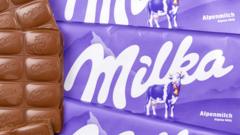
You’ve probably felt that weird sense of betrayal at the grocery store lately. You pick up a chocolate bar that looks the same as it did last month, but it feels lighter. The wrapper is just as big, the price is the same, and the branding hasn’t changed a bit. This isn't just your imagination or a bad day at the office. It’s a calculated retail strategy called shrinkflation. And in Germany, the courts just decided that Mondelez, the giant behind Milka, went too far.
A Regional Court in Düsseldorf recently handed down a verdict that should make every snack food executive in Europe sweat. They ruled that the way Milka sold its "Stray Strawberry" chocolate bars was misleading to consumers. Why? Because the company kept the outer packaging the same size while cutting the actual weight of the chocolate from 100 grams down to 92 grams.
It’s a win for everyone tired of paying more for less. It’s also a massive warning shot to brands that think they can hide price hikes inside oversized cardboard boxes.
How the Milka Trick Actually Worked
The consumer rights group Consumer Association of North Rhine-Westphalia (VZNRW) brought this case forward. They noticed something sneaky about the 92-gram Milka bar. Even though the bar was eight percent smaller, the wrapper was identical in dimensions to the standard 100-gram version.
When you see two bars on a shelf and they’re the same height and width, your brain assumes they’re the same amount of food. That’s basic human psychology. The German court agreed that shoppers don't spend their lives reading the fine print of grammage on every single item they toss in their cart. We shop by visual cues.
The court noted that using the same size packaging for a smaller product creates a "misleading impression." It’s basically a visual lie. If the product shrinks, the box needs to shrink with it, or the brand needs to be incredibly loud about the change. Mondelez didn't do that. They let the air in the package do the talking, or rather, the hiding.
Shrinkflation Is More Than Just Inflation
We're all used to things getting more expensive. That’s inflation. We don't like it, but it’s transparent. When a bag of chips goes from $3.00 to $3.50, you see the hit to your wallet immediately. You can decide right then if those chips are worth the extra fifty cents.
Shrinkflation is different. It’s "hidden" inflation. By reducing the weight of the product instead of raising the price, companies bypass the "pain point" of the consumer. You don’t feel the sting at the register. You feel it when you open the bag and find it half-empty.
The Milka case is a perfect example of why this is a legal minefield. In Germany, the Calibration Act and various consumer protection laws aim to prevent "slack fill"—that's the technical term for the empty space in a package. Companies argue they need that space for "technical reasons" like protecting the product during shipping. The court in Düsseldorf didn't buy that excuse for a chocolate bar that used to fit perfectly in that same wrapper at 100 grams.
Why the Courts are Finally Stepping In
For years, brands got away with this. They’d shave off a few grams here and a few milliliters there. Who’s going to sue over eight grams of chocolate? Well, consumer advocacy groups finally had enough.
The German court’s decision hinges on the idea of "consumer expectation." If a brand has sold a product in a specific size for decades, the consumer has a reasonable expectation that the size remains constant unless clearly stated otherwise.
The Transparency Gap
Most people shop on autopilot. You’ve got five minutes before you need to pick up the kids, and you're grabbing the essentials. You aren't a walking calculator. Brands know this. They count on your "inattentiveness."
This ruling argues that the burden of honesty lies with the manufacturer, not the shopper. You shouldn't need a magnifying glass to figure out if your favorite snack just went on a diet without telling you.
What Mondelez Argued
Naturally, Mondelez defended the move. Large corporations usually point to rising raw material costs—like the skyrocketing price of cocoa—as the reason for these changes. They claim they're trying to keep products affordable for the average family.
But there’s a difference between adjusting a recipe or a price and using deceptive packaging. The court wasn't telling Milka they couldn't sell a 92-gram bar. They were telling them they couldn't sell it in a 100-gram-sized coat.
The Cocoa Crisis Is Real But Not an Excuse
To be fair to the chocolate industry, the price of cocoa has been insane. Bad harvests in West Africa, driven by climate change and crop disease, sent prices to record highs in late 2023 and 2024. Every chocolate maker is struggling.
However, the legal issue isn't about why the chocolate is smaller. It's about how that smaller size is presented. If the cost of cocoa goes up 50%, you can raise the price, or you can make a smaller bar. But if you make a smaller bar, you don’t get to pretend it’s the old one.
The German ruling is part of a broader European movement against "price trickery." France has also been aggressive here, with some supermarkets even putting stickers on products to warn customers about shrinkflation. It’s a level of transparency we rarely see in North America.
Looking for the Signs of a Shrunken Product
You can’t rely on the courts to catch every single instance of this. You have to be your own detective. Here’s what you should actually look for when you're in the aisles.
Check the unit price. This is the most important number on the shelf tag. It tells you how much the product costs per pound, per ounce, or per 100 grams. If the unit price has jumped but the retail price is the same, the product has likely shrunk.
Notice changes in packaging texture or "ribbing." Sometimes brands add indentations to the bottom of plastic jars (like peanut butter) to displace volume. The jar looks the same size from the outside, but the "dimple" at the bottom is deeper, meaning there's less actual food inside.
Be wary of "New Look, Same Great Taste" labels. Often, a package redesign is the perfect cover for a weight reduction. If the box looks shinier and more modern, check the weight in the corner. It’s a classic misdirection play.
What Happens Next for Big Brands
This ruling is a massive headache for Mondelez, but it's a win for the VZNRW and the "vulnerable consumer." It sets a precedent that could lead to a wave of similar lawsuits across the EU.
If you're a brand manager right now, you're looking at your entire product line. You’re realizing that "efficient packaging" might actually be "illegal packaging." We might see a return to more honest sizing, or at least more "New Lower Weight" stickers—though brands hate admitting that.
The Milka bar case proves that the "little guy" can actually win when the rules are clear. It forces companies to treat their customers like partners rather than targets to be tricked.
Don't just take it. If you see a product that has clearly shrunk while the box stayed big, report it to consumer protection agencies. Use your phone to take a photo of the old weight vs. the new weight. Your wallet will thank you.
Stop trusting the silhouette of the box. Start reading the weight. It's the only way to make sure you're actually getting what you paid for.