The cycle of kinetic exchange between the United States and Iran is not a series of random aggressive outbursts but a calculated execution of Proportional Escalation Theory. When news reports indicate that both nations have launched strikes while simultaneously discussing a ceasefire, they are describing a state of "Violent Diplomacy." This mechanism allows both actors to calibrate their military pressure to achieve specific concessions at the negotiating table without triggering a total theater war. Understanding this dynamic requires moving past surface-level headlines and analyzing the structural incentives that drive both Washington and Tehran.
The Triad of Strategic Constraints
Every kinetic action taken by either party is filtered through three primary constraints that prevent a full-scale regional conflagration.
- The Threshold of Sovereignty: Iran utilizes "gray zone" tactics, employing regional proxies to maintain plausible deniability. By striking US assets through third-party militias, Tehran tests American resolve without providing a direct casus belli for a strike on Iranian soil. Conversely, US retaliatory strikes typically target these proxy hubs rather than Iranian command centers to avoid forced escalation.
- The Economic Chokepoint Variable: The Strait of Hormuz acts as a physical circuit breaker. Any escalation that threatens the flow of 20% of the world's oil supply creates an immediate global economic shock. Neither the US—wary of domestic inflation—nor Iran—dependent on illicit oil revenue—benefits from a total maritime shutdown.
- Domestic Political Lifecycles: For the US administration, a new war in the Middle East is a political liability. For the Iranian leadership, maintaining a state of "permanent resistance" is a necessity for internal legitimacy, yet a direct war could threaten the regime's very survival.
The Mechanics of the "Strike and Talk" Feedback Loop
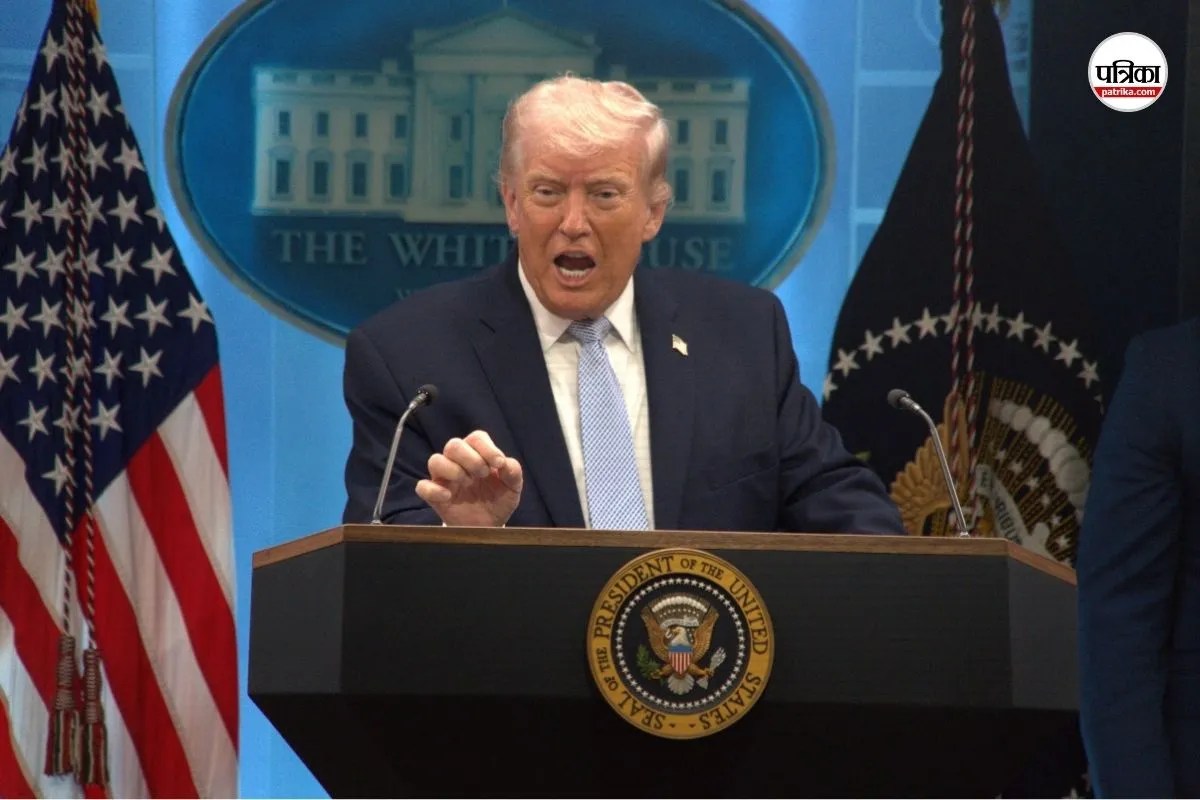
The recent assertion by Donald Trump regarding ongoing ceasefire talks amidst active strikes highlights a phenomenon known as Competitive Bargaining. In this framework, military strikes function as a form of communication rather than an attempt at total victory.
The logic follows a specific sequence:
- Signaling Intent: A strike is calibrated to demonstrate a specific capability (e.g., precision drone accuracy or missile range) to prove that the cost of non-compliance is high.
- Establishing a New Baseline: Each strike attempts to shift the "status quo" in the aggressor's favor before a ceasefire is signed.
- Leveraging Damage for Diplomatic Credit: The damage inflicted becomes a "bargaining chip." One side offers to cease further strikes in exchange for sanction relief or troop withdrawals.
This creates a paradox where increased violence often signals that a deal is nearing completion. Both sides are attempting to secure the strongest possible position before the window for negotiation closes.
Tactical Asymmetry and the Cost Function of Proxy Warfare
The US and Iran operate on different economic and military cost functions. The US relies on high-cost, high-precision kinetic assets. A single interceptor missile used by a US destroyer can cost upwards of $2 million, while the Iranian-manufactured drone it destroys may cost less than $20,000.
The Attrition Disparity
This creates an Attrition Disparity where the defender (the US) incurs a significantly higher financial and logistical cost to maintain a defensive posture than the aggressor (Iran-backed groups) incurs to challenge it. Tehran leverages this by saturating air defenses with low-cost munitions, forcing the US to deplete expensive stockpiles. This is not a military failure but a calculated economic strategy designed to make the long-term US presence in the region fiscally and politically unsustainable.
Strategic Depth vs. Technological Superiority
Iran’s "Strategic Depth" is built on its network of regional allies across Iraq, Syria, Lebanon, and Yemen. While the US possesses undisputed technological superiority, it lacks the local footprint to control the "human terrain" without a massive troop surge. Iran uses this to its advantage by creating a multi-front dilemma; a strike in Iraq can be met with a counter-response in the Red Sea, forcing the US to distribute its assets thinly across a massive geographical area.
The Ceasefire Architecture and its Inherent Instability
A "ceasefire" in this context is rarely a formal treaty. Instead, it is typically a Tacit Understanding—an unwritten agreement to return to a baseline level of manageable hostility. The fragility of these agreements stems from the "Spoilers" within the system.
Smaller militia groups often have their own local agendas that do not perfectly align with Tehran’s grand strategy. If a local commander decides to launch an unauthorized strike, it can trigger a retaliatory chain that neither Washington nor Tehran intended. This "Agency Problem" means that even when both primary actors want peace, the decentralized nature of proxy warfare makes a durable ceasefire difficult to maintain.
Measuring Success in Non-Binary Conflict
In traditional warfare, success is measured by captured territory or destroyed divisions. In the US-Iran shadow war, success is measured by Deterrence Credibility.
If the US strikes back and the frequency of proxy attacks drops for a fiscal quarter, the mission is deemed a tactical success. If Iran successfully forces the US to redirect a carrier strike group away from the Persian Gulf, they claim a strategic victory. Most analysts miss the point by looking for a "winner," when the actual objective for both sides is the Avoidance of Worst-Case Outcomes while maximizing marginal influence.
The Failure of "Maximum Pressure" Metrics
The previous "Maximum Pressure" campaign demonstrated that economic strangulation does not necessarily lead to behavioral change if the targeted regime perceives the change as an existential threat. When the cost of compliance (regime collapse) exceeds the cost of defiance (economic sanctions and occasional strikes), the regime will always choose defiance. This is why the current rhetoric focuses on "ceasefires" and "talks" rather than "surrender."
The transition from the Trump-era isolation/pressure model to a more transactional "strike and talk" model suggests a realization that neither side can fundamentally alter the other's core nature. Instead, they are managing a permanent rivalry.
The Strategic Path Forward
The current trajectory indicates that any ceasefire will be transactional and temporary. To stabilize the region, the strategy must shift from reactive kinetic strikes to a Multilateral Containment Framework.
- Decoupling Proxies from the Center: Future negotiations must treat proxy activity not as an Iranian side-effect, but as the core issue. Decoupling the financial flows from Tehran to its regional affiliates is more effective than striking the affiliates themselves.
- Recalibrating the Cost of Defense: The US must integrate lower-cost counter-UAS (Unmanned Aircraft Systems) technologies, such as directed energy weapons or electronic warfare, to break the unfavorable $100-to-$1 cost ratio currently favoring Iran.
- Formalizing Red Lines: The current ambiguity regarding what constitutes an "acceptable" level of provocation encourages testing of limits. Establishing clear, publicly stated consequences for specific actions reduces the risk of accidental escalation due to miscalculation.
The immediate play is not to seek a grand "peace deal," which is currently impossible given the ideological divide. The objective is to refine the Rules of Engagement to ensure that the inevitable future exchanges remain below the threshold of total war.