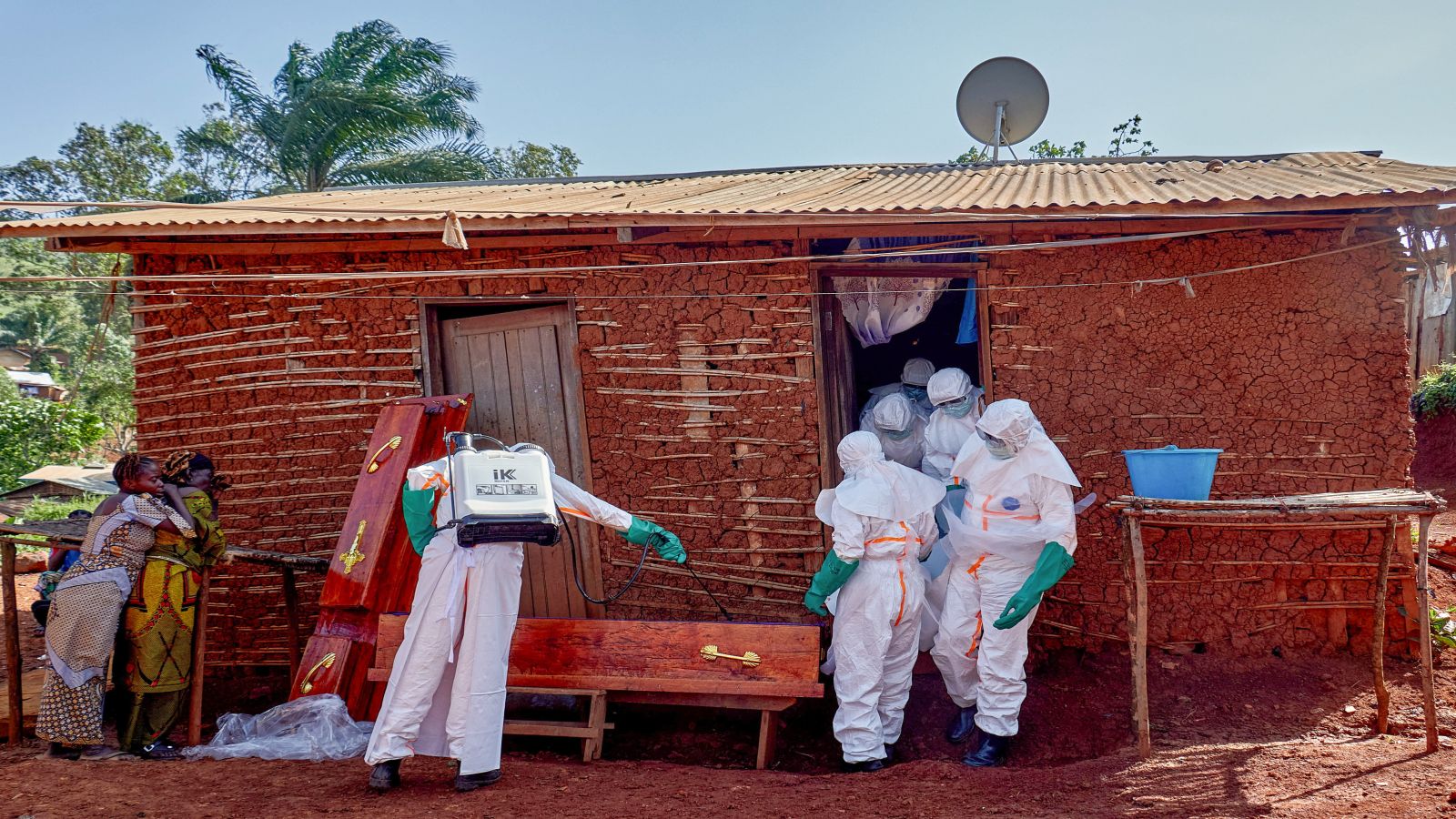
The operationalization of state sovereignty during a public health emergency is shifting from domestic containment to strategic offshoring. The Donald Trump administration's decision to construct a 50-bed Ebola isolation and quarantine facility at the Laikipia Air Base in Nanyuki, Kenya, introduces a novel framework for biosecurity risk management. This strategy seeks to decouple external exposure from domestic contamination risk by intercepting asymptomatic, exposed American nationals before they reach United States territory.
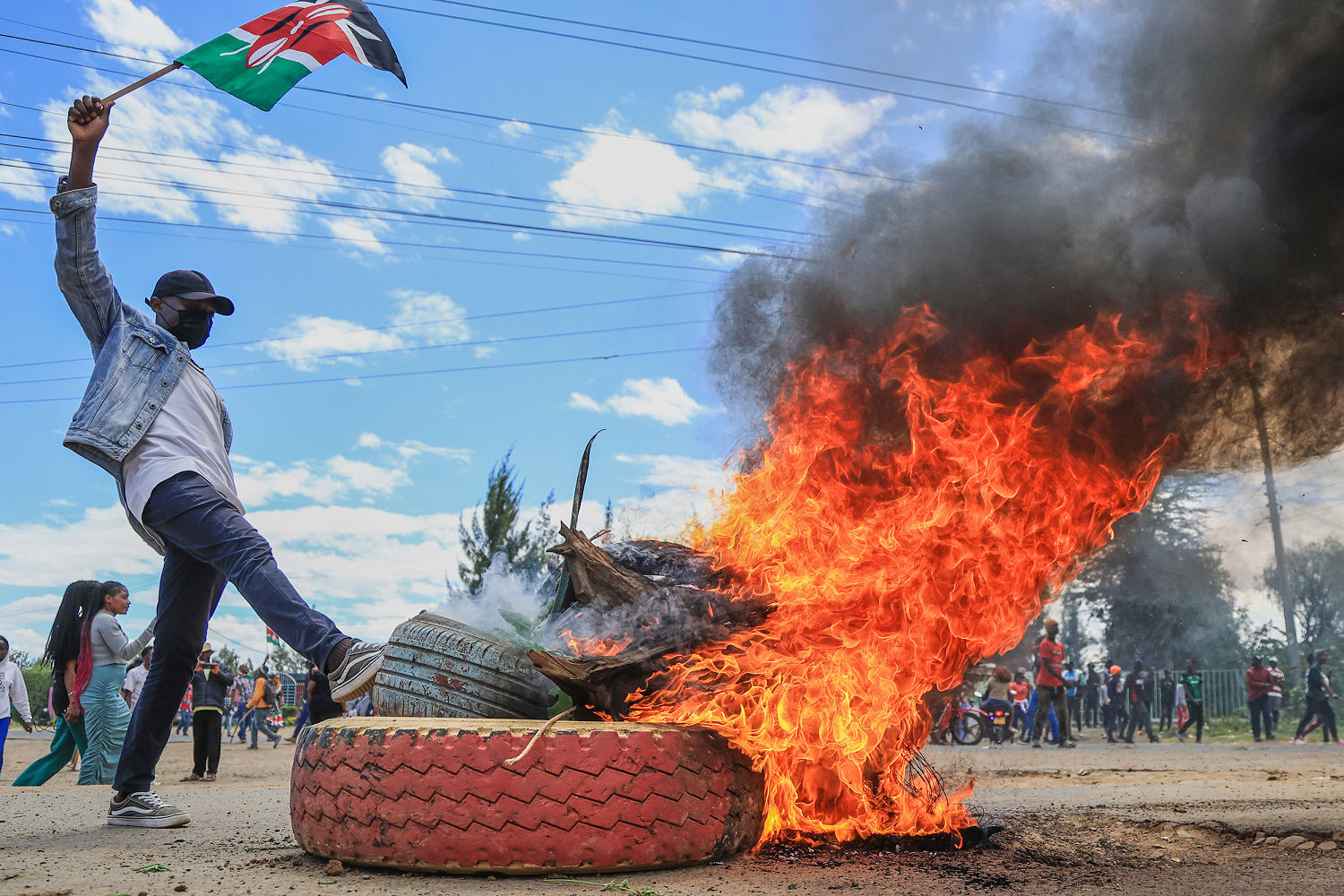
This model, however, has encountered severe structural friction, resulting in a three-week High Court injunction issued by Judge Patricia Nyaundi and civil unrest that has cost two lives. The crisis reveals a fundamental misalignment between the unilateral biosecurity objectives of the United States and the domestic legal, social, and infrastructural realities of the host nation.
The Tri-Partite Risk Transfer Model
The U.S. containment strategy is governed by a risk-minimization formula designed to eliminate the long-range transportation of high-consequence pathogens onto domestic soil. During the 2014–2016 West African Ebola outbreak, the U.S. utilized domestic biocontainment units to treat infected citizens. The current approach to the Bundibugyo strain outbreak in the Democratic Republic of the Congo (DRC) and Uganda rejects that precedent. The framework relies on three core operational pillars:
- Forward-Deployed Quarantine: Intercepting individuals exposed to the pathogen within the regional theater of operations, thereby eliminating the 12-hour medical evacuation (medevac) flight risk profile to Washington.
- Asymptomatic Isolation via Uniformed Personnel: Staffing the 50-bed Laikipia facility with members of the U.S. Public Health Service to maintain strict clinical protocols under sovereign control.
- Secondary Offshoring of Symptomatic Cases: Implementing an operational protocol where patients who convert from asymptomatic to symptomatic are evacuated out of Kenya to third-party destinations, rather than being returned to the United States.
+---------------------------+       +----------------------------+       +----------------------------+
|  Regional Ebola Exposure   | ----> | Asymptomatic Interception  | ----> | Symptom Onset (Conversion) |
| (DRC / Uganda Outbreak)   |       | (Laikipia Air Base, Kenya) |       |  (Evacuation Out of Kenya) |
+---------------------------+       +----------------------------+       +----------------------------+
                                                  |                                    |
                                                  v                                    v
                                        [Eliminates US Flight]               [Prevents US Admission]
This structural architecture exposes the primary asymmetry of the arrangement. While the U.S. minimizes its domestic biological exposure vector, it transfers the initial triage and containment burden to a regional hub.
Structural Bottlenecks and Institutional Friction
The implementation of this offshored biosecurity model has failed due to a lack of institutional alignment, operating under a flawed assumption of seamless host-nation execution. This breakdown manifests across three distinct friction points.
Constitutional and Judicial Overrides
The Kenyan executive branch, led by President William Ruto and Health Minister Aden Duale, attempted to authorize the facility via unilateral diplomatic agreement. This triggered immediate pushback from civil society and legal watchdogs, including the Law Society of Kenya and the Katiba Institute.
The High Court's intervention rests on the government's failure to satisfy constitutional mandates regarding public participation and parliamentary oversight. By ordering the state to disclose all classified operational protocols and agreements within seven days, the judiciary has reasserted domestic legal sovereignty over bilateral military-medical agreements.
Biosecurity Labor Friction
The Kenya Medical Practitioners, Pharmacists and Dentists Union (KMPDU) introduced a major operational roadblock by threatening a nationwide strike. The union’s logic exposes an irreconcilable double standard in global health policy.
If a 12-hour medevac flight is deemed an unacceptable biosecurity risk for the U.S. domestic population, the introduction of those same exposed vectors into Kenyan airspace and territory constitutes an equivalent, uncompensated risk to the host nation's medical workforce. The local healthcare system faces a potential containment failure without possessing the biocontainment infrastructure common in the Global North.
Localized Contamination Risk Vectors
The selection of Laikipia Air Base as the containment site assumes a perfect barrier between the facility and the surrounding population. In practice, military bases are porous economic ecosystems. Hundreds of local Kenyan civilians enter the base daily to provide manual labor, logistics, and maintenance support.
Because the Bundibugyo strain currently lacks an approved vaccine or targeted therapeutic regimen, local leaders—including Laikipia Governor Joshua Irungu—correctly identify these workers as a direct transmission vector into Nanyuki and the broader domestic population.
The Political Economy of Biosecurity Subsidies
To offset the host nation's risk, the U.S. State Department pledged a $13.5 million financial package dedicated to Kenya's national Ebola preparedness. This transaction attempts to convert a systemic biosecurity risk into a financial asset for the host country. However, the economic valuation of this subsidy is flawed when measured against the potential costs of a containment failure.
The capital required to contain a localized outbreak of the Bundibugyo virus in a fragile healthcare system far exceeds the proposed $13.5 million influx. The financial package functions as a political palliative rather than an equalization of risk.
This mismatch explains the conflicting rhetoric from leadership. President Ruto and Health Minister Duale have publicly framed the facility as a bilateral asset that will serve "everyone," including Kenyan citizens, during a regional crisis. Conversely, U.S. diplomatic sources maintain that the facility's primary mission is the isolation of American nationals. This divergence reveals an unsustainable strategy: the Kenyan executive must misrepresent the facility's exclusivity to its public to justify the sovereign risk, while the U.S. requires exclusivity to justify its capital expenditure and operational control.
Strategic Forecast
The current impasse at Laikipia Air Base demonstrates that offshored biosecurity models cannot be executed solely through executive agreements and financial subsidies. The enforcement of the judicial injunction until the June 23 hearing halts all legal construction and deployment, even as U.S. military transport aircraft continue to land personnel and hardware at the airfield. This ongoing deployment in defiance of a court freeze will likely worsen civil unrest in Nanyuki, increasing political costs for the Ruto administration.
The United States must adjust its strategy. It cannot successfully operate a high-consequence pathogen isolation center within a hostile local population and alongside an adversarial medical union. The U.S. Public Health Service will likely face an unworkable operating environment if local labor strikes block access to basic base utilities and logistical supply chains.
The U.S. administration will likely be forced to consider two options: either amend the facility's charter to grant verified, co-equal treatment and diagnostic access to Kenyan medical personnel—backed by an order-of-magnitude increase in infrastructure investment—or abandon the Laikipia footprint entirely in favor of shipborne maritime isolation platforms or unpopulated sovereign territories.
Using sovereign developing nations as geographic buffers for high-consequence biological pathogens is no longer politically viable when faced with independent judiciaries and organized domestic labor.