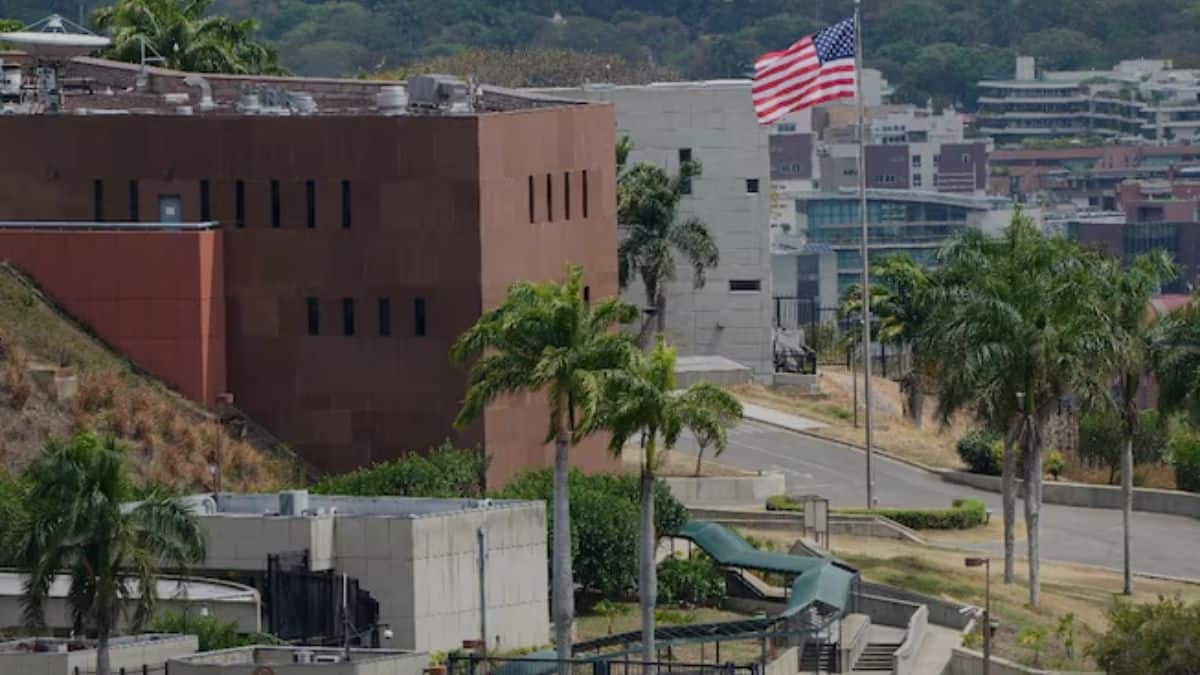
The restoration of the United States diplomatic presence in Caracas is not a symbolic gesture of reconciliation but a calculated recalibration of the Hemispheric Energy and Security Architecture. After years of maximum pressure and the resulting diplomatic vacuum, the U.S. State Department is transitioning from a policy of isolation to one of managed engagement. This shift is driven by three measurable imperatives: the stabilization of global heavy crude markets, the mitigation of regional migration externalities, and the erosion of adversary influence—specifically from the BRICS+ bloc—within the Western Hemisphere.
The Tri-Pillar Framework of Re-engagement
The decision to raise the flag at the U.S. Embassy in Caracas functions as the "Initial Operating Capability" (IOC) of a broader strategic pivot. To understand the mechanics of this shift, one must analyze the interaction between three distinct pillars:
1. The Energy Arbitrage Logic
Venezuela holds the world's largest proven oil reserves, estimated at 303 billion barrels. However, the technical debt accrued by PDVSA (Petróleos de Venezuela, S.A.) due to underinvestment and sanctions has created a structural bottleneck in global supply.
The U.S. strategy now prioritizes "Energy Security via Proximity." By establishing a physical diplomatic presence, the U.S. provides a de facto security guarantee for Western multi-nationals—such as Chevron, Eni, and Repsol—to expand their General Licenses. The objective is to increase Venezuelan output from the current ~800,000 barrels per day (bpd) toward a mid-term target of 1.2 million bpd. This incremental volume is critical for Gulf Coast refineries, which are specifically configured to process the heavy, sour crude grades that Venezuela produces.
2. The Migration Cost Function
The collapse of the Venezuelan economy resulted in the displacement of over 7.7 million citizens. For the United States, this represents a domestic policy crisis quantified by the rising "Fiscal Burden per Encounter" at the southern border. Diplomatic normalization is the prerequisite for high-volume repatriation flights and the implementation of in-country processing centers. Without an embassy, the legal and logistical friction of deportations and visa processing remains insurmountable. Re-engagement is a tactical move to move the "Border" further south, utilizing the Caracas mission as a hub for regional migration management.
3. Geopolitical Denial of Space
The "Strategic Vacuum" created by the U.S. departure in 2019 allowed the Russian Federation, China, and Iran to deepen their footprint in the Caribbean basin. Russia provided financial lifeboats through Rosneft, while Iran assisted with refinery repairs and condensate swaps. The U.S. reentry is a "Denial Operation." By offering a path toward the Western financial system (SWIFT) and the lifting of sectoral sanctions, the U.S. creates an opportunity cost for the Maduro administration’s reliance on extra-hemispheric actors.
Mechanics of the Diplomatic Escalation Ladder
Diplomatic normalization rarely occurs in a vacuum. It follows a strict sequence of "Reciprocal De-escalation." The current phase is characterized by Restricted Sovereignty Recognition. While the flag flies, the U.S. maintains a dual-track approach: acknowledging the de facto control of the Maduro government while theoretically upholding the principles of the Barbados Agreement.
The Credibility Gap in Electoral Guarantees
The primary risk factor in this strategy is the "Autocratic Consolidation Trap." The U.S. assumes that economic incentives will compel the Venezuelan executive branch to permit competitive elections. However, game theory suggests that for an incumbent regime facing potential prosecution or total loss of power, the "Exit Cost" is higher than any "Stay-in-Power Bonus" provided by sanctions relief.
Therefore, the U.S. has adopted a Modular Sanctions Architecture. Unlike the "All-or-Nothing" approach of 2019, the current framework utilizes:
- Time-Limited Licenses: General License 44 and its successors are issued for six-month intervals, creating a "Performance Review" cycle.
- Individual vs. Sectoral Bifurcation: Maintaining personal sanctions on key regime figures while easing restrictions on the oil and gas sector.
- The Escrow Mechanism: Proposals to place oil revenues into controlled accounts that can only be used for humanitarian imports (food, medicine, electrical grid repair).
Structural Bottlenecks to Full Normalization
Despite the optic of a flag-raising ceremony, four structural variables prevent a rapid return to 2010-level relations.
Infrastructure Atrophy
The Venezuelan power grid and water systems are in a state of advanced decay. Estimates suggest that stabilizing the national grid requires an immediate capital injection of $15 billion to $20 billion. Diplomatic presence allows for the assessment of these needs, but private capital will not flow until the "Country Risk Premium" is lowered through legal reforms that the current Venezuelan National Assembly is hesitant to pass.
Debt Overhang and the Paris Club
Venezuela and PDVSA owe approximately $150 billion to international creditors. The "Default Status" of these bonds complicates any reinvestment strategy. U.S. diplomatic staff must navigate the "Creditor Paradox": any increase in oil production increases the value of the claims held by bondholders, many of whom are U.S.-based institutional investors who have been sidelined for years.
The "Petro-State" Dependency Loop
The Venezuelan state remains a mono-export economy. Success in the diplomatic arena is paradoxically tied to the price of Brent crude. If oil prices remain high, the Maduro administration gains "Fiscal Autonomy," reducing the U.S. leverage. Conversely, a price collapse increases the regime's willingness to negotiate but decreases the incentive for U.S. firms to invest in the high-cost Orinoco Belt.
Tactical Implications for Regional Stakeholders
The U.S. return to Caracas shifts the gravity of the "Lima Group" era toward a new "Caracas-Washington-Bogotá" axis.
- For Colombia: The reopening of the U.S. embassy reduces the burden on Bogotá as the primary intermediary for Venezuelan affairs. It allows for a coordinated approach to the Darien Gap security crisis.
- For the Caribbean (CARICOM): The potential revival of "Petrocaribe" under a U.S.-sanctioned framework offers energy stability to island nations currently vulnerable to high LNG prices.
- For Private Equity: The flag-raising signals the beginning of the "Due Diligence Phase." Analysts are no longer asking if they will return to Venezuela, but when the legal framework will allow for the repatriation of profits.
The Operational Reality of the Mission
The U.S. Mission will likely operate under a "High-Threat, Low-Profile" posture. The initial staff will be comprised of security detail, consular officers, and energy attachés. This is not a "Mission Accomplished" moment but a "Forward Operating Base" for a long-term diplomatic war of attrition.
The success of this reentry will not be measured by the warmth of the rhetoric between the State Department and Miraflores, but by the volume of crude shipments departing Jose Terminal and the number of repatriation flights arriving at Maiquetía Airport. The U.S. has traded the "Moral Clarity" of total isolation for the "Operational Utility" of presence.
The strategic play now moves to the technical level. Stakeholders should monitor the appointment of a confirmed Ambassador—a move that would signify the transition from "Interests Section" logic to "Full Sovereign Recognition." Until that occurs, the embassy remains a listening post in a volatile market. The immediate move for regional players is to secure "First-Mover Advantage" in the logistics and service sectors that support the inevitable, albeit slow, reopening of the Venezuelan hydrocarbon corridor.
Focus on the "Specific Licenses" (SL) issued by the Office of Foreign Assets Control (OFAC) in the coming 180 days. These will reveal the true velocity of the normalization, far more accurately than any public flag-raising ceremony.
Would you like me to analyze the specific impact of this diplomatic shift on the 2024-2025 Venezuelan debt restructuring outlook?