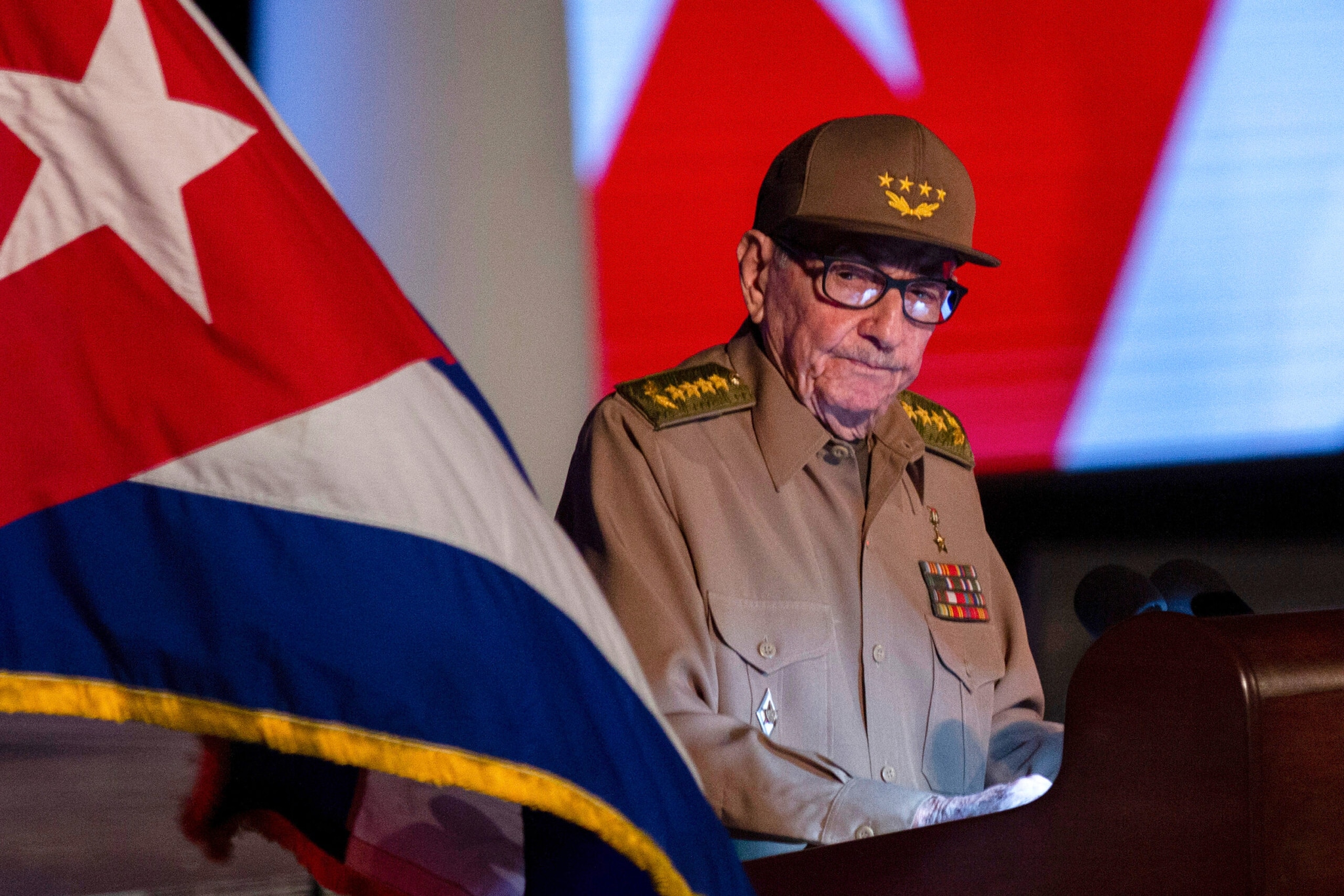
Former Cuban President Raul Castro appeared on state television to celebrate his 95th birthday at a Ministry of Interior event in Havana, marking his first public appearance since being indicted by the United States Department of Justice. Clad in his traditional olive-green military uniform, the aging revolutionary received a standing ovation from the island's top political and military elite. The public display serves as a calculated message of geopolitical defiance. By placing Castro front and center alongside current President Miguel Diaz-Canel, Havana is using the milestone birthday to project internal stability and reject Washington’s legal maneuvers, which Cuban officials dismiss as a politically motivated stunt by the Trump administration to force regime change.
This latest flashpoint stems from a May 2026 federal indictment charging Castro with murder and conspiracy over the 1996 downing of two unarmed civilian aircraft operated by the Miami-based exile group Brothers to the Rescue. For three decades, the shootdown has remained a raw nerve in U.S.-Cuba relations. Bringing charges against a retired head of state who turned 95 on June 3 is a symbolic but severe escalation of Washington's economic and legal pressure campaign on the cash-strapped, fuel-starved island.
The Strategy of Public Longevity
In totalitarian and communist systems, the physical health of the founding generation is directly tied to the perceived stability of the state. Raul Castro has lived a highly discreet life since formally stepping down from the leadership of the Communist Party of Cuba in April 2021. His public outings are rare, reserved almost exclusively for highly symbolic state holidays like May Day.
By broadcasting footage of an alert, uniform-clad Castro entering a packed theater at the Ministry of Interior, the government sought to project continuity. The choreography was precise. Walking directly behind Castro was his grandson and chief bodyguard, Raul Guillermo Rodriguez Castro, followed immediately by Diaz-Canel. This visual alignment reinforces the dynastic and institutional shield surrounding the older generation while signaling that the current leadership remains intensely loyal to the old guard.
Diaz-Canel used his address to praise Castro's lifelong defiance of American intelligence services. The rhetoric was intentionally retro, echoing the height of the Cold War to rally a population currently enduring severe domestic hardships. Cuba is suffering through its worst economic crisis in decades, characterized by chronic food shortages, rolling blackouts, and critical fuel deficits. The state media blitz surrounding the hashtag #RaulesRaúl is an attempt to redirect domestic frustration outward, transforming a birthday into a referendum on national sovereignty.
Breaking Down the 1996 Indictment
The timing of the U.S. indictment is as much about contemporary politics as it is about historical justice. On February 24, 1996, Cuban MiG-29 fighter jets intercepted and shot down two Cessna Skymaster aircraft over international waters, killing four members of the Brothers to the Rescue group. Cuba argued at the time, and continues to maintain, that the planes had repeatedly violated Cuban airspace to drop anti-regime pamphlets over Havana.
U.S. prosecutors have long held that Raul Castro, who served as Cuba’s Minister of the Revolutionary Armed Forces for nearly 50 years from 1959 to 2008, personally ordered the strike. While a lower-level Cuban general and the fighter pilots were indicted in American courts in 2003, the decision to charge Castro himself was held back for decades due to the complex diplomatic fallout of indicting a sitting ruler or active political figure.
The revival of the case by the Justice Department reflects a broader hardening of U.S. policy toward Havana. By formalizing charges against a 95-year-old retired official, Washington is signaling that it considers the current Cuban administration an extension of the original revolutionary government, ignoring the institutional handoff to Diaz-Canel.
Cuba possesses no intention of extraditing Castro. The indictment remains functionally symbolic, preventing the former president from ever traveling abroad, though his advanced age makes international travel highly unlikely regardless. The real impact of the charges is economic and diplomatic, serving as a legal justification for Washington to maintain its stringent state sponsor of terrorism designation against Cuba, which severely limits the island’s access to international banking channels.
Domestic Realities Versus Revolutionary Myths
While the theater in Havana projects an image of unwavering solidarity, the view from the streets of Cuba tells a different story. The revolutionary slogans broadcast on state television contrast sharply with the daily grind of ordinary citizens waiting in miles-long lines for subsidized bread or fuel.
For the younger generation of Cubans, who have no living memory of the 1959 revolution or the 1996 plane shootdown, the appeals to historical grievances are losing their potency. The government’s attempt to frame the U.S. indictment as an existential threat to the nation is competing with immediate material survival.
The state’s defense mechanism relies on a familiar playbook. When external pressure increases, internal dissent is treated as a security threat. By holding the birthday celebration at the Ministry of Interior—the very apparatus responsible for domestic intelligence and state security—the regime sent a subtle warning to internal critics. The message was clear: the security state remains vigilant, and the legacy of the old guard is non-negotiable.
The Broader Diplomatic Stalemate
The escalation between Washington and Havana dampens any remaining hope for a diplomatic thaw similar to the one engineered during the Obama administration, when Raul Castro and American officials restored formal diplomatic ties. Those policy shifts were largely dismantled during the first Trump term, and the current administration’s legal offensive closes the door on short-term re-engagement.
Havana has sought comfort in its traditional geopolitical alliances. Russian Foreign Minister Sergey Lavrov sent official congratulations to Castro on his birthday, emphasizing Moscow's continued support for the island amid American pressure. Cuba has also strengthened ties with Venezuela, a relationship that remains vital for its survival despite its own regional volatility. Earlier this year, Castro made a rare public appearance to honor Cuban soldiers killed during past operations linked to the defense of Venezuelan interests, highlighting how tightly intertwined Havana's military legacy remains with its foreign policy.
The aging leadership in Havana understands that time is an undefeated opponent. Raul Castro's 95th birthday is a milestone that underscores the twilight of the historic generation that reshaped Latin American politics in the 20th century. By turning a routine legal indictment into a rallying cry for the survival of the socialist state, Cuba's current leaders are trying to institutionalize a sense of permanent resistance, ensuring the system outlives the men who built it.