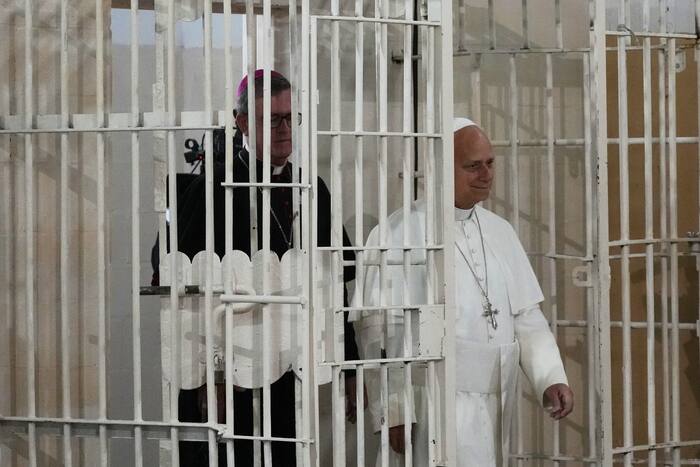
Papal itineraries are never arbitrary tourist circuits; they are high-stakes diplomatic instruments engineered to project soft power, recalibrate regional alliances, and manage institutional crises. When a pontiff concludes a visit to Argentina with stops at a correctional facility and a religious shrine before departing for Peru, the sequence represents a deliberate allocation of symbolic capital. Standard news coverage treats these stops as routine pastoral duties, missing the underlying operational logic that governs Vatican statecraft in the Southern Cone.
To understand the strategic architecture of a papal tour through Argentina and Peru, one must analyze it through the framework of Symbolic Diplomacy and Institutional Resource Allocation. Every minute of a pontiff’s schedule is subject to an extreme opportunity cost. Choosing a prison and a shrine over a state banquet or an academic symposium signals a specific doctrinal and political posture aimed at both domestic populations and regional governments.
The Structural Logic of the Terminal Itinerary
In diplomatic protocol, the final stops of a state visit carry disproportionate weight because they dictate the prevailing media narrative upon departure. By structuring the conclusion of the Argentine leg around a prison and a shrine, the Vatican executes a dual-track communication strategy designed to neutralize political co-optation while reinforcing institutional legitimacy.
1. The Prison Visit as Asymmetric Institutional Critique
A papal visit to a penitentiary functions as a direct, non-verbal audit of state governance. Rather than issuing a formal diplomatic communique criticizing judicial backlogs, socioeconomic inequality, or carceral conditions, the pontiff uses physical presence to highlight the margins of society.
- Political Neutralization: In polarized political environments like Argentina, alignment with any sitting administration risks fracturing the local Church. Visiting a prison bypasses the executive branch entirely, placing the institution on the side of the disenfranchised without endorsing a specific political party or economic policy.
- Doctrinal Alignment: This mechanism operationalizes Catholic Social Teaching—specifically the preferential option for the poor and marginalized—turning abstract theological principles into measurable public events.
- Media Framing Control: Images of the pontiff inside a correctional facility dominate broadcast cycles, crowding out partisan commentary and forcing state media to cover social welfare issues they might otherwise minimize.
2. The Shrine Stop as Cultural Anchoring
Following a politically charged prison visit with a stop at a Marian or national shrine serves a stabilizing function. Shrines in Latin America operate as high-density nodes of popular piety that transcend socioeconomic and political divisions.
- Legitimacy Reinforcement: While ecclesiastical hierarchies often suffer from declining trust or political entanglement, popular shrines retain high baseline legitimacy among the broader population. Anchoring the departure at a shrine links the papacy directly to grassroots religious identity rather than bureaucratic church structures.
- Emotional Consolidation: From an operational perspective, large-scale gatherings at established pilgrimage sites allow the Vatican to demonstrate crowd mobilization capacity without relying on state-sponsored logistics or political party machinery.
The Geopolitical Pivot From Argentina to Peru
Transitioning directly from Argentina to Peru is not merely a matter of geographical convenience; it reflects a calculated shift between two distinct ecclesiastical and political theaters within South America. Each nation presents unique structural challenges to Vatican influence, requiring tailored diplomatic interventions.
Comparing the Operational Theaters
| Variable | Argentina Theater | Peru Theater |
|---|---|---|
| Primary Institutional Challenge | Deep political polarization and acute economic volatility | Chronic executive instability and rapid evangelical expansion |
| Vatican Diplomatic Objective | Avoid partisan capture while advocating for social cohesion | Stabilize democratic norms and defend Catholic market share |
| Key Target Audience | Urban working class and fractured political elites | Indigenous populations, rural communities, and youth |
| Symbolic Mechanism | Carceral outreach and popular shrine devotion | Environmental stewardship and anti-corruption messaging |
The trajectory from Buenos Aires or the Argentine interior to Lima underscores the Vatican's broader regional doctrine: treating South America not as a monolith, but as a series of localized crisis zones requiring differentiated interventions.
Managing the "Homecoming" Dynamic
When a pontiff possesses deep personal, biographical, or pastoral ties to the region—whether returning to Argentina or heading home to Peru—the diplomatic calculus shifts from external mediation to internal reckoning.
- Heightened Scrutiny: Local populations and media possess granular knowledge of the pontiff's past statements and alliances. Ambiguity, which often serves diplomats well in foreign capitals, becomes a liability at home.
- Expectation Inflation: Domestic audiences frequently project unrealistic expectations onto a returning leader, anticipating immediate economic relief, political intervention, or institutional reform. The Vatican manages this by lowering expectations through strictly pastoral, non-legislative stops like shrines and prisons.
- Succession and Legacy Signaling: Returning to a foundational base in Peru after addressing complex social fractures in Argentina allows the pontiff to frame his broader regional vision, linking local pastoral roots to global Church governance.
The Economics of Papal Soft Power
Unlike traditional nation-states, the Holy See operates without military force or direct economic aid. Its primary currency is moral authority, which behaves like a depreciating asset if overused or misallocated. The itinerary design reflects an effort to maximize return on symbolic investment while minimizing institutional risk.
Opportunity Cost and Schedule Compression
A papal visit typically lasts between three and six days per country. Within this compressed timeframe, every public appearance requires massive security coordination, logistical expenditure, and media preparation.
- High-Cost, Low-Yield Events: Formal meetings with diplomatic corps or extended legislative addresses consume significant time and rarely shift public opinion, though they remain necessary for bilateral protocol.
- Low-Cost, High-Yield Events: Unscripted interactions at a prison or brief prayer services at a shrine require minimal diplomatic negotiation while generating maximum visual and emotional resonance globally.
The Risk of Symbolic Overreach
This strategy carries inherent limitations. Relying heavily on symbolic gestures—such as washing the feet of prisoners or praying silently at a shrine—can create a credibility gap if not backed by concrete institutional action.
- Local Clerical Disconnect: If the local episcopate does not sustain the outreach initiated during the papal visit, the event risks being dismissed by critics as superficial public relations.
- State Co-optation: Governments frequently attempt to appropriate the goodwill generated by a papal visit to mask ongoing human rights abuses or economic mismanagement. The Vatican must continuously calibrate its messaging to prevent its presence from being interpreted as an endorsement of the status quo.
Strategic Execution for Regional Observers
Analysts, policymakers, and journalists tracking Vatican movements in Latin America must move beyond surface-level event reporting to evaluate the underlying institutional shifts triggered by these visits.
To accurately forecast the long-term impact of the Argentina-to-Peru itinerary, monitor three concrete post-visit indicators over the subsequent six months:
- Episcopal Appointments: Watch for immediate changes in the leadership of key archdioceses in both countries. A prison-and-shrine itinerary typically precedes the appointment of bishops who prioritize street-level pastoral work over doctrinal rigidity or political alignment.
- Bilateral Concordat Adjustments: Track whether the goodwill generated at national shrines translates into legislative protections for Church-run social services, tax exemptions, or educational subsidies in Argentina and Peru.
- Local NGO Funding Flows: Observe shifts in resource allocation from international Catholic charities (such as Caritas) toward prison ministry programs and rural Peruvian parishes, which will confirm whether the itinerary's symbolic priorities are being backed by operational capital.



