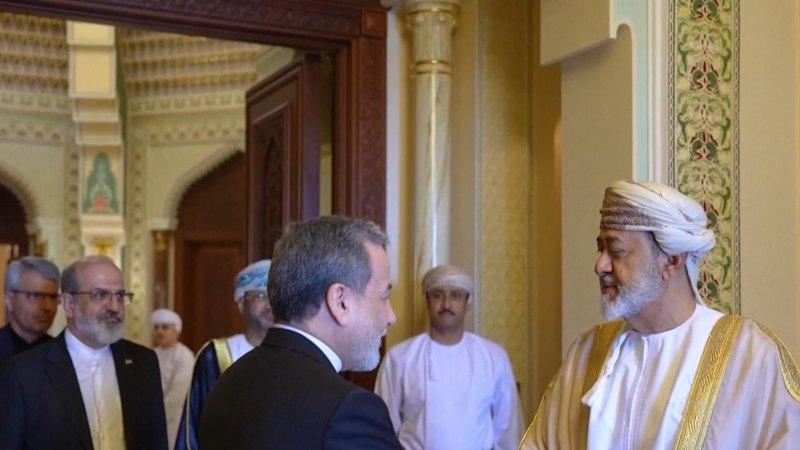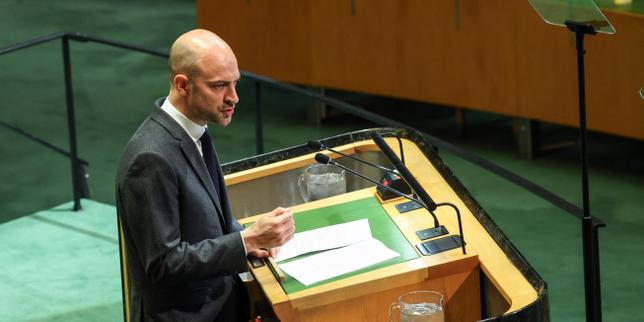
The current friction in the Middle East has moved beyond a cycle of kinetic exchanges into a phase of coercive diplomacy where the price of stability is being priced in sovereign concessions. When Jean-Noël Barrot, the French Minister for Europe and Foreign Affairs, posits that Iran must make "major concessions" to terminate the regional conflict, he is describing a specific shift in the balance of power. This is not a request for a ceasefire; it is a demand for a structural realignment of Iranian regional influence. The conflict has reached a point where the cost of maintaining the status quo for Tehran is beginning to exceed the strategic utility of its proxy network.
The Tripartite Framework of Conflict Resolution
Ending the current hostilities requires a simultaneous resolution across three distinct but interconnected theaters. Any diplomatic effort that fails to address these pillars as a unified system will result in a temporary pause rather than a terminal peace. You might also find this connected story interesting: The Anatomy of a Collision in the Blue Room.
1. The Territorial Integrity of Lebanon and Resolution 1701
The most immediate bottleneck to peace is the failure of UN Security Council Resolution 1701. The resolution was designed to create a buffer zone between the Blue Line and the Litani River, free of any armed personnel other than the Lebanese Army and UNIFIL. The degradation of this buffer led to the current escalatory ladder. A "major concession" in this context involves Iran signaling to Hezbollah that a full withdrawal north of the Litani is non-negotiable. Without this, the Israeli security establishment views the northern border as an unacceptable risk, necessitating continued kinetic operations.
2. The Nuclear Threshold and Strategic Ambiguity
Iran’s proximity to "breakout capacity"—the time required to produce enough weapons-grade uranium for a single nuclear device—acts as an underlying pressure cooker for regional tensions. While the current conflict is fought with conventional and asymmetric tools, the shadow of the nuclear program limits the West's appetite for total escalation while simultaneously increasing the likelihood of a preemptive strike by regional actors. Concessions here would require a return to the verifiable monitoring standards of the IAEA that go beyond the previous JCPOA framework. As discussed in detailed coverage by The Washington Post, the implications are significant.
3. The Proxy Sustainability Function
Tehran operates on a strategy of forward defense, using the "Axis of Resistance" to export conflict away from Iranian soil. The economic cost of supporting these groups is a variable in Iran’s internal stability. For a peace deal to hold, the international community is demanding a decoupling of Iranian financial and military logistics from groups like Hamas, Hezbollah, and the Houthis. This is the "major concession" Barrot alludes to: the dismantling of a multi-decade foreign policy architecture.
The Mechanics of Escalation and De-escalation
The logic of the current war follows a predictable mathematical path of escalation. Each strike is intended to communicate a message about the opponent's "red lines." However, when both parties operate with asymmetrical values—where one side values territorial security and the other values ideological projection—the communication breaks down.
The primary mechanism of escalation currently is the Cycle of Diminishing Deterrence. When a retaliatory strike fails to stop the next attack, the intensity of the response must increase by a specific factor to regain the deterrent effect. We see this in the transition from targeted assassinations to broad-scale aerial campaigns and direct state-to-state ballistic missile exchanges.
De-escalation requires an Asymmetric Exit Strategy. This occurs when one side is offered a "golden bridge" to retreat—a way to stop fighting that allows them to claim a domestic victory while making the substantive concessions required by the adversary. For Iran, this might look like a commitment to Lebanese state sovereignty in exchange for the lifting of specific sectoral sanctions. However, the window for such an exit closes as the tactical gains by the Israel Defense Forces (IDF) increase, reducing the incentive for Israel to negotiate from a position of anything less than total tactical dominance.
Constraints on Western Diplomacy
France and its European allies are operating under several significant constraints that limit their ability to force these concessions.
- The Enforcement Gap: While European powers can facilitate dialogue, they lack the regional military footprint to enforce the terms of a ceasefire. This reliance on U.S. and regional military power creates a disconnect between diplomatic rhetoric and ground reality.
- Economic Leverage Exhaustion: Most high-impact sanctions against Iran are already in place. The "maximum pressure" campaign has reached a point of diminishing returns where additional sanctions provide marginal leverage compared to the immediate survival instincts of the Iranian regime.
- The Hegemonic Vacuum: As the U.S. focuses on a pivot to the Indo-Pacific and the ongoing war in Ukraine, regional powers like Saudi Arabia, the UAE, and Turkey are asserting more independent foreign policies. This multi-polar environment makes it harder to form a unified front for demanding concessions.
The Strategic Cost Function of the Iranian Regime
To understand why "major concessions" are being demanded now, one must analyze the Iranian regime’s internal cost function. The leadership in Tehran evaluates its actions based on three variables:
- Regime Survival: The absolute priority. Any concession that threatens the internal grip of the IRGC (Islamic Revolutionary Guard Corps) is rejected.
- Regional Influence: The ability to project power and deter threats.
- Economic Viability: The ability to fund the state and suppress domestic dissent.
The war has shifted the balance of these variables. The systemic destruction of Hezbollah’s leadership and infrastructure has severely weakened Iran’s "deterrence by proxy." If Hezbollah is neutralized, Iran loses its primary shield against a direct strike on its nuclear facilities. Therefore, the concession to end the war is a defensive maneuver to preserve what remains of their regional assets before they are liquidated entirely by kinetic force.
Quantifying the "Concessions"
What does a "major concession" look like in a technical sense? It is not a vague promise of "peace." It is a verifiable set of actions:
- Logistical Severance: The cessation of the "land bridge" from Iran through Iraq and Syria to Lebanon. This involves shutting down specific IRGC-controlled airports and border crossings.
- Weaponry Limitations: An agreement to stop the transfer of precision-guided munitions (PGMs) and long-range drone technology to non-state actors.
- Intelligence Cooperation: Formal or informal channels to ensure that miscalculations during border skirmishes do not trigger full-scale regional wars.
The challenge is that these concessions represent a fundamental retreat from the "Export of the Revolution" doctrine enshrined in the Iranian constitution. Asking for these concessions is effectively asking for a regime-level shift in identity.
Structural Bottlenecks to Peace
The primary bottleneck is the Security Dilemma. Any move Iran makes to de-escalate might be interpreted by its adversaries as a sign of terminal weakness, inviting further pressure. Conversely, any move by Israel to stop its campaign before achieving its stated goals of returning citizens to the north might be seen as a failure of the current government.
The second bottleneck is the Proxy Autonomy. While Iran provides the funding and hardware, groups like Hezbollah and Hamas have their own local political imperatives. A command from Tehran to stop fighting may not be immediately or fully obeyed if the local leadership perceives an existential threat. This "agency problem" complicates the negotiation process, as the guarantor (Iran) may not have total control over the actors it is supposed to restrain.
Tactical Recommendation for Regional Stability
A stable outcome requires a transition from a security-based architecture to an economic-based architecture. If the international community wants "major concessions" from Iran, the offer must be more than just the absence of war. It must involve a reintegration into the regional energy and trade grids, which would create a mutual dependency that makes future conflict prohibitively expensive.
The immediate strategic play is the enforcement of a "Security for Sovereignty" trade. Lebanon must be empowered to exercise a monopoly on the use of force within its borders. This requires the international community to move beyond UNIFIL’s limited mandate and provide the Lebanese Armed Forces (LAF) with the hardware and political backing to displace non-state militias. For Iran, the concession is the acceptance of a Lebanese state that is no longer a platform for Iranian power projection. For Israel, the concession is the acceptance of a sovereign Lebanon that, while potentially hostile in rhetoric, is stable and predictable in its security posture.
The resolution of the conflict will not come from a grand bargain or a single treaty. It will come from a series of hard-nosed, verifiable tactical withdrawals. The "major concessions" Barrot demands are the entry fee for Iran to remain a relevant regional player in a Middle East that is rapidly losing patience with the architecture of permanent instability. The strategic focus must now shift to defining the exact metrics of these concessions and the mechanisms for their verification, moving away from the "peace through exhaustion" model which has historically failed in this geography.