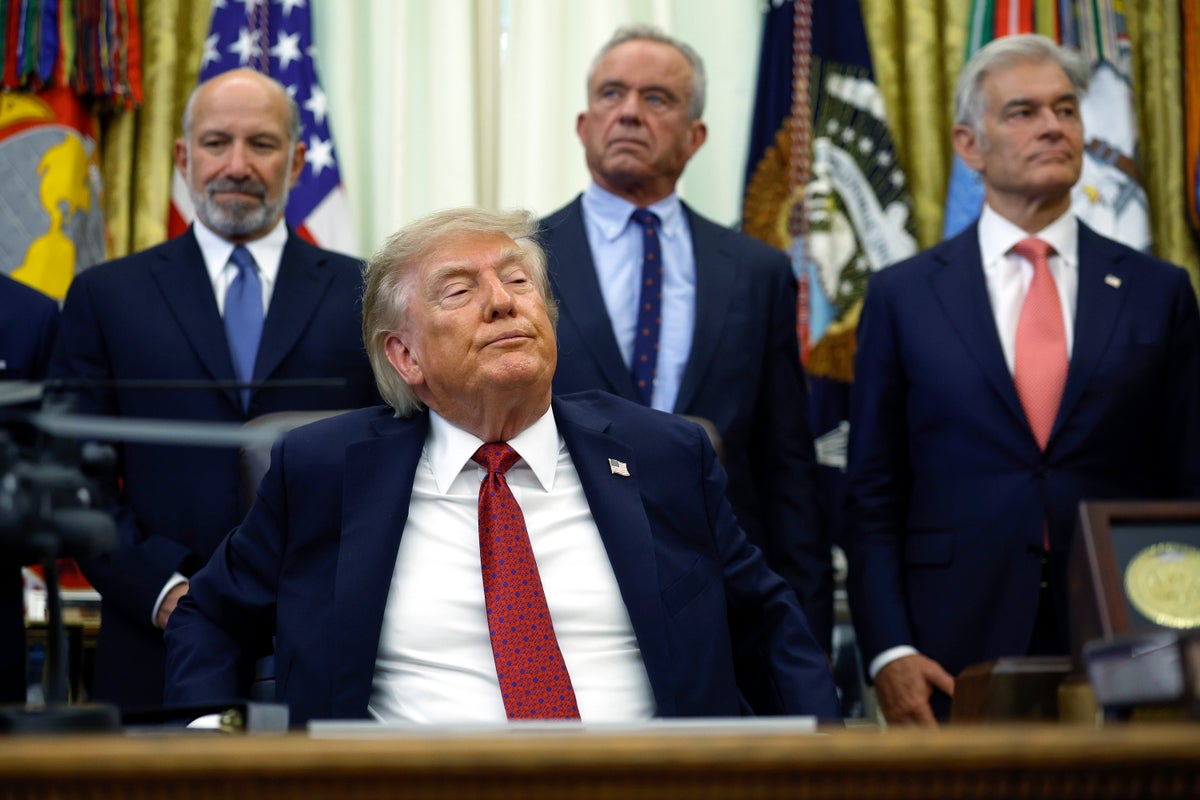
The asymmetric distribution of power within multilateral forums guarantees that a hegemonic state possesses structural leverage disproportionate to its singular vote. When US President Donald Trump entered the final G7 session in Evian-les-Bains and declared "I'm the boss," the subsequent global discourse focused heavily on behavioral theater and interpersonal humor. However, viewing this event through a clinical framework reveals that the performance operates as an informal mechanism to signal structural dominance during acute geopolitical shifts, specifically regarding Eastern European military strategies and global supply chain reconfigurations.
The efficacy of structural leverage within the G7 can be mapped across three distinct analytical pillars.
1. The Asymmetric Architectural Signal
The physical configuration of multilateral meetings frequently underscores the disparity between institutional design and actual state capacity. In his retrospective analysis with Axios, Trump noted the spatial anomaly of the G7 setup: a table engineered for approximately 30 delegates occupied by only seven primary heads of state, creating an accidental amphitheater.
This environment functions as a classic stage for status signaling. In international relations theory, status signaling dictates that dominant actors utilize highly visible, unscripted behavioral cues to reaffirm their position within a hierarchy without triggering formal diplomatic friction. By framing the "boss" remark as a humorous aside, the executive branch maintains plausible deniability while forcing peripheral actors to react. The reaction—in this case, uniform laughter from the seated heads of state—serves as a tacit acknowledgement of the underlying power asymmetry.
2. The Credibility Utility of Interpersonal Dominance
The strategic utility of behavioral dominance relies on the concept of audience costs and bargaining credibility. In bilateral and multilateral negotiations, an actor's leverage is a function of their perceived willingness to execute unilateral maneuvers.
Leverage = (Structural Capacity) x (Perceived Wiliness to Act Unilaterally)
The media's emphasis on whether world leaders literally believed the declaration misses the operational mechanism: Trump's subsequent claim that "all of them" believed it confirms that the remark was designed to establish a psychological anchor. By projecting an image of centralized authority, the US executive branch reduces the perceived probability that it will succumb to multilateral consensus building, thereby forcing allies to adjust their baselines toward the US position.
This mechanism was directly observable in the shifting alliances at the summit, where prominent non-G7 leaders like Indian Prime Minister Narendra Modi were integrated into peripheral sessions. The public commendation of Modi as a strong leader capable of insulating a massive economy from external conflict illustrates how the US leverages bilateral affinity to offset traditional multilateral constraints within the G7 framework.
3. The Structural Baseline of Tangible Outcomes
A rhetorical anchor is structurally hollow without underlying transactional leverage. The Evian-les-Bains summit coincided with two critical macroeconomic and military pivot points that provided the material foundation for the behavioral display.
- The Reopening of the Strait of Hormuz: The digital signing of a preliminary memorandum of understanding between the United States and Iran effectively neutralized an acute threat to a transit corridor handling roughly 20% of global petroleum consumption. The US executed this negotiation largely outside traditional G7 multilateral mechanisms, presenting European allies with a completed diplomatic framework. This unilateral success established an undeniable operational baseline for the "boss" assertion.
- The Realignment of Ukraine Strategy: European allies, led by French President Emmanuel Macron, noted a distinct hardening of the US stance regarding Eastern European defense metrics. The shift from historical skepticism to a coordinated joint statement endorsing Kyiv’s position reflects a calculated calculation: the US utilized its position as the primary supplier of military material to dictate the terms of G7 financial sanctions against Russia, aligning the bloc with its tactical parameters.
The primary constraint of this strategy is its high reliance on the personal credibility of the executive. When bargaining power is tied closely to individual behavioral patterns rather than institutionalized treaties, long-term policy predictability degrades. European diplomats expressed immediate concern regarding the durability of the preliminary Iran memorandum, noting that the threat of resuming kinetic operations ("dropping bombs") introduces a volatility premium into global energy markets that complicates long-term macroeconomic planning.
The Critical Minerals Diversification Mandate
The ultimate manifestation of this structural dominance appeared not in rhetorical exchanges, but in the economic security directives integrated into the final joint statement. The G7 nations agreed to a centralized platform under the International Energy Agency to coordinate the stockpiling and distribution of critical minerals.
The strategic imperative here is the systematic reduction of over-reliance on Chinese supply chains for rare earth elements and defensive materials. By aligning the economic security policies of the G7 with domestic technology mandates—including the evaluation of AI models and national security constraints regarding developers like Anthropic—the US successfully codified its domestic security priorities into global trade policy. This structural alignment confirms that behind the facade of casual summitry lies a highly functional, data-driven methodology designed to enforce economic alignment across Western capitals.
G7 Evian Summit Geopolitical Briefing
This broadcast provides direct context on the structural discussions at the Evian-les-Bains summit, outlining the specific policy alignments regarding Eastern European defense and the strategic assessments of non-member alignment that formed the backdrop of the executive's comments.