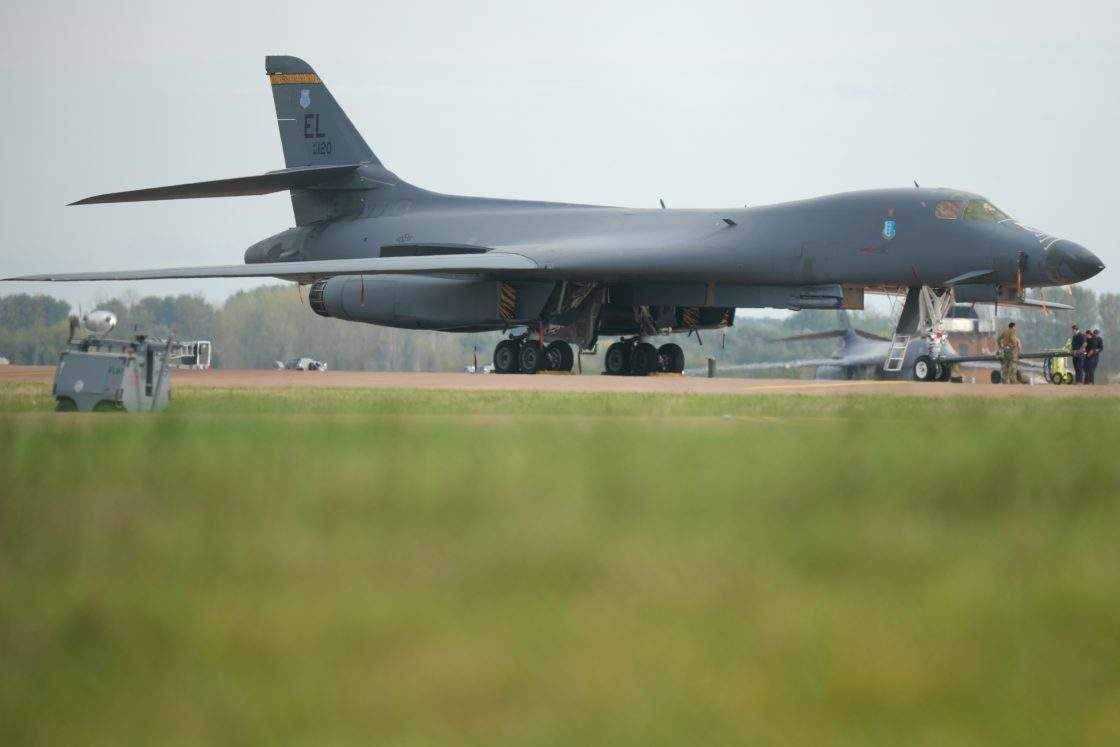
State-backed asymmetric operations represent a fundamental structural shift in how regional powers project force across sovereign borders. When diplomatic channels fail to deter military deployment on allied soil, state actors increasingly rely on distributed proxy networks rather than direct confrontation. The recent interdiction of an operation targeting Royal Air Force Fairford in the United Kingdom, followed by coordinated diplomatic rebukes from Canada, the United States, and European allies, exposes the mechanical realities and systemic vulnerabilities inherent in modern transnational security architecture.
The Strategic Calculus of Forward-Operating Bases
Military installations situated outside a combatant's immediate geographic theater serve as force multipliers. RAF Fairford, utilized by United States strategic bombers for long-range power projection, functions as a critical node in an interconnected logistics and strike network. For a targeted state like Iran, which explicitly designates any military platform involved in hostile kinetic strikes against its sovereign territory as a legitimate target, neutralizing or degrading these hubs is a strategic imperative.
Direct conventional retaliation against a NATO member state triggers Article 5 collective defense mechanisms, introducing an unacceptable escalation threshold. Therefore, the strategic calculus requires asymmetric substitution: utilizing proxy operatives, local criminal cells, or third-party nationals to execute sabotage, reconnaissance, or kinetic disruption. This approach preserves plausible deniability while attempting to impose operational friction and psychological pressure on opposing coalitions.
The Mechanics of Proxy Infrastructure
The operational blueprint for state-sponsored operations on foreign soil relies on decentralized cell structures to maximize survivability and compartmentalization. Investigations surrounding the Fairford incident highlight several structural components:
- Resource Infiltration: Operatives utilize conventional logistical channels, securing commercial vehicles and basic industrial accelerants (such as gasoline or localized incendiary agents) to minimize dependence on controlled military-grade ordnance that leaves detectable forensic traces.
- Proxy Handlers and Criminal Syndicates: State intelligence arms, specifically external operations units like the Islamic Revolutionary Guard Corps Quds Force, routinely outsource operational surveillance and support functions to transnational criminal networks or ideologically aligned non-state actors. This creates an insulating buffer between the sovereign sponsor and the tactical asset on the ground.
- Exploitation of Legal and Geographic Friction points: Open democratic societies present high volumes of background noise—dense immigrant communities, open borders, and robust privacy protections—which covert networks exploit for movement, communication, and funding concealment.
Systemic Vulnerabilities in Domestic Security
The exposure of foreign intelligence networks within Western Europe and North America underscores structural vulnerabilities in domestic counterintelligence frameworks. Counter-terrorism units face a persistent trade-off between civil liberties and baseline perimeter security.
When foreign operatives map the residences of dissidents, journalists, or military personnel, or attempt incursions against strategic logistics nodes, they exploit the gaps between domestic criminal law and international state-on-state hostility. Traditional law enforcement agencies are optimized to disrupt domestic criminal conspiracies, making it difficult to preemptively neutralize sophisticated, state-directed clandestine networks before they transition from the planning phase to operational staging.
The Economic and Diplomatic Deterrence Function
Multilateral joint statements and coordinated diplomatic expulsions function as economic and political signaling mechanisms designed to alter the cost-benefit ratio for the sponsoring state. When Canada, the United Kingdom, and the United States synchronize public denunciations and indictments, they achieve two distinct objectives:
- Information Operations Hardening: Public attribution neutralizes the aggressor's plausible deniability, forcing them to absorb reputational costs and tighter international financial sanctions.
- Operational Disruption: Publicly naming specific intelligence officials and criminal facilitators disrupts their travel vectors, freezes financial assets, and burns downstream assets globally.
Despite these measures, diplomatic condemnation alone lacks the kinetic or economic mass required to fully deter asymmetric warfare. Because the marginal cost of deploying proxy operatives is exceptionally low compared to the billions of dollars required to repair damaged military assets or manage domestic panic, state sponsors view occasional operational failures as an acceptable overhead expense.
Strategic Forecast and Defense Optimization
Future threat vectors will continue to exploit the gray zone between peacetime policing and wartime engagement. To counter distributed state-backed proxy networks, intelligence architecture must evolve from reactive criminal prosecution to proactive network mapping. Western security apparatuses are shifting toward tighter vetting of sensitive military perimeters, enhanced cross-border intelligence sharing regarding financial flows from state intelligence fronts, and automated tracking of digital communications utilized by proxy handlers. Maintaining operational continuity at forward-deployed bases will increasingly depend on neutralizing the command-and-control nodes operating thousands of miles away from the physical target.