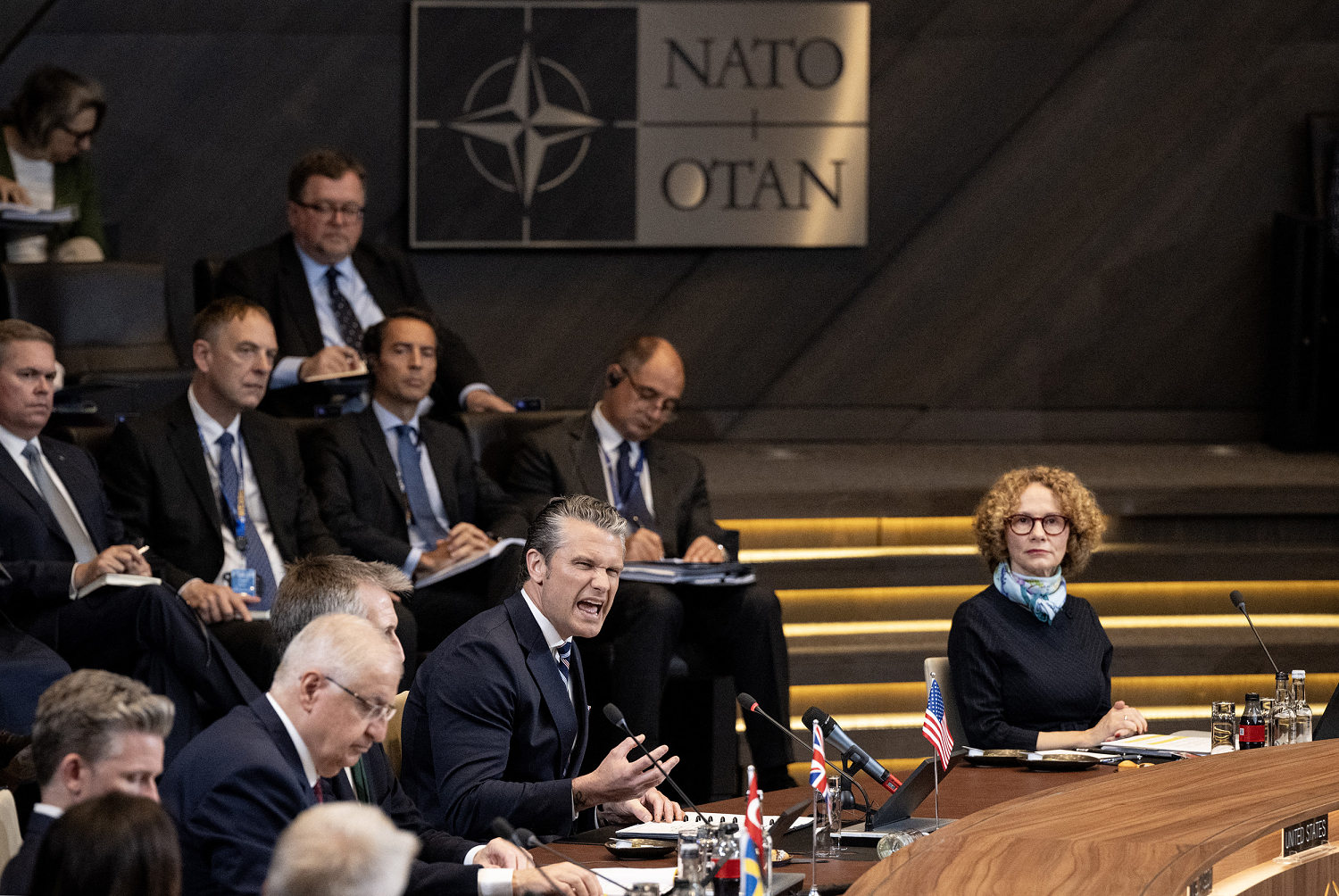
The security architecture of Europe is undergoing a structural recalibration driven by a shifting U.S. strategic calculus rather than conventional diplomatic consensus. U.S. Defense Secretary Pete Hegseth's announcement in Brussels of a six-month Pentagon review of American force posture in Europe establishes an explicit conditional relationship between host-nation operational compliance and U.S. forward-deployed presence. By introducing a "pass-fail" metric for sovereign allies, Washington is transitioning NATO from an integrated, assurance-based collective defense framework into a transactional, hard-power utility model.
To understand the operational and economic implications of this transition, policy analysts and defense planners must look past the ideological rhetoric and isolate the mechanical levers of what the Pentagon terms "NATO 3.0." The fundamental friction does not merely stem from meeting arbitrary defense spending targets. The primary breakdown occurs at the intersection of host-nation sovereign constraints, regional asset allocations, and global multi-theater power projection.
The Three Pillars of Transactional Deterrence
The strategic pivot executed by the Pentagon operates on three structural variables that define the scope and durability of U.S. forward presence in Europe:
- The Sovereignty-Access Tradeoff: The immediate friction point centers on predictable operational access, basing rights, and overflight clearances. Host nations that restrict U.S. forces from utilizing European installations for out-of-theater operations, specifically referencing recent kinetic requirements in the Middle East, alter the U.S. cost-benefit equation. From Washington’s vantage point, restricted access degrades the strategic utility of maintaining approximately 100,000 U.S. troops on the continent.
- Asymmetric Burden Sharing and Asset Redundancy: While aggregate European defense spending increased by 20%—amounting to an additional $90 billion capital injection—the structural composition of that spending remains highly fragmented. The Pentagon’s pivot exposes a deep-seated vulnerability in European high-end enablers, specifically deep-strike capabilities, aerial refueling tankers, and carrier strike groups.
- The Multi-Theater Capacity Bottleneck: The U.S. defense establishment is optimizing its force structure to sustain a two-theater simultaneous conflict model, with primary prioritization directed toward the Indo-Pacific region. This creates a zero-sum allocation problem for finite U.S. military assets.
The Cost Function of Power Projection
The explicit policy shift announced by Washington introduces a severe operational deficit for European defense planners. On June 3, the U.S. administration adjusted its formal pledges to the NATO force model, signalling the withdrawal of core strategic enablers—including an aircraft carrier, support vessels, aerial refueling aircraft, and multiple fighter squadrons—from the baseline contingency plans for European defense.
This withdrawal shifts the conventional defense curve. The operational risk can be mathematically modeled as a function of warning time, logistical throughput, and asset deployment velocity. When the U.S. removes high-end assets from the immediate theater plan, European allies face a structural bottleneck.
[Conventional Threat Level] ──> [U.S. Enabler Withdrawal] ──> [European Capacity Deficit]
                                                                        │
[Deterrence Degradation] <── [Logistical Bottleneck] <── [Air/Sea Lift Under-Supply]
The withdrawal of aerial refueling aircraft directly constrains the combat radius and sortie generation rate of European fourth- and fifth-generation fighter fleets. Without organic U.S. tanker support, the operational readiness of air superior assets across Northern and Eastern Europe drops significantly, as European air forces lack the aggregate fuel-distribution capacity to maintain prolonged combat air patrols.
Structural Fault Lines in Host-Nation Posture
The Pentagon's six-month review introduces a bifurcated sorting mechanism for NATO members. The evaluation criteria prioritize operational utility and access over historic or political alignment. This framework creates distinct operational realities across the alliance:
- The Frontier Outposts: Baltic and Eastern European nations that dedicate more than 2.5% or 3% of their GDP to defense, and offer unrestricted local infrastructure integration, will likely pass the Pentagon evaluation. These states serve as the frontline conventional tripwire.
- The Logistical Core: Germany and the Low Countries provide the critical logistical backbone, rail networks, and deep-water ports needed for rapid reinforcing maneuvers. However, domestic political constraints regarding out-of-theater asset usage introduce high friction into U.S. global planning.
- The Strategic Outliers: Southern and Western European nations that exhibit lower capital reinvestment rates into heavy conventional armor or advanced air defense systems face immediate downgrades in their strategic prioritization within the U.S. force architecture.
The second limitation of the current European defense surge is structural fragmentation. The injection of $90 billion is diluted across multiple sovereign procurement streams, resulting in redundant supply chains, mismatched command-and-control architectures, and a severe lack of interchangeable ammunition and spare parts. The absence of a centralized European procurement authority ensures that capital expenditure does not efficiently translate into cohesive combat readiness.
The Indo-Pacific Reallocation Model
The driver of the Pentagon’s assertive posture is not fiscal austerity, but the realities of global asset scarcity. The United States cannot comfortably field the naval tonnage or precision-guided munitions required to simultaneously deter a peer competitor in the Western Pacific while subsidizing a heavy conventional footprint in Europe.
The U.S. Air Force and Navy face severe structural aging across their hulls and airframes. By transferring the primary burden of conventional European defense to local allies, Washington frees up critical maintenance pipelines, deployment cycles, and engineering cadres to reinforce the First and Second Island Chains in Asia. This is an irreversible geographic reallocation of American hard power.
European defense ministers must recognize that a failure to rapidly absorb these responsibilities will result in a rapid, uncoordinated degradation of regional deterrence. The historic reliance on the U.S. nuclear umbrella remains intact, but the conventional shielding that prevents localized territory grabs is being systematically dismantled.
Strategic Action Matrix
To mitigate the immediate risks of the U.S. force posture review, European defense headquarters must bypass traditional bureaucratic timelines and execute a targeted capability bridge.
First, allies must establish a legally binding, standardized framework for Western military access. This agreement must grant explicit, pre-authorized overflight and base-access privileges for U.S. forces engaging in trans-regional missions, eliminating the political friction that Washington has labeled a core operational risk.
Second, procurement priorities must shift immediately away from legacy domestic industrial protectionism and toward the mass acquisition of high-end enablers. European nations must jointly fund and operate a centralized fleet of strategic airlifters, aerial refueling tankers, and airborne early warning and control (AEW&C) platforms. This collective asset pool must be detached from individual national command structures and integrated directly into NATO’s Supreme Allied Commander Europe (SACEUR) operational control, ensuring that the withdrawal of U.S. hardware does not leave an unfillable vacuum in the initial 72 hours of a conventional theater crisis.
An analytical broadcast breaking down the tactical friction points between the Pentagon's new directives and European defense budgets can be observed in this Pentagon Chief Warns NATO Allies to Boost Defense Commitments, which details the official U.S. position on burden-sharing and military access delivered during recent international security summits.


