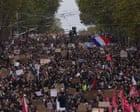
Calm after a street curfew is rarely equilibrium; it is usually compression before the next release. Sensationalist commentary on unrest in France paired with sweeping alarms over Ukraine and Israel treats three distinct crisis theaters as though they share a single fuse, missing how domestic fiscal strain, attrition warfare, and regional security dilemmas actually interact. A rigorous assessment separates verified political and military dynamics from speculative escalation scenarios, maps the transmission channels that link internal pressure to external statecraft, and establishes a practical decision framework for leaders and operators navigating high-volatility environments.
Deconstructing the Sensationalist Narrative
Sensationalist coverage of civil unrest and simultaneous foreign conflicts relies on three recurring analytical shortcuts that obscure real risks while inflating imaginary ones. First, it conflates temporal coincidence with causal unity. Street protests in Paris, Lyon, or Marseille occurring during ongoing fighting in Eastern Europe or the Levant do not automatically prove that a single hidden hand or global master plan connects them. Even when protesters invoke geopolitical grievances or economic pain, domestic mobilization follows local institutional rules, policing doctrines, and fiscal triggers.
Second, alarmist framing mistakes surface calm for structural resolution. When authorities impose curfews, deploy riot units, or ban marches, visible street clashes often subside quickly. That quiet reflects coercive containment and crowd dispersal, not a settled bargain over underlying grievances such as cost-of-living pressures, educational bottlenecks, or parliamentary gridlock. Treating a quiet evening under curfew as permanent stability sets up analysts and decision-makers for surprise when grievances re-emerge in another venue—at the ballot box, in strikes, or through renewed street friction.
Third, headline-driven commentary tends to flatten asymmetric conflict structures into a single escalation ladder. A standoff in a European capital over living costs and public order operates under domestic constitutional and municipal constraints. The war in Ukraine involves industrial mobilization, air defense attrition, deep-strike logistics, and external resupply. Conflicts involving Israel center on multi-front deterrence, proxy networks, regional diplomacy, and internal institutional strain. Merging them into one "storm" blurs where real spillovers occur and where analytical boundaries must stay sharp.
A Structured Framework for Multi-Theater Risk
To evaluate these theaters without hype or fatalism, analysts can organize risk around four operational dimensions:
- Trigger vs. Structural Driver: A trigger is the immediate spark—a contested policy, a specific protest march, a cross-border strike, or a diplomatic rupture. A structural driver is the slow-moving condition that makes escalation costly to contain—budget deficits, shrinking legislative majorities, defense-industrial bottlenecks, or unresolved territorial disputes.
- Coercive Capacity vs. Political Legitimacy: States can project physical force—curfews, police cordons, air strikes, or fortified lines—faster than they can rebuild public trust or political coalitions. When coercive tools carry high political or reputational costs, short-term order can coexist with long-term fragility.
- Direct Spillover vs. Resource Competition: Direct spillover happens when instability in one place physically or diplomatically alters another—such as disrupted trade routes, displaced populations, or shifting diplomatic coalitions. Resource competition happens indirectly when constrained budgets, munitions stockpiles, or diplomatic bandwidth force governments to ration attention across competing priorities.
- Verified Fact vs. Educated Hypothesis: Known facts include official policy announcements, documented clashes, confirmed strikes, and public polling or parliamentary constraints. Educated hypotheses include projections about how voter dissatisfaction will shift future elections, how logistics strikes will affect frontline tempo months later, or whether regional rivalries will widen into broader interstate war.
Domestic Pressure and Order in France
Street unrest in France illustrates how localized grievances and broad economic frustration can converge without erasing differences among participants. Demonstrations rooted in student conditions, school schedules, and university admissions can overlap with broader complaints over living costs, fuel prices, and institutional frustration. Within a single day of national mobilization, peaceful marchers, organized activists, and opportunistic rioters or looters can act alongside one another while pursuing very different objectives.
Authorities typically respond using a two-stage playbook: immediate de-escalation through targeted curfews, protest restrictions, and visible police deployment, followed by selective concessions or legislative negotiations aimed at isolating moderate grievances from violent fringes. That approach often lowers street temperature in the short term. The second limitation of a containment-heavy response is that curfews treat symptoms in public space while leaving unresolved budget arithmetic, legislative minority dynamics, and polarized political incentives intact.
A useful distinction separates crowd dynamics from regime stability. Violent property damage, clashes with security forces, and night curfews disrupt commerce, strain municipal services, and erode public confidence. Yet France possesses deep administrative institutions and established constitutional mechanisms. The more consequential risk for policymakers is political polarization—where prolonged friction hardens opposition movements and strengthens anti-establishment or extreme factions ahead of future elections.
Attrition, Deep Strikes, and External Bandwidth in Ukraine
In Ukraine, the conflict has long operated as a test of industrial endurance, technological adaptation, and logistics rather than a quick maneuver campaign. Long-range drone barrages, air-defense suppression, and strikes against energy, transport, and military repair infrastructure aim to degrade an opponent's war economy and supply lines over time. Even when frontline territorial lines shift slowly on a given week, deep strikes can impose cumulative friction on fuel refining, repair capacity, and rear-area movement.
What connects this theater to broader global turbulence is less a single shared battlefield than strategic competition for attention, munitions, and diplomatic leverage. When major powers juggle multiple regional crises alongside domestic economic pressures, sustaining air-defense interceptors, artillery shells, and financial backing requires continuous political execution rather than one-off commitments. Meanwhile, diplomatic posturing around negotiations often collides with maximalist demands on the ground, keeping the gap between stated peace terms and battlefield realities wide.
Analysts should distinguish between tactical strike effects and strategic trajectory. Damaging a refinery, bridge, or aircraft facility can disrupt operations locally or temporarily, but strategic outcomes still hinge on production scale, air-defense sustainability, force generation, and coalition cohesion. Assuming every high-profile strike signals an imminent collapse—or assuming stalemate means nothing is changing beneath the surface—misses how attritional wars accumulate pressure.
Deterrence and Strategic Strain Around Israel
Security dynamics involving Israel show why military capability alone rarely resolves underlying political and regional instability. Across Gaza, the West Bank, Lebanon, and broader regional rivalries involving Iran and regional proxies, military pressure can degrade adversary capabilities in the near term while leaving governance vacuums, humanitarian strain, and unresolved political questions behind. In environments marked by protracted security operations and contested boundaries, tactical quiet rarely equals a durable settlement.
Regional escalation risks also transmit outward through economic and diplomatic channels. Heightened tension around maritime chokepoints, missile exchanges, or cross-border clashes affects shipping insurance, supply-chain routing, and regional hedging by middle powers. At the same time, sustained mobilization and prolonged conflict place real strain on domestic politics, social cohesion, and high-skill or high-tech labor retention over time.
A critical analytical pitfall here is treating every flare-up as an automatic slide into total regional war, or conversely treating temporary lulls as permanent normalization. Regional actors frequently calibrate actions below the threshold of all-out war to preserve leverage, even as miscalculation or proxy escalation remains a persistent hazard.
How Pressure Transmits Across Borders
When domestic unrest in Europe coincides with wars in Eastern Europe and the Middle East, the real link is compound friction, not a single domino chain. High energy or living costs at home can fuel domestic protest movements, which in turn narrow a government's political room to maneuver on foreign budgets, aid packages, or crisis diplomacy. Conversely, external shocks—such as shipping disruptions, energy price spikes, or geopolitical polarization—can amplify domestic discontent by making everyday life more expensive or uncertain.
Consider a practical example for an executive or policy team: a company or public agency exposed to European logistics, Middle Eastern shipping lanes, and defense-linked supply chains should not treat a curfew in a major city as an isolated local event. If domestic unrest coincides with freight rerouting or budget tightening in key capitals, delivery lead times, insurance premiums, and regulatory delays can compound across quarters. The second limitation of relying on single-theater risk scores is that they blind teams to cross-theater bottlenecks, such as shared component supply chains or overlapping diplomatic attention.
Operational Playbook for High-Volatility Environments
Decision-makers who want to move past headlines can follow a disciplined sequence whenever domestic unrest and external conflicts overlap:
- Separate containment metrics from resolution metrics. Track curfew end dates, protest bans, and deployment levels separately from legislative agreements, economic relief measures, and underlying grievance trends.
- Audit exposure by transmission channel, not by headline. Map specific dependencies across energy prices, maritime transit corridors, defense or industrial inputs, and government procurement timelines rather than reacting to broad fear.
- Set explicit tripwires for escalation and de-escalation. Define concrete indicators in advance—such as major infrastructure disruptions, diplomatic ruptures, formal coalition shifts, or sustained legislative gridlock—that trigger contingency actions.
- Build slack into schedules, inventory, and cash buffers. When political and supply environments are noisy, buffer stock, flexible routing, and conservative assumptions outperform precision forecasts.
No analytical framework or operational checklist eliminates geopolitical surprise; intelligence gaps, sudden political shifts, and miscalculation remain inherent features of contested environments. Leaders should therefore treat every forecast as provisional and pair structured monitoring with concrete operational buffers—adjusting supply routes, budget assumptions, and risk tolerances before calm is mistaken for permanence.