A naval blockade is not a static perimeter; it is a dynamic application of force intended to decouple a nation's internal economy from global trade networks. When the executive branch signals the initiation of a maritime blockade against Iranian ports, it moves beyond the friction of financial sanctions into the realm of kinetic economic warfare. The objective is the total compression of Iranian fiscal liquidity by targeting the literal point of departure for its primary export: crude oil and petroleum products. This strategy operates on three distinct levels of escalation: the disruption of physical logistics, the inflation of maritime insurance premiums, and the forced realignment of regional security architectures.
The Mechanics of Kinetic Decoupling
The primary bottleneck for the Iranian economy is the dependency on a narrow set of maritime exit points, specifically Bandar Abbas and the Kharg Island terminal. Over 90% of Iranian oil exports flow through Kharg Island. A blockade, therefore, does not require a thousand-ship navy circling the entire coastline. It requires a localized concentration of power at the Strait of Hormuz and specific terminal approaches.
The efficacy of this maneuver depends on the Rule of Interdiction Persistence. A blockade only functions if it is credible enough to deter commercial shipping companies from attempting transit. This is achieved through:
- The Exclusion Zone Protocol: Establishing defined geographical coordinates where any unauthorized vessel is subject to boarding, inspection, or seizure.
- Electronic Warfare Dominance: Neutralizing the "ghost fleet" by jamming AIS (Automatic Identification System) spoofing and utilizing satellite synthetic aperture radar (SAR) to track vessels that have "gone dark."
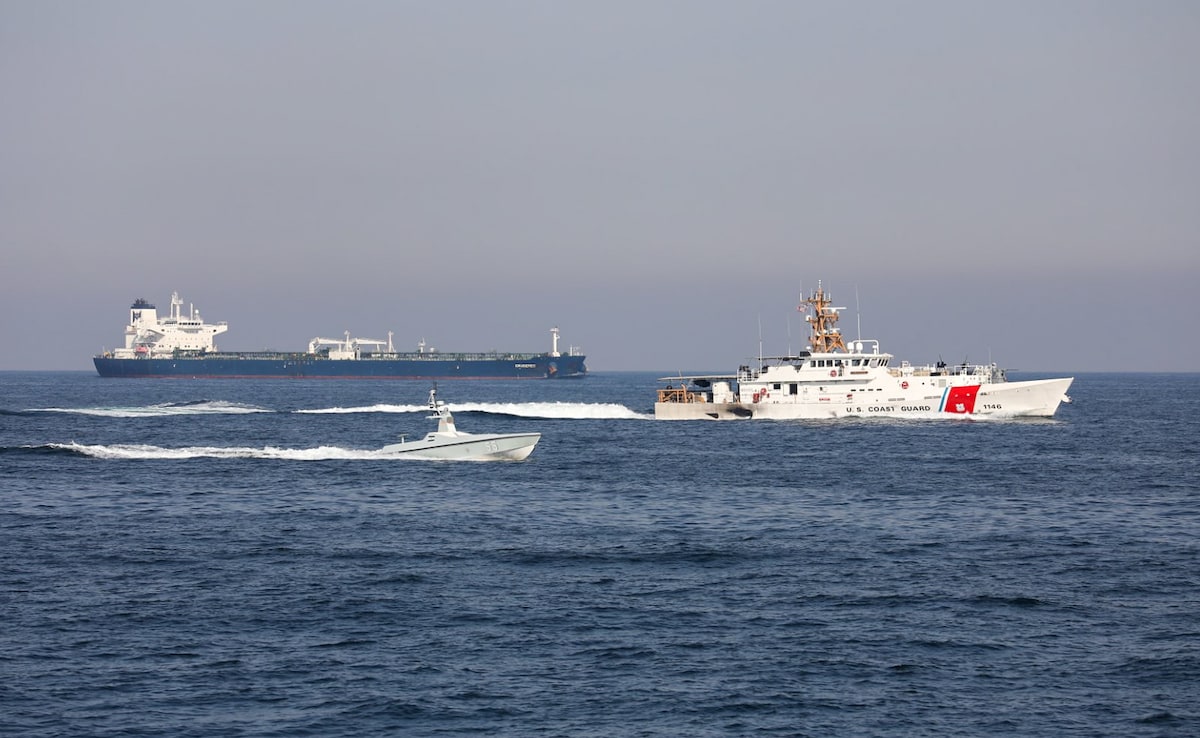
- Physical Denial of Port Access: Utilizing surface combatants and aerial assets to prevent tankers from docking at loading gantries.
Unlike previous "maximum pressure" campaigns that relied on the threat of secondary sanctions against banks, a physical blockade targets the physical asset. If the oil cannot leave the gantry, the financial mechanism behind the sale becomes irrelevant.
The Insurance Multiplier and Commercial Deterrence
The true power of a naval blockade often lies in the "Insurance Risk Coefficient." International shipping relies on Protection and Indemnity (P&I) clubs and hull insurance. The moment a region is declared a zone of active blockade or "War Risk," premiums skyrocket or coverage is revoked entirely.
For the Iranian export model, which often utilizes the National Iranian Tanker Company (NITC) or third-party vessels under flags of convenience, this creates an insurmountable cost floor. Even if a vessel is willing to run a blockade, the inability to secure insurance makes the cargo toxic to potential buyers. Refineries in East Asia or elsewhere cannot accept uninsured cargo without risking catastrophic liability. This creates a secondary blockade that is legal and financial, enforced by the global maritime industry rather than the military.
Strategic Asymmetry and the Iranian Counter-Response
Iran’s defensive doctrine is built on Asymmetric Naval Friction. They recognize that they cannot win a conventional blue-water engagement against a carrier strike group. Instead, their strategy focuses on making the cost of maintaining the blockade higher than the political will of the blockading power.
The Iranian response framework typically involves:
- Saturation Attacks: Using large numbers of fast attack craft (FAC) and unmanned surface vessels (USV) to overwhelm the defensive sensors of blockading ships.
- Mine Warfare: Deploying bottom-mounted or drifting sea mines in the narrow shipping lanes of the Strait of Hormuz. This is a low-cost, high-impact denial strategy that forces the blockading power to divert resources to minesweeping operations, slowing the tempo of the blockade.
- Coastal Defense Cruise Missiles (CDCMs): Utilizing mobile batteries of Noor or Qader missiles hidden in the rugged terrain along the Persian Gulf coast to threaten capital ships from a distance.
This creates a Cost-Exchange Ratio problem. A single Iranian USV costing $50,000 can theoretically disable a destroyer costing $2 billion. The blockading force must maintain 100% vigilance, while the insurgent navy only needs to succeed once to shift the international narrative and spike global oil prices.
The Global Energy Shockwaves
A blockade of Iranian ports is fundamentally a blockade of the Strait of Hormuz, a chokepoint through which approximately 20% of the world’s petroleum consumption passes. The market does not price in the loss of Iranian oil alone; it prices in the risk to all Gulf exports.
- Brent Crude Volatility: Initial reports of a blockade typically trigger an immediate "security premium" of $10 to $20 per barrel.
- The Tanker Shortage: If Gulf-based tankers are diverted or trapped, the global supply of Very Large Crude Carriers (VLCCs) effectively shrinks, driving up shipping rates globally, even for non-Middle Eastern routes.
- The Strategic Petroleum Reserve (SPR) Lever: The U.S. and its allies would likely be forced to coordinate an emergency release of stocks to prevent a domestic inflationary spiral.
The paradox of the blockade is that by successfully cutting off Iranian revenue, the blockading power may inadvertently increase the price of the remaining oil Iran does manage to smuggle out, potentially softening the intended fiscal blow.
Operational Constraints and Legal Justification
Under international law, a blockade is an act of war. Traditionally, it requires a formal declaration and must be applied impartially to all nations. The modern "Pacific Blockade" or "Quarantine" (as seen in the 1962 Cuban Missile Crisis) is a nuanced alternative that seeks the same results with less legal baggage.
The operational risk for the U.S. military involves the Pivot Exhaustion. Maintaining a continuous presence in the Persian Gulf requires pulling assets from the Indo-Pacific or the Mediterranean. This creates a security vacuum in other theaters, which competitors like China or Russia can exploit. The logistics of a 24/7 blockade require a massive rotation of crews and hulls, straining the current readiness levels of the U.S. Navy.
Structural Failures in the Shadow Fleet
Iran has spent a decade refining its "Shadow Fleet" operations—using aging tankers, frequent ship-to-ship (STS) transfers, and shell companies in jurisdictions with weak maritime oversight. A physical blockade exposes the vulnerability of this system.
These vessels are often poorly maintained. In a high-tension blockade environment, the risk of an environmental disaster increases. If a blockaded vessel is seized or suffers a mechanical failure while attempting to evade patrols, the resulting oil spill becomes a geopolitical weapon. Iran could frame the blockade as an "environmental crime," attempting to break the coalition's resolve through international diplomatic pressure.
The Terminal Strategy
To move from a tactical blockade to a strategic victory, the pressure must be converted into a specific diplomatic or internal outcome. The current framework assumes that by reducing Iranian oil exports to near-zero, the internal pressure on the regime will force a renegotiation of regional influence or nuclear capabilities.
The logic follows a trajectory of Fiscal Asphyxiation:
- Phase 1: Exhaustion of foreign exchange reserves.
- Phase 2: Hyper-inflation of the Rial as the government prints money to cover domestic subsidies.
- Phase 3: Critical failure of the "bonyads" (charitable trusts) that underpin the Iranian paramilitary and social safety nets.
Success is measured not by the number of ships turned back, but by the delta between Iranian government expenditures and their shrinking revenue ceiling.
The strategic play is the transition from maritime interdiction to a Multilateral Energy Re-routing. While enforcing the blockade, the U.S. must simultaneously incentivize and secure the expansion of the East-West Pipeline in Saudi Arabia and the Habshan–Fujairah pipeline in the UAE. By moving the majority of Gulf oil exports to terminals outside the Persian Gulf, the blockade of Iranian ports becomes a surgical strike against Tehran rather than a blunt instrument that threatens the global economy. The objective is to make the Strait of Hormuz—and by extension, Iran’s primary leverage—geopolitically irrelevant.