The global sports economy relies on a friction-free arbitrage of talent where elite athletes, coaches, and match officials migrate across borders based purely on performance metrics. However, this meritocratic framework frequently collapses when it intersects with state-level immigration policies. The denial of entry to a qualified Somali soccer referee designated for a FIFA tournament in the United States exposes a structural vulnerability in international sports governance. This incident is not an isolated administrative error; it is a predictable outcome of a systemic friction between international sporting mandates and national border security protocols.
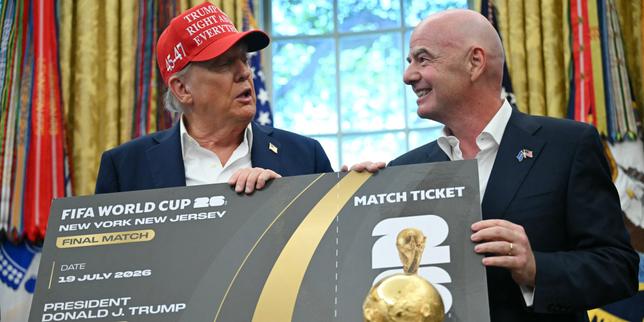
When a sovereign state hosts a major global sporting event, it enters into a tacit agreement with international governing bodies to facilitate the entry of all accredited participants. Yet, national immigration frameworks operate under strict risk-assessment matrices that look at country-of-origin data rather than athletic or professional credentials. For officials from nations labeled as high-risk or politically unstable, the administrative burden of proof often exceeds the operational timelines of sporting tournaments. This creates a bottleneck where administrative gatekeeping overrides athletic merit, distorting the integrity of global sports representation. Recently making headlines in related news: Why Gianni Infantino Thinks the World Cup Needed Donald Trump to Survive.
The Dual-Value Framework of the Elite Official
To understand the systemic impact of this exclusion, one must first deconstruct the professional profile of an elite referee operating within a developing or conflict-affected nation. An official's career trajectory functions under a dual-value framework: internal domestic utility and external diplomatic equity.
Internal Domestic Utility
Within the domestic sports ecosystem, an internationally accredited referee serves as the primary mechanism for knowledge transfer. They translate FIFA updates, technical interpretations, and match-management methodologies back into the local league structure. This elevates the standard of play domestically and creates a pipeline for future talent. When an official is blocked from international exposure, the domestic league suffers a direct depreciation in technical development. More details on this are explored by Yahoo Sports.
External Diplomatic Equity
For a nation undergoing reconstruction, such as Somalia, international sporting representation functions as a soft-power asset. The presence of a Somali official on a global stage alters international perceptions, signaling institutional stabilization and compliance with global regulatory standards. The home country views the official’s return not just as a sporting event, but as a validation of national resilience. The hero's welcome observed upon return is a rational collective response to a perceived external devaluation of their institutional progress.
The Friction Function: International Governance vs. Sovereign Borders
The core breakdown occurs because FIFA’s operational model assumes a level of global mobility that does not exist in contemporary geopolitics. The friction between these two systems can be mapped through three distinct operational bottlenecks.
+---------------------------+       +----------------------------+
|  FIFA Accreditation Mode  |       | Sovereign Immigration Visa |
| (Based on Athletic Merit) |       |  (Based on Geopolitics)    |
+-------------+-------------+       +-------------+--------------+
              |                                   |
              +-----------------+-----------------+
                                |
                                v
                  +---------------------------+
                  |    The Friction Point     |
                  | (Administrative Refusal)  |
                  +-------------+-------------+
                                |
                                v
                  +---------------------------+
                  | Institutional Soft-Power  |
                  |        Asymmetry          |
                  +---------------------------+
1. Passport Asymmetry and Passport Power Inflation
International sports governance operates on a flat hierarchy: a referee from a low-tier footballing nation must meet the identical physical and technical benchmarks as one from an elite soccer nation. However, the international visa ecosystem is highly stratified. A referee holding a Western European passport enjoys visa-free or expedited entry to most host nations. Conversely, a referee holding a Somali passport faces extensive background checks, biometric verification, and administrative processing times that can span months. The governing body’s failure to subsidize or expedite this political variance creates an unequal playing field for officials from the Global South.
2. The Risk-Assessment Asymmetry
Sovereign immigration departments utilize automated and manual risk-scoring systems that evaluate applicants based on macroeconomic indicators, asylum-seeking statistics, and geopolitical alliances. An individual's status as an elite FIFA referee is rarely weighted heavily enough to override a high-risk country classification. Because immigration officers operate under national mandates rather than sporting guidelines, the athletic credential is subordinated to national security or immigration enforcement goals.
3. The Timeline Disconnect
FIFA and continental confederations often finalize match official appointments only weeks or months before a tournament begins, following rigorous fitness assessments and performance reviews. This compressed timeline matches the visa processing speeds of developed nations but fails completely when applied to jurisdictions requiring deep-dive security clearances. The resulting operational delay guarantees that officials from specific regions will miss tournament deadlines due to administrative backlogs, irrespective of their professional readiness.
The Institutional Soft-Power Asymmetry
The systemic failure to secure entry visas for qualified officials exposes an imbalance of power between international sports federations and wealthy host nations. When FIFA awards tournament hosting rights—such as the co-hosted World Cup in North America—the host nation typically signs guarantees promising entry to all qualified participants, teams, and officials.
When a host nation violates this agreement by denying entry to specific nationalities, the international governing body faces an optimization dilemma. It can either pressure the host nation via legal or logistical sanctions (such as threatening to relocate matches), or it can quietly replace the affected official with a substitute from a geopolitically favored nation.
Historically, federations choose replacement over confrontation. This optimization strategy minimizes immediate operational disruption for the tournament but extracts a heavy long-term cost from developing football associations. The message sent to the domestic federation is clear: your technical investments and meritocratic achievements are expendable when weighed against the domestic immigration policies of global powers.
This dynamic reinforces a closed-loop system where officials from preferred geopolitical tiers accumulate international caps, high-pressure match experience, and tournament bonuses. Meanwhile, officials from marginalized federations remain restricted to regional tournaments, capping their career earnings, limiting their professional development, and lowering the ceiling of the sport's growth within their home countries.
Strategic Realignment: Mitigating Border Friction in Global Sport
To prevent the repeated exclusion of elite talent from restricted jurisdictions, international sports organizations must abandon the passive assumption that sports transcend politics. They must instead build proactive mechanisms designed to navigate sovereign border realities.
Implementing FIFA-Sponsored Diplomatic Passports or Transnational Visas
Governing bodies must negotiate a standardized "Sporting Transit Credential" recognized by treaty nations, similar to merchant marine or international airline crew visas. This credential would require pre-clearance and comprehensive background checks managed by FIFA and international security agencies years in advance, decoupled from specific tournament timelines. Once an official enters the elite international pool, their security clearance should remain active, short-circuiting the standard visa processing queue during tournament selections.
Decoupling Host Selection from Restrictive Immigration Frameworks
When bidding for major tournaments, applicant nations must provide binding, non-negotiable legal exemptions for accredited sporting personnel. If a sovereign state's legislative framework prevents it from guaranteeing entry to citizens of every FIFA member association, that nation must be disqualified from the bidding process at the initial screening stage. Financial penalties and hosting revocations must be explicitly written into the hosting agreements to shift the cost function back onto the host nation.
Regionalizing Early-Stage Administrative Processing
For officials from high-friction jurisdictions, the visa application process must be initiated based on probability vectors rather than final appointments. If an official is in the top decile of performance metrics and stands a statistical chance of selection, the administrative pipeline must be activated six to nine months prior to the event. This buffers against the extended processing times typical of high-risk country matrices, ensuring that administrative decisions are rendered long before matchday deployments.
The exclusion of a Somali referee from an international tournament is not merely a bureaucratic inconvenience for one individual; it is an indicator of structural inefficiency within the global sports market. Until international governing bodies treat geopolitical friction as a core operational risk rather than an unpredictable anomaly, the global talent pipeline will remain fundamentally broken, and the ideal of a pure, borderless meritocracy will remain unfulfilled.