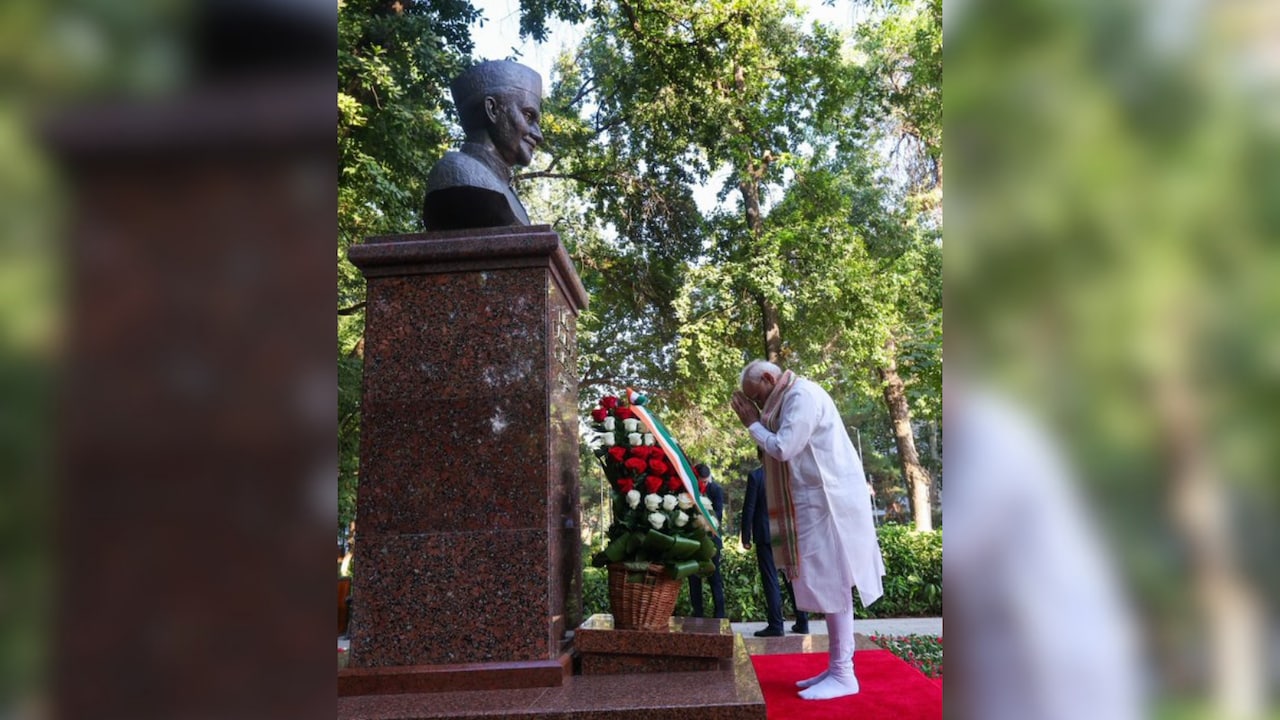
State visits between emerging economic powers and resource-rich Central Asian republics operate on structural imperatives rather than ceremonial whim. When bilateral diplomacy translates into tangible institutional upgrades, such as the elevation of the India-Uzbekistan relationship to a Comprehensive Strategic Partnership, the underlying mechanics involve deliberate economic calibration, security alignment, and logistical corridor design. Symbolic gestures, including honoring historical legacies in foreign capitals and joint arboreal planting under parallel environmental frameworks like Yashil Makon and Ek Ped Maa Ke Naam, serve as diplomatic signaling mechanisms designed to reduce friction in high-stakes interstate negotiations.
The economic baseline governing this engagement requires explicit quantification. Bilateral commerce between New Delhi and Tashkent has historically traded below its theoretical potential, constrained by geographical transit hurdles and limited financial integration. The establishment of a hard target—reaching USD 5 billion in bilateral trade by 2030—establishes a quantifiable performance metric for ministries on both sides. Achieving this expansion vector necessitates structural shifts across three primary functional pillars:
- Logistical and Transit Corridor Efficiency: Overcoming the absence of a direct shared land border requires utilizing multimodal transport networks, heavily dependent on the International North-South Transport Corridor and Iranian port infrastructure like Chabahar, to bypass regional bottlenecks.
- Sectoral Diversification: Moving away from traditional commodity exchanges into high-value domains, specifically pharmaceuticals, critical mineral extraction, aerospace components, and digital public infrastructure exports such as India's Unified Payments Interface.
- Regulatory Harmonization: Streamlining customs procedures and establishing bilateral investment protections to mitigate the sovereign risk profile for private enterprises operating across unfamiliar legal environments.
The geopolitical utility of Tashkent as a diplomatic venue carries historical weight, intrinsically linked to the legacy of former Indian Prime Minister Lal Bahadur Shastri. Beyond historical commemoration at the Shastri Memorial, modern statecraft utilizes these touchpoints to anchor contemporary policy within a narrative of continuity, reliability, and mutual sovereignty respect. Central Asia represents a crucial node in extended Eurasian security architecture. Landlocked and balancing the gravitational pull of larger adjacent continental powers, Uzbekistan pursues multi-vector foreign policies that align naturally with India's strategic preference for a multipolar regional order.
Environmental diplomacy increasingly functions as a direct instrument of economic statecraft. The convergence of India's domestic afforestation drives with Uzbekistan's large-scale ecological reclamation initiatives—symbolized by joint tree planting at the Kuksaroy Presidential Palace—provides cover for deeper technical cooperation. Direct financial allocations, such as a USD 1 million grant targeting environmental rehabilitation efforts in the Aral Sea basin, demonstrate how middle powers project soft power through ecological asset creation, addressing shared climate vulnerabilities that threaten agricultural productivity and public health across the region.
Institutionalizing this bilateral momentum demands active corporate participation rather than passive intergovernmental treaties. The planned execution of a dedicated Business Summit shifts the burden of expansion from state bureaucracies to private capital allocators and industrial consortia. To capitalize on these structural openings, export-oriented manufacturing firms and technology providers must establish joint ventures within Uzbek special economic zones, leveraging local energy cost advantages while integrating regional supply chains directly into broader South Asian industrial ecosystems.