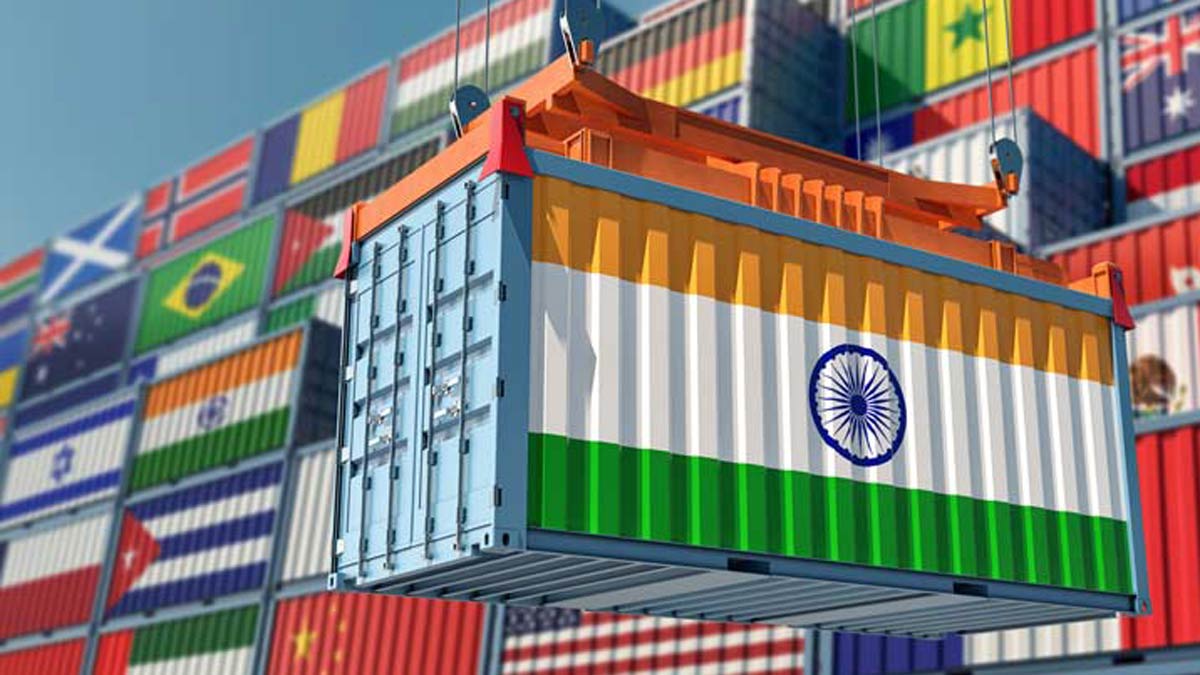
The Asymmetry of India-Latin America Commerce
The economic relationship between India and the Commonwealth of Independent States or East Asia commands significant state and corporate attention. However, India’s trade relationship with Latin America and the Caribbean (LAC) represents a severe case of market mispricing and under-allocation. While traditional export corridors face margin compression and geopolitical friction, the Indo-LAC corridor remains structurally undervalued. This under-allocation stems from a collective analytical failure: evaluating the region as a monolithic, distant geography rather than an aggregation of distinct, high-yield trade nodes.
To understand the scale of this undervaluation, one must look at the structural friction that distorts standard trade metrics. The perceived barrier of physical distance creates an artificial discount on LAC assets and export potential. When adjusted for value-to-weight ratios and margin elasticity, specific sectors within Latin America yield higher capital efficiency for Indian exporters than traditional European or North American destinations. The arbitrage lies in replacing low-margin, high-competition volume in the West with high-margin, supply-constrained specialized exports to LAC. For another look, see: this related article.
The structural misalignment can be broken down into three core components:
- The Velocity Deficit: The prolonged transit times for physical goods between Indian ports and South American hubs create a working capital drag that deters mid-market firms.
- The Regulatory Asymmetry: The lack of comprehensive Preferential Trade Agreements (PTAs) forces Indian goods to absorb higher tariff penalties compared to intra-regional or US-facing competitors.
- The Information Void: Indian corporate intelligence pipelines heavily favor Anglophone and Middle Eastern markets, leading to an overestimation of credit risk and currency volatility in Latin American jurisdictions.
By deconstructing these barriers through a rigorous corporate framework, Indian enterprises can systematically extract value from this neglected economic corridor. Related analysis on this trend has been published by Forbes.
The Three Pillars of Indo-LAC Value Extraction
Evaluating the Latin American market requires moving past nominal GDP growth figures. Instead, capital must be allocated based on three distinct structural pillars that define the Indo-LAC trade potential.
Pillar 1: High-Value-Density Manufacturing and Input Elasticity
The primary constraint of Indo-LAC trade is the logistics cost-to-value ratio. Shipping a low-margin bulk commodity over 15,000 kilometers is economically unviable. Therefore, the corridor favors high-value-density goods—products where logistics costs represent less than 5% of the total landed cost.
Pharmaceuticals and active pharmaceutical ingredients (APIs) serve as the prime example. India is already a major provider of generic formulations to Brazil and Mexico. However, the next phase of value capture lies in complex biologics and oncology therapeutics. The cost function of pharmaceutical manufacturing in India provides an inherent 30% to 40% cost advantage over Western multinational competitors. When exported to nations like Colombia or Chile, which operate sophisticated healthcare procurement frameworks, Indian manufacturers can capture premium pricing while still undercutting local or Western incumbents.
A similar mechanism operates in the automotive component and agrochemical sectors. In these industries, the input elasticity of Latin American agricultural and industrial sectors is highly sensitive to quality-stabilized, cost-efficient chemical inputs. Indian phosphorus and nitrogen derivatives, alongside specialized tractor components, match the rigorous soil and mechanical requirements of the Brazilian Cerrado at a fraction of the cost of European equivalents.
Pillar 2: Digital Infrastructure and Service Export Scalability
Physical distance is irrelevant to digital service delivery. The digital transformation of the LAC banking, retail, and telecommunications sectors has outpaced the local supply of engineering talent. This talent deficit creates a direct entry point for Indian technology architectures.
The opportunity extends beyond traditional IT outsourcing. The focus is now on the deployment of ready-made digital public goods and financial infrastructure. India’s success with unified payment architectures provides a tested blueprint for LAC nations seeking to digitize informal economies.
[Indian SaaS/Fintech Stack] ──(API Integration)──> [LAC Banking Infrastructure] ──> [Reduction in Transaction Friction]
Indian software-as-a-service (SaaS) enterprises targeting enterprise resource planning (ERP) and customer relationship management (CRM) verticalization for mid-market Latin American enterprises face minimal competition from bloated US software giants. The cost-to-performance ratio of Indian code and implementation support acts as a deflationary force for Latin American businesses looking to optimize operations amid domestic inflationary pressures.
Pillar 3: Resource Securitization Counter-Trade
Latin America possesses the critical mineral reserves required to fuel India’s domestic industrial transformation. The relationship must transition from a simple buyer-seller dynamic into an integrated, asset-backed counter-trade framework.
The global energy transition requires vast inputs of lithium, copper, and rare earth elements. The "Lithium Triangle" (Argentina, Bolivia, and Chile) holds over half of the world’s lithium resources. Indian public and private entities must deploy capital directly into upstream mining assets in these jurisdictions. The logical framework relies on a sovereign-backed vertical integration model:
- Upstream Equity Acquisition: Direct equity investment by Indian consortiums in Argentine or Chilean mining concessions.
- Long-term Offtake Agreements: Securing fixed-price, long-term supply contracts to insulate Indian manufacturing from spot-market price volatility.
- Downstream Value-Add: Exporting Indian refining technology and industrial machinery back to the host nations, neutralizing balance-of-payment concerns.
This counter-trade mechanism ensures resource security for India's domestic electric vehicle (EV) and electronics manufacturing ecosystems while providing Latin American economies with a stable, non-predatory capital partner.
Quantifying the Logistics and Capital Bottleneck
The primary operational failure in executing an Indo-LAC strategy is a failure to model the working capital cycle accurately. The physical transit of goods from Mumbai or Mundra to Santos or Veracruz requires an average of 35 to 50 days, excluding customs clearance delays.
The Working Capital Formula for Long-Transit Trade
To evaluate the true profitability of exporting to the LAC region, corporate treasury departments must calculate the Landed Capital Drag ($C_d$). This can be modeled using the following formula:
$$C_d = \left( \frac{V \times R}{365} \right) \times (T_t + T_c) + L_f$$
Where:
- $V$ = Value of the shipment
- $R$ = Annualized cost of capital (internal hurdle rate or short-term credit facility rate)
- $T_t$ = Transit time in days
- $T_c$ = Customs clearing and localized transit inland time in days
- $L_f$ = Freight and logistics cost as a fixed percentage of cargo value
If a firm fails to optimize $T_t$ and $T_c$, the interest expense on the tied-up capital can erode the margin premium that attracted the exporter to Latin America in the first place.
To mitigate this bottleneck, organizations must shift from direct port-to-port shipping profiles to a hub-and-spoke distribution model. Utilizing free trade zones in Panama or Uruguay allows Indian corporations to position inventory ahead of demand, dropping local fulfillment times from 45 days to under 72 hours. This positioning transfers the working capital burden from the exporter to the local distributor, unlocking rapid velocity of capital.
Navigating Regulatory Frameworks and Trade Asymmetry
The institutional architecture governing Indo-LAC trade is thin. India's current Preferential Trade Agreement (PTA) with Mercosur (Brazil, Argentina, Paraguay, and Uruguay) covers only a limited number of tariff lines. This creates a structural disadvantage when compared to nations that hold comprehensive Free Trade Agreements (FTAs) with the region, such as China or the United States.
Tariffs and the Real Cost of Protectionism
Indian engineering goods and textiles face average tariff rates ranging from 14% to 35% when entering Mercosur markets without preferential access. To bypass this barrier, strategic execution must shift from direct product exportation to localized final assembly or joint venture manufacturing.
[Indian Component Export (Low Tariff)] ──> [LAC Free Trade Zone / Local Assembly] ──> [Zero-Tariff Regional Distribution]
By exporting knocked-down kits or intermediate inputs into countries with favorable intra-regional trade links—such as Mexico (via USMCA) or Colombia, Chile, and Peru (via the Pacific Alliance)—Indian firms can achieve compliance with local rules of origin. This structural maneuver transforms a high-tariff barrier into an optimized regional distribution network, granting tariff-free access to the wider Latin American consumer base.
Risk Allocation and Currency Volatility Mitigation
The hesitation of Indian corporate boards to commit capital to the LAC region frequently tracks back to macroeconomic stability concerns. Currency volatility across the Argentine Peso, Brazilian Real, or Colombian Peso introduces significant balance-sheet risk if left unhedged.
Structural Hedging Frameworks
Relying purely on financial derivatives to hedge long-term exposure in illiquid currency pairings is cost-prohibitive. Instead, operational strategies must utilize structural hedging mechanisms:
- Hard-Currency Invoicing: Insisting on US Dollar or Euro denomination for all long-term supply agreements, shifting the immediate currency depreciation risk to the local purchasing entity.
- Localized Debt Structuring: Financing local operational entities through debt denominated in the host country's currency. In the event of a currency devaluation, the local liability decreases in tandem with local revenues when converted back to the parent company’s reporting currency.
- Asset-Revenue Matching: Utilizing local cash flows generated from services or sales to acquire depressed local hard assets or commodities, which are then exported globally to realize value in hard currency.
Sovereign and Counterparty Risk Management
The application of strict credit insurance protocols is mandatory. Companies must integrate structured trade finance instruments, including irrevocable letters of credit confirmed by top-tier international banking institutions, into their baseline commercial terms. Partnering with multilateral agencies like the Inter-American Development Bank (IDB) or utilizing the guarantees provided by India's Export-Import Bank (EXIM Bank) reallocates geopolitical and systemic banking risk away from the corporate balance sheet.
The Strategic Blueprint for Corporate Allocation
Capitalizing on the Indo-LAC trade arbitrage requires abandoning a generalized approach. Executing this strategy demands a precise sequencing of operations designed to capture high-margin niches while neutralizing logistical drags.
Phase 1: Identify High-Value-Density Niches (APIs, SaaS, Auto Components)
  │
  ▼
Phase 2: Establish Free Trade Zone Logistics Hubs (Panama/Uruguay)
  │
  ▼
Phase 3: Deploy Structural Currency and Geopolitical Risk Mitigants
The corporate play is clear: scale back exposure to over-saturated, low-yield regional markets where pricing power has been systematically eroded. Allocate that freed capital into developing specialized, infrastructure-tied corridors into Brazil, Mexico, and the Pacific Alliance nations. Firms that establish these supply chain pathways, secure upstream asset configurations, and deploy localized assembly frameworks will capture structural premiums long before the broader market recognizes the mispricing. The yield goes to those who build the infrastructure of the corridor, not those who wait for it to be smoothed by consensus.