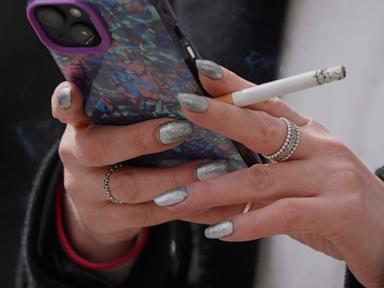
Westminster is congratulating itself on a "smoke-free generation." The narrative is tidy, moralistic, and dangerously naive. By passing legislation that creates a sliding age-gate for tobacco purchases—effectively banning anyone born after 2009 from ever legally buying a cigarette—the UK government thinks it has solved a century-long health crisis with a stroke of a pen.
It hasn't. It has simply outsourced the distribution of tobacco from regulated storefronts to the trunk of a car in a dark alley.
The "lazy consensus" pushed by health lobbyists and career politicians is that prohibition works if you apply it slowly. They argue that by "phasing out" the habit, they can avoid the immediate shock of a total ban while reaping the long-term rewards of a healthier workforce. This ignores the most basic rule of human behavior: demand does not vanish because a supply line becomes illegal. It just becomes more expensive and more violent.
The Myth of the Vanishing Smoker
The premise of this bill rests on the idea that 18-year-olds in 2028 will look at a cigarette, realize they are legally barred from buying it, and simply walk away.
History is littered with the corpses of similar experiments. Look at the US experiment with alcohol in the 1920s or the ongoing global "War on Drugs." When you criminalize a product with high inelasticity of demand, you don't stop the usage; you create a massive profit incentive for organized crime.
In the UK, the illicit tobacco trade already costs the taxpayer roughly £2.8 billion in lost revenue every year. HMRC data isn't a secret. We know that one in four cigarettes smoked in the UK is already "under the counter." By creating a permanent class of "illegal" buyers, the government is gifting the tobacco market to gangs who don't check ID, don't pay VAT, and don't care if their product is laced with sawdust or heavy metals.
The Enforcement Nightmare Nobody is Talking About
Imagine you are a shopkeeper in 2040. A 30-year-old walks in to buy a pack of cigarettes. Because of this law, they are legally allowed to purchase them. Five minutes later, a 29-year-old walks in. They are banned for life.
The administrative burden of policing a sliding age scale is a logistical joke. Retailers are now expected to be the front line of a constitutional experiment that treats two fully grown adults as having different civil liberties based on a birth certificate.
I have worked with supply chain logistics for two decades. I’ve seen how easy it is to bypass "closed" systems. This law creates a massive "grey market" where older siblings, friends, or even strangers become the primary distributors for the banned generation. We aren't stopping smoking; we are turning every 31-year-old into a potential bootlegger.
The Tax Gap and the NHS Paradox
The standard retort is that the NHS will save billions. This is a half-truth that fails to account for the fiscal reality of the UK budget.
Tobacco duty brings in around £10 billion annually. While the long-term health costs of smoking are high, smokers also tend to die younger, "saving" the state millions in pension payouts and end-of-life social care for the elderly. This is a grim, cold-blooded calculation, but it is the one the Treasury relies on.
When you remove that £10 billion in tax revenue and replace it with the massive costs of policing a new black market, the "savings" evaporate. You are left with a hole in the budget and a police force stretched even thinner trying to figure out if a man on a street corner is selling a legal or illegal combustible stick.
Infantilizing the Citizenry
There is a deeper, more philosophical rot at the heart of this bill. It signals the end of the "competent adult" in British law.
We allow 18-year-olds to vote, to join the military, to marry, and to take out life-altering debt. Yet, this legislation suggests they are too cognitively impaired to decide whether or not to consume a legal product. If the state can decide you are "too young" for a cigarette at age 35, what is stopping them from applying the same logic to high-sugar foods, red meat, or alcohol?
The slippery slope isn't a fallacy here; it’s the blueprint. By removing personal agency, the government isn't building a healthier society; it's building a nursery.
The Vaping Contradiction
The bill also takes aim at vaping, the very tool that has done more to reduce smoking rates in the last decade than any government "Stoptober" campaign ever could.
By restricting flavors and packaging, the government is making the less harmful alternative less attractive. If a 19-year-old can't buy a vape and they can't buy a legal cigarette, they will find a "disposable" on the black market that has zero safety regulations and probably originated in an unlicensed factory with no quality control.
We are trading a regulated health risk for an unregulated catastrophe.
The Reality of the "Illegal Class"
Let’s be brutally honest about who this affects. Smoking is heavily concentrated in lower-income communities. This ban will disproportionately criminalize the poor.
While the wealthy will always find ways to source high-end cigars or imported tobacco through "private clubs" and international travel, the working class will be the ones harassed by police for holding a prohibited item. It creates a two-tier society where your date of birth determines your level of state-mandated purity.
Stop Chasing Utopias
The UK should have doubled down on harm reduction—better education, higher-quality vaping standards, and targeted support for those already addicted. Instead, it chose the "big win" of a total ban because it looks better on a campaign poster.
We are about to watch the UK’s tobacco market go the way of the American Prohibition era. The cigarettes won't disappear. They will just get filthier, the criminals will get richer, and the state will lose even more control over what its citizens put in their bodies.
The "smoke-free generation" will still smoke. They’ll just do it while funding the very gangs the government claims to be protecting them from.
Throw the bill in the shredder and treat adults like adults. Or don't, and watch the shadow economy swallow the high street whole.