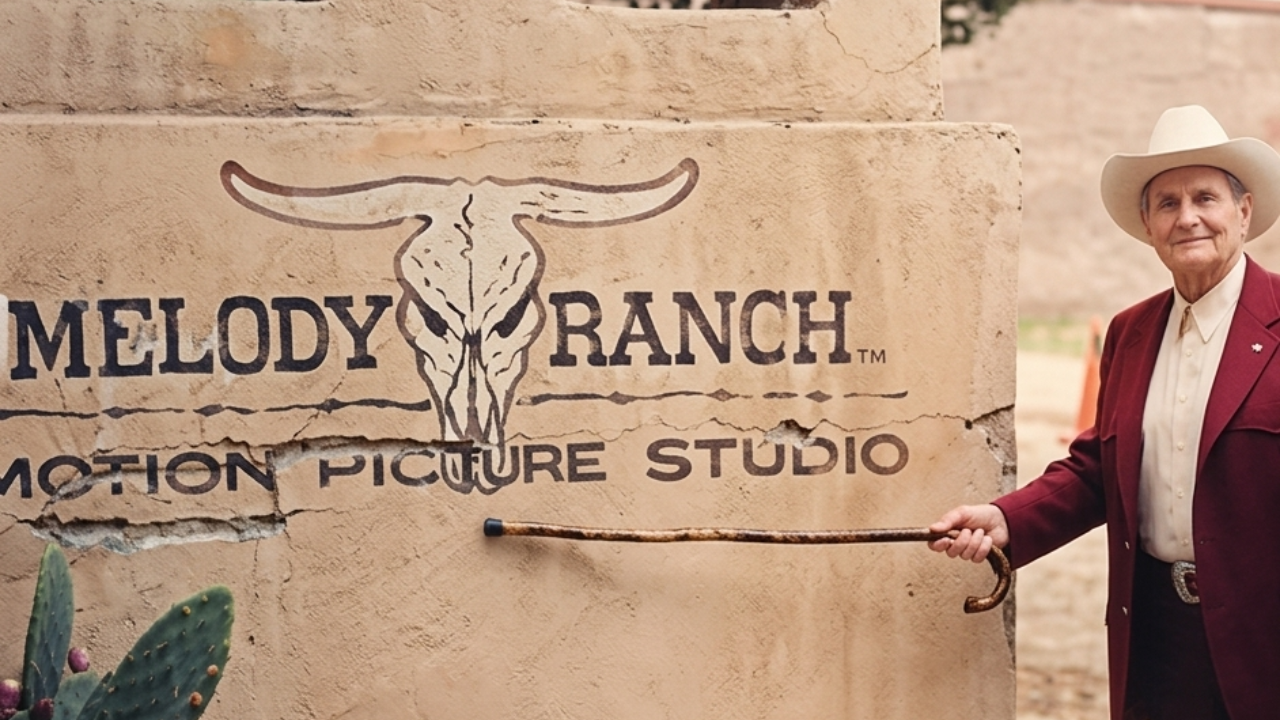
Old Hollywood history is filled with glamorous tales, but few match the raw heartbreak of Gene Autry and his legendary Melody Ranch. When the singing cowboy bought 110 acres of prime California land in Placerita Canyon back in 1952, he wasn't just buying real estate. He was buying an empire.
For years, that location had served as a backlot for early cinema legends, including John Wayne. Autry wanted to turn the space into a hub for his television production company, Flying A Pictures, churning out weekly adventures for eager kids sitting in front of living room television sets. But a single afternoon in August 1962 changed everything. A fast-moving brush fire tore through the canyon and reduced 54 buildings to ash, crushing Autry's grand plans and beginning a long, slow goodbye to his beloved ranch.
If you look into how Hollywood treats its physical history, you quickly realize that outdoor movie sets are built to look tough on camera, but they are remarkably fragile in real life. They are made of wood, canvas, and plaster facades designed to trick the eye. Autry found this out the hard way.
The Rise of Melody Ranch
Before Autry laid down his cash in 1952, the Newhall property had already spent decades working as a film set. Known originally as Monogram Ranch or Placeritos Ranch, it offered directors a quick escape from Los Angeles studios. You had a ready-made Western street, dusty trails, and hills that could pass for almost any frontier territory.
Autry knew the dirt well. He had filmed there years earlier, including work on his 1935 film Tumbling Tumbleweeds. When he finally bought the 110-acre spread, television was exploding. Instead of making feature films exclusively, Autry shifted gears. He used the ranch as the primary headquarters for his television shows, and soon programs like Hopalong Cassidy and Gunsmoke were utilizing the dusty streets and wooden storefronts.
He wasn't just running a production lot. Autry envisioned the property as a future home for his massive personal collection of Western lore. He had spent years gathering rare items: historic stagecoaches, priceless Native American artifacts, antique firearms including a set once used by Billy the Kid, and over 200 mounted longhorn steer heads. He stored costumes, vehicles, and an archive of roughly 17,000 sound recordings on the grounds.
It was a working studio and a private museum waiting to happen. Then the dry summer winds picked up.
The 1962 Placerita Fire
On August 28, 1962, a massive brush fire erupted in Placerita Canyon. Fueled by heavy brush and dry weather, the flames raced toward the property with terrifying speed.
Firefighters managed to rescue the ranch hands and all fourteen horses, including Autry's famous mounts housed in fireproof stables, along with a portion of his historic film reels. But the structural losses were catastrophic. Seventy-five percent of the ranch vanished in hours. Fifty-four buildings burned to the ground.
Autry’s dream of opening a public Western museum on the site went up in smoke. The rare guns, the irreplaceable documents, the wagons, and the historic false-front buildings were gone. While a few structures survived—including an old adobe house and a schoolhouse—the soul of the active working ranch was badly wounded.
The disaster forced a major pivot. Television crews moved elsewhere, and the charred hillsides sat in a state of melancholy.
Selling Off the Land
Autry didn't bounce back by rebuilding the massive empire he once envisioned. Instead, the fire marked the beginning of a decades-long retreat.
Over the next thirty years, piece by piece, Autry began selling off portions of the 110-acre property to real estate developers. The sprawling backlot shrunk dramatically as housing tracts crept into Placerita Canyon. Fans of classic Westerns watched sadly as the acreage dwindled.
Even as he sold off the land, a few constants remained. His famous horse, Champion Three, lived out his days at the ranch until passing away in 1990. But the era of the giant Autry-owned movie ranch was effectively over long before that. By the time the final parcels were managed or sold down to the last remaining remnants, the physical footprint of Melody Ranch was a mere fraction of its historical peak.
What Remains Today
History rarely stays completely buried in Hollywood. Years after Autry let go of the bulk of the property, new owners stepped in to restore what was left of the historic Western street, rebuilding structures using photographs and old film frames. Today, parts of the surviving acreage still host film crews and modern television productions, keeping a ghostly echo of the golden age of Westerns alive.
You can still visit parts of the Santa Clarita area and feel the ghost of that old cinema magic, but the story serves as a harsh reminder of how quickly physical history can vanish. Gene Autry bought 110 acres to build a permanent monument to the American frontier, but nature and time reduced it to a fraction of its former self. What started as a television powerhouse ended as a lesson in preservation, proving that even the most iconic Hollywood dreams can be rewritten by a single afternoon of fire.