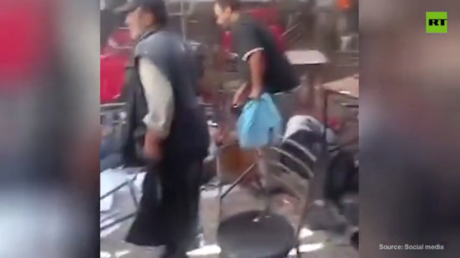
One thousand days. That is how long the people of Gaza have been living through a relentless crucible. If you look at the official political declarations, a ceasefire took effect on October 10, 2025. On paper, the major combat operations are over. But if you talk to the Palestinians trapped inside the enclave, they will tell you that the peace everyone speaks about is an illusion.
A milestone like 1,000 days should mark a transition toward recovery. Instead, it serves as a grim ledger of what has been permanently lost. Over 73,000 Palestinians are dead, according to data from Gaza’s Health Ministry. Thousands more remain missing, buried deep beneath the mountains of pulverized concrete. The war that began after the October 7, 2023 attacks has completely reshaped the geography, politics, and human psyche of the region. Yet, the current reality on the ground is not one of reconstruction. It is an exhausting limbo where survival is still a daily battle.
The Reality of a Fragile Ceasefire
Don't let the word ceasefire fool you. While the rain of heavy aerial bombardment has slowed down compared to the peak of the conflict, the violence has never actually stopped. Since the truce was signed, more than 1,050 Palestinians have been killed by continued localized strikes and security operations.
The territory is fundamentally altered. Israeli forces controlled roughly half of the Gaza Strip when the truce began, but that footprint has quietly grew. The Israeli government has made its intentions clear, pushing to maintain control over 70% of the territory. This leaves more than two million residents squeezed into a suffocating 30% of the land, mostly a narrow strip lacking any basic infrastructure.
Humanitarian groups like Mercy Corps point out that families are still forced to live in collapsing makeshift shelters. They spend their mornings hunting for clean water and their nights wondering if a localized strike will hit their block. The International Committee of the Red Cross recently noted that the region is far away from even a basic semblance of normalcy. The conflict didn't end; it just shifted into a quieter, agonizing phase.
A Broken System of International Aid
The biggest disappointment for the people on the ground has been the complete failure of the promised aid surge. The October truce was supposed to open the floodgates for food, medicine, and fuel. That simply did not happen.
Every single border crossing remains tightly restricted. United Nations humanitarian officials have called out the incredibly cumbersome approval processes and customs procedures managed by COGAT, the Israeli military body overseeing civilian affairs. Essential items are frequently blocked over concerns that they could have a dual use as military equipment. This includes basic medical supplies and even prosthetic limbs for the tens of thousands of amputees created by the war.
The numbers paint a horrifying picture of neglect:
- 17 hospitals across the Gaza Strip remain completely non-functional.
- An estimated 245,000 children are currently suffering from or are at extreme risk of acute malnutrition.
- Over 370,000 homes have been severely damaged or completely destroyed, which translates to roughly 77% of all housing units in the enclave.
While COGAT insists that the food entering the strip exceeds the nutritional needs of the population, aid agencies on the ground tell a completely different story. The available food lacks any nutritional diversity, and the prices in local markets are astronomically high, leaving most families entirely dependent on sparse hand-outs.
The Stalled Board of Peace
Politically, everything is deadlocked. The ceasefire deal was brokered with massive fanfare under a U.S.-led initiative known as the Board of Peace. The framework promised billions of dollars in international pledges to fund the total recovery and rebuilding of Gaza.
Today, that board is virtually silent. The entire diplomatic process has stalled over the incredibly thorny issue of Hamas disarming. The U.S. and Israeli framework demands full disarmament before massive reconstruction funds are unlocked and an international stabilization force is deployed. Hamas hasn't completely rejected the idea, but they are refusing to give up all their weapons without major, long-term concessions from Israel.
While the politicians argue over terms in distant capitals, the residents of Gaza are paying the price. Local trade is dead, the banking system is non-existent, and there is zero clear plan for who will actually govern the territory or clear the millions of tons of toxic rubble.
Moving Past the Static Deadlock
Waiting for a flawless political consensus before fixing the humanitarian disaster is a catastrophic error. International donors and regional powers need to pivot away from grand, all-or-nothing diplomatic deals and focus on immediate, unconditional structural relief.
First, the dual-use restrictions on medical and water infrastructure equipment must be challenged directly by international cross-border coalitions. Clean water access and functioning surgical units cannot be used as bargaining chips for disarmament negotiations.
Second, regional partners need to bypass the paralyzed centralized funds and directly finance localized, non-governmental distribution networks to stabilize food prices. Survival cannot wait for a political breakthrough. If the international community keeps treating Gaza as a permanent waiting room, the next thousand days will look exactly like the last.
The video below offers an on-the-ground look at how displaced families are attempting to navigate daily life inside the strip amid the ongoing political deadlock.
Palestinians across Gaza Strip mark 1,000 days of war
This news report provides direct visual context and testimonies from local residents enduring the aftermath of the milestone.