The headlines say a US-brokered ceasefire is holding in Gaza, but the reality on the ground tells a completely different story. You can't look at the latest news out of the strip without realizing that the truce signed last October is basically a ceasefire on paper only.
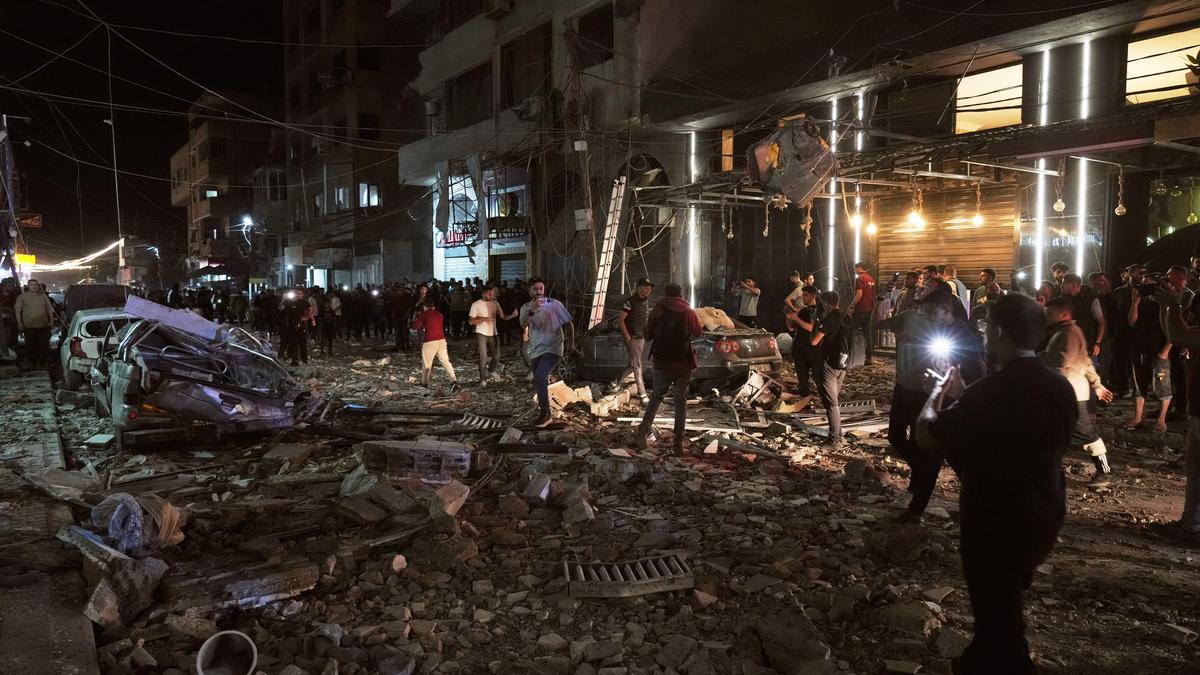
On Tuesday, May 26, 2026, Israeli airstrikes killed at least seven Palestinians across Gaza, exposing the fragile state of this prolonged conflict. Five people died in an attack on the Al-Maghazi refugee camp, while a separate strike on a vehicle in Khan Younis killed two more. These aren't isolated incidents. They represent a dangerous, escalating proxy dynamic inside the enclave that most mainstream reporting completely ignores.
If you want to understand why Gaza remains a tinderbox despite months of official truce, you have to look past the political statements and look at what is happening along the internal borders.
The Chaos Inside Al-Maghazi Camp
The strike at the Al-Maghazi refugee camp in central Gaza wasn't a standard military engagement. It highlights a messy internal conflict that has been brewing for months.
According to local witnesses and Palestinian security sources, an unidentified armed group broke into a home east of the camp early Tuesday morning. Local residents noticed the intrusion and confronted the gunmen using nothing but sticks and stones. As the confrontation grew, an Israeli drone fired a missile into the crowd of residents.
Five people died instantly. Several others were injured. The armed men, meanwhile, fled toward the eastern border area controlled by the Israeli military.
The Israeli military offered a different perspective. They stated that their troops spotted several "armed terrorists" operating near the "Yellow Line"—the heavily guarded military boundary that divides Gaza into Israeli-controlled zones and regions de facto managed by Hamas. The military said it launched a precise strike to remove the threat.
But local reporters and international observers point out a much more complicated reality. Over the past few weeks, incursions by anti-Hamas militias operating out of Israeli-controlled areas have surged. Hamas labels these groups "Israeli collaborators," while the militias claim their goal is to overthrow Hamas rule. This internal friction, paired with instant drone intervention, creates a chaotic environment for civilians caught in the middle.
Khan Younis and the Targeted Strike Policy
Hours after the tragedy at Al-Maghazi, another Israeli airstrike hit a western neighborhood in the southern city of Khan Younis. The target was a moving vehicle.
Nasser Hospital received two bodies from the wreckage. The Israeli military confirmed it conducted a targeted strike aiming at a specific Hamas operative, though they kept details minimal while assessing the outcome.
This brings us to the core issue of the October 10 ceasefire agreement. Under the terms brokered by the US, Israel reserves the right to strike any targets it deems an active or immediate threat. In practice, this clause has allowed routine aerial operations to continue.
Since the truce took effect in October, at least 906 Palestinians have lost their lives to these ongoing military actions, according to the Gaza health ministry. On the other side, the Israeli military reports that five of its soldiers have been killed by militants during the same timeframe. The figures paint a picture of a low-intensity war that never actually stopped.
The Friction of a Divided Gaza
To understand why the violence persists, you have to look at how Gaza is physically partitioned right now.
The ceasefire left the territory deeply fractured. Israeli forces still occupy more than half of Gaza's land. They maintain a strict presence along the "Yellow Line" and have ordered residents out of large swaths of the interior. Consequently, more than two million people are crammed into a narrow coastal strip, living in makeshift tents or heavily damaged concrete structures.
- Aid Shortages: The truce promised 600 trucks of humanitarian aid daily. Currently, barely 150 trucks enter, and most carry commercial goods rather than emergency relief.
- Infrastructure Collapse: Critical services in cities like Khan Younis are failing. Severe fuel shortages mean hospitals are constantly on the verge of losing power for oxygen lines, and municipal sewage systems have completely broken down.
- The Diplomatic Deadlock: Both sides are stuck. Indirect negotiations over the second phase of the peace plan—which requires Hamas to disarm and the Israeli military to withdraw completely—are at an absolute standstill.
The lack of reconstruction and the permanent displacement of families fuel an environment of total despair. When people have no homes to return to and basic supplies don't arrive, stability is impossible to maintain.
What Happens Next on the Ground
If you are tracking this situation, don't look for sudden, massive breakthroughs in the international diplomatic circuit. The real trajectory of the conflict will be decided by these local border incidents.
The immediate steps to watch involve whether these anti-Hamas militias continue to push into civilian camps like Al-Maghazi, and how intensely Hamas forces retaliate along the partition lines. Until the core issues of territorial control, aid delivery, and full military withdrawal are resolved through the stalled phase-two talks, expected localized drone strikes and sudden urban skirmishes will keep shattering the illusion of peace in Gaza.