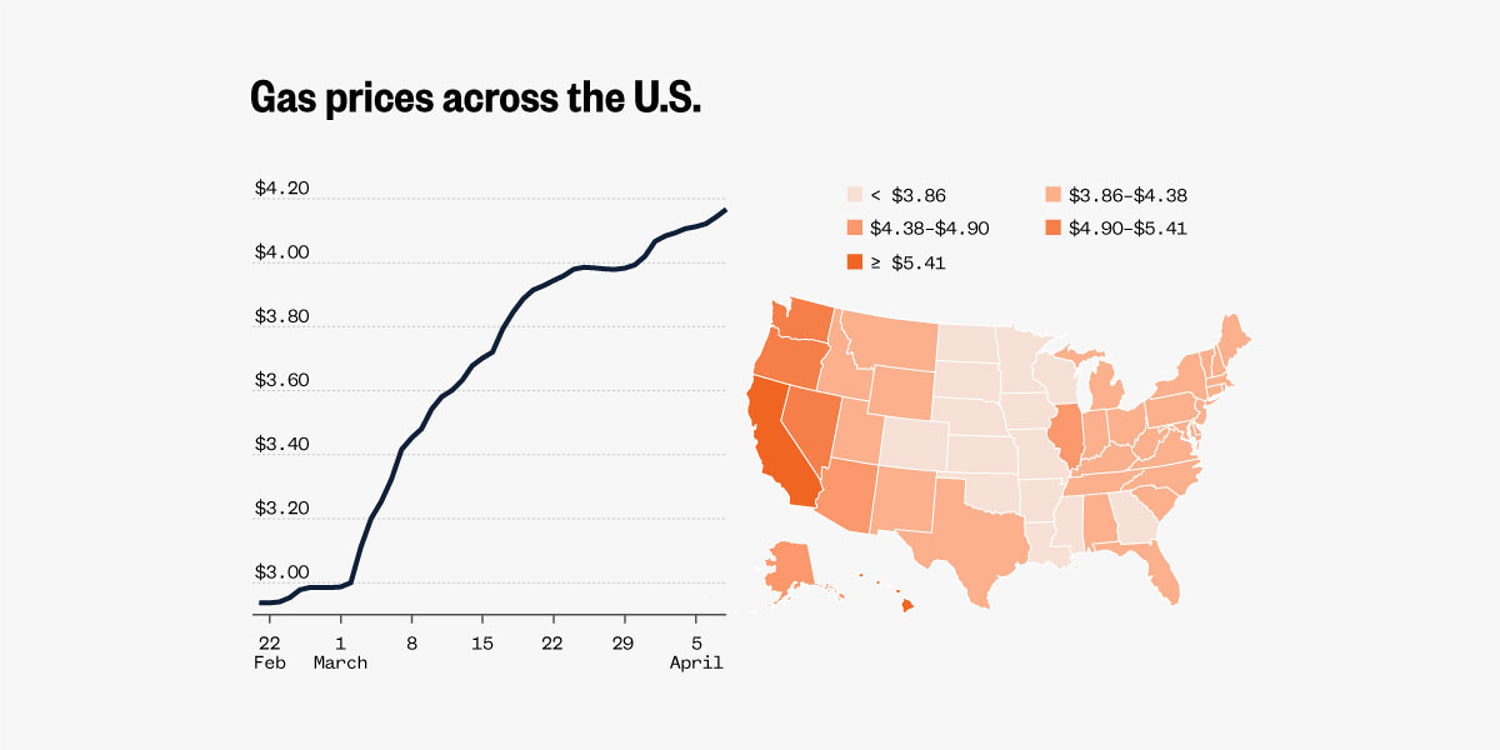
You’re likely staring at a gas pump screen right now, watching the numbers climb faster than your heart rate. It’s not your imagination. National gas prices just breached the $4.16 per gallon mark this week, hitting a peak we haven't seen in years. If you’re in California, you’re looking at nearly $6.00, while Texas drivers are still hovering around $3.84.
Why the sudden spike? It’s a mess of geopolitical tension, seasonal shifts, and supply chain hiccups. The conflict involving Iran has sent global crude oil markets into a tailspin. Combine that with the annual spring "switch-over" to more expensive summer-blend fuel, and you have a recipe for a very expensive commute. Honestly, it’s frustrating. You want to know if prices will drop or if you should just trade your SUV for a bicycle.
The Real Reason Your Local Station Is Charging More
Most people blame the local gas station owner when prices jump ten cents overnight. That’s a mistake. Most station owners make pennies on a gallon of gas. They make their real money on the coffee and snacks you buy inside.
The price you pay is basically a pie chart of costs you can't control. Crude oil is the biggest slice, accounting for about 50% of what you pay. When global tensions rise in the Middle East, crude prices surge, and you feel it at the pump within days.
Refining costs take up another 20%. This is where things get tricky in the spring. To meet environmental regulations, refineries have to switch from "winter-blend" to "summer-blend" gasoline by May. Summer-blend is less prone to evaporation in high heat, but it’s harder to produce. That extra effort costs money.
State Taxes and Why Your Neighbor Pays Less
State taxes are the wild card. This is why crossing a state line can save you 50 cents a gallon. California has some of the highest fuel taxes in the country, adding over 70 cents to every gallon. Meanwhile, states like Alaska or Texas keep it much lower.
- Environmental Mandates: Some states require specific fuel additives to reduce smog. These "boutique blends" can only be produced by certain refineries, creating a localized supply squeeze.
- Transportation Costs: If you live far from a major pipeline or refinery, the gas has to get to you by truck or rail. That adds a "delivery fee" to every gallon.
- Competition: If there’s only one station for 50 miles, they’ll charge what they want. In high-density areas, stations get into "price wars" to lure you into their convenience store.
Is There Any Relief in Sight for 2026?
The short answer is: not immediately. The U.S. Energy Information Administration (EIA) originally predicted lower prices for 2026, but the Iran conflict changed the math. We’re currently in a period of "price volatility." This means numbers will bounce around based on the latest news cycle.
However, there’s a silver lining. U.S. crude production is still at record levels. We’re pumping more oil than ever before. This domestic supply acts as a buffer. Without it, we’d likely be looking at $7.00 gas nationwide. Analysts expect that once the "summer-blend" transition is complete and the initial shock of geopolitical news fades, prices might settle back toward the $3.70 range by late autumn.
The Impact of Electric Vehicles and Efficiency
You might not drive an EV, but you’re benefiting from them. As more people switch to electric or hybrid vehicles, the overall demand for gasoline dips. The EIA notes that fleetwide fuel economy is at an all-time high. Basically, cars are getting better at sipping gas rather than gulping it. This long-term trend is the only thing keeping prices from permanent record highs.
Stop Giving Away Your Money at the Pump
You can’t control global oil markets, but you can control how much of it you burn. Most people drive like they’re on a racetrack. Stop doing that. Jackrabbit starts and hard braking can lower your gas mileage by 15% to 30% at highway speeds.
Check your tire pressure. It sounds like something your dad would nag you about, but it matters. Under-inflated tires create more rolling resistance. It’s like trying to ride a bike through sand. Keep them at the recommended PSI, and you’ll see an immediate, albeit small, boost in efficiency.
Use the Right Apps and Loyalty Programs
If you’re not using a fuel rewards program, you’re leaving money on the table. Most major chains like Shell, BP, and Exxon have apps that save you at least 5 to 10 cents per gallon.
- GasBuddy: It’s the gold standard for finding the cheapest station in your immediate area.
- Warehouse Clubs: If you have a Costco or Sam’s Club membership, use it. Their gas is almost always significantly cheaper than the station down the street.
- Credit Card Rewards: Some cards offer 3% to 5% cashback on fuel. On a $60 fill-up, that’s $3 back in your pocket. It adds up.
Don't wait until your tank is on empty to find a station. That’s when you’re forced to pay whatever the closest sign says. Start looking when you hit a quarter tank. Use an app to plan your stop at a cheaper location along your route. These small habits are the only way to fight back against a market that doesn't care about your bank account.