Foreign policy is not a consumer goods transaction.
The media loves the narrative of the "struggling commuter" versus the "hawkish politician." It frames the nuclearization of Iran as a line item on a balance sheet where the American driver is being overcharged. This is a fundamental misunderstanding of how global stability functions. If you think five dollars a gallon is a crisis, wait until you see the price of a nuclear-armed Middle East.
We are currently witnessing a collective delusion where short-term domestic comfort is weighed against long-term existential threats. It is a false equivalence rooted in economic illiteracy.
The Myth of the "Affordability" Trade-off
The consensus view suggests that sanctioning Iranian oil—thereby tightening global supply and raising prices—is an act of economic self-sabotage. Critics argue that a president’s first duty is to the "pocketbooks of the people."
This is short-termism at its most lethal.
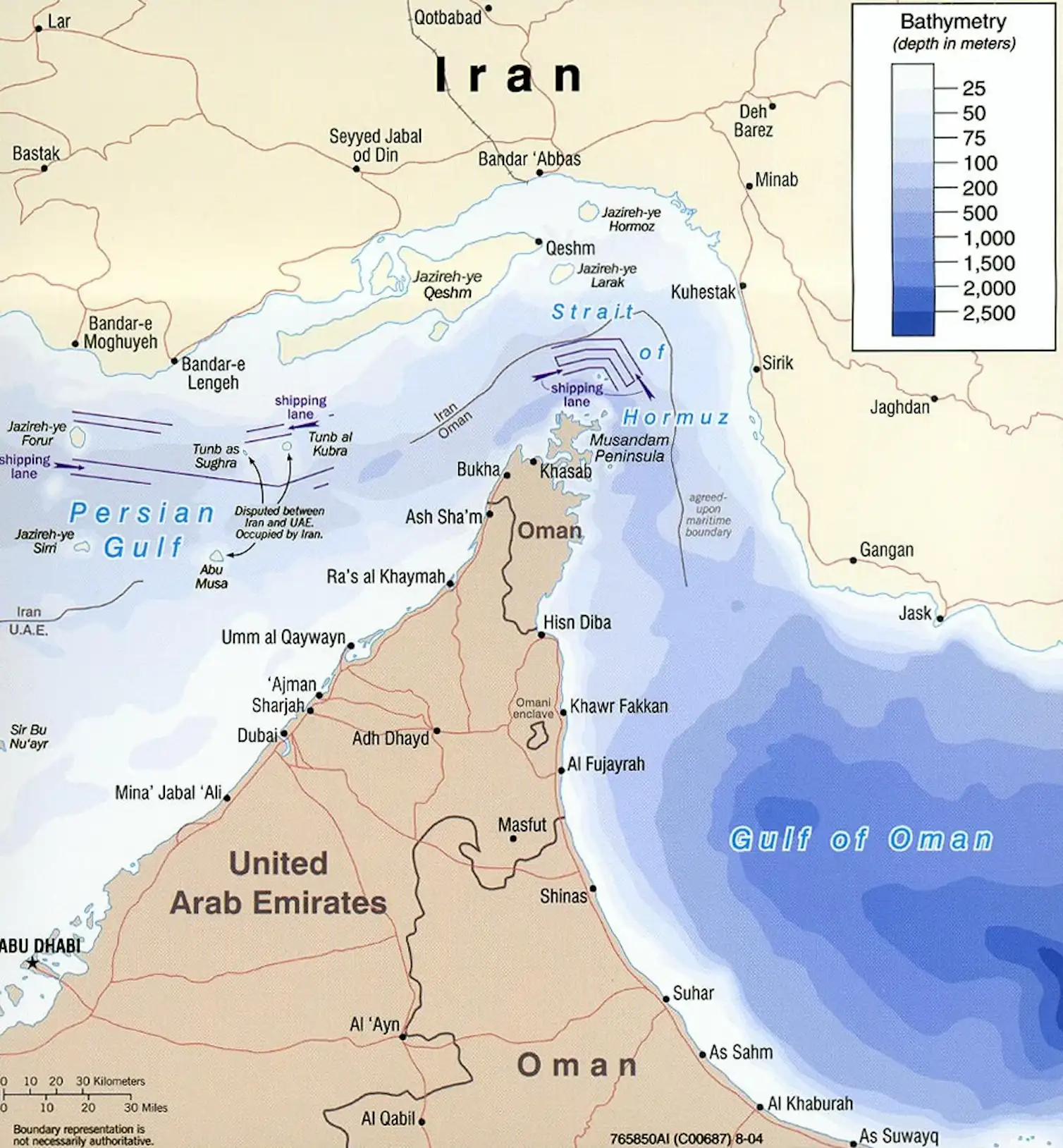
In reality, the volatility caused by a nuclear-armed rogue state would dwarf any temporary spike in the Consumer Price Index. We aren't talking about a few cents at the pump; we are talking about the total disruption of the Strait of Hormuz, a chokepoint through which 20% of the world's liquid petroleum passes.
If Iran achieves breakout capacity, they don’t just get a bomb. They get a permanent veto over global energy markets. They gain the ability to hold the entire global economy hostage without firing a single shot. Paying a premium now is an insurance policy against a total systemic collapse later.
Nuclear Proliferation is an Infinite Cost
When a nation like Iran goes nuclear, the "economic pain" doesn't end with a policy shift. It triggers a regional arms race. Saudi Arabia, Egypt, and Turkey will not sit idly by.
Imagine a scenario where four or five volatile regimes in the most unstable region on earth are all maintaining nuclear hair-triggers. The defense spending required for the United States to contain that reality would make our current inflation look like a rounding error.
I’ve watched analysts cry foul over energy prices for twenty years while ignoring the fact that the U.S. dollar’s strength is tied directly to our ability to enforce global order. You cannot have a "Strong Dollar" and a "Weak Presence." They are mutually exclusive.
Sanctions are the Cheap Option
The "economic pain" argument assumes that there is a third door. There isn't. You have three choices:
- Diplomatic capitulation (which history shows leads to eventual nuclearization).
- Economic strangulation (current sanctions).
- Kinetic military action (war).
Sanctions are the only "budget-friendly" option on the table. A full-scale conflict in the Persian Gulf would send oil to $300 a barrel overnight. It would freeze global shipping. It would destroy the retirement accounts of every American complaining about the price of a mid-size SUV fill-up.
To complain about the cost of sanctions is to complain about the cost of the sprinkler system while the house next door is actively on fire.
The Zero-Sum Fallacy of Domestic Politics
Political pundits treat the economy as a closed loop. They talk as if the Federal Reserve can simply tweak a dial and fix everything regardless of what’s happening in Tehran.
This is a lie.
The global economy is a complex, interconnected machine. You cannot isolate the American consumer from the reality of Iranian centrifuges. When we talk about "stopping" a nuclear program, we are talking about preserving the underlying architecture of global trade.
People ask: "Why should I care about a bomb 7,000 miles away when I can’t afford eggs?"
The answer is brutal: Because the supply chains that bring those eggs to your grocery store rely on a world where nuclear blackmail isn't the standard operating procedure for mid-tier powers.
The Efficacy of the "Pain"
The goal of economic pressure isn't just to punish; it's to force a change in the internal calculus of the Iranian regime. For sanctions to work, they have to be felt. If they are light enough that they don't affect global oil prices, they are light enough for the Iranian Revolutionary Guard Corps to ignore.
The pain is the point.
We’ve seen this before. In 2012, the intensification of sanctions led directly to the negotiating table. When the pressure was eased, the leverage evaporated. Diplomacy without a credible economic or military threat is just a polite way of losing.
The Hard Truth About Energy Independence
The loudest critics of "economic pain" often point to American energy independence as a shield. "We produce enough oil here, so why are we affected?"
This ignores the reality of the global commodity market. Oil is fungible. US producers sell to the highest bidder on the world stage. Unless we plan on nationalizing the oil industry and banning exports—a move that would destroy our own economy—we are tied to the global price.
The only way to truly insulate the American consumer from Middle Eastern instability is to ensure that instability doesn't escalate to the nuclear level.
Stop Asking for a Free Lunch
The American public has been sold a fantasy that we can maintain global hegemony, prevent nuclear proliferation, and keep gas under three dollars all at the same time.
You can’t.
Leadership requires choosing the least-bad option. If the choice is between a temporary recession and a nuclear-armed Iran, the recession is the bargain of the century.
Stop looking at the price on the sign at the corner gas station and start looking at the cost of a world where we let the most dangerous weapons fall into the hands of the most dangerous actors because we were too cheap to pay for the alternative.
If you aren't willing to endure a little discomfort to prevent a global catastrophe, you aren't a citizen; you're just a consumer waiting for the lights to go out.
Go fill up your tank. Pay the extra ten dollars. It’s the cheapest contribution to national security you’ll ever make.