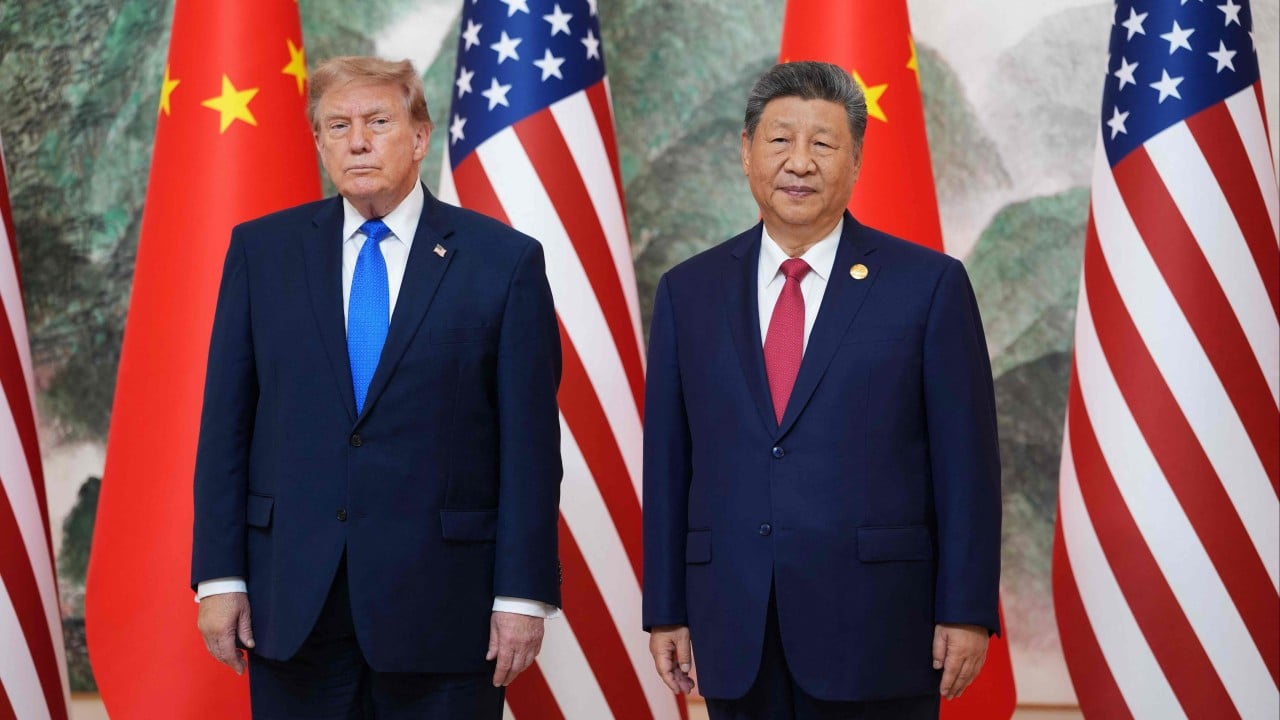
Great power competition between Washington and Beijing operates as a classic two-player
To understand why ASEAN resists choosing a side, analysts must separate the incentive structures of the superpowers from the survival mechanics of middle and small powers. When Washington and Beijing frame global trade, technology supply chains, and regional security as existential struggles, they create a payoff matrix that punishes cooperation. ASEAN states reject this framing entirely, treating great power rivalry as an external variable to be hedged rather than a binary choice to be resolved.
The Anatomy of the Superpower Prisoner's Dilemma
In standard game theory, a Prisoner's Dilemma occurs when two rational actors pursue individual self-interest, resulting in a worse outcome for both than if they had cooperated. Applied to US-China relations, the mechanics break down into four distinct payoff quadrants across trade, technology, and regional influence:
- Mutual Cooperation (Global Public Goods): Both powers maintain open markets, coordinate on climate policy, and uphold multilateral trade rules. This yields maximum global economic growth and supply chain efficiency.
- US Defection, China Cooperation: Washington imposes targeted export controls and tariffs while Beijing maintains open market access. Washington captures short-term technological dominance at Beijing's expense.
- China Defection, US Cooperation: Beijing subsidizes domestic champions and restricts foreign market entry while Washington keeps borders open. Beijing captures industrial market share and intellectual property advantages.
- Mutual Defection (Decoupling and Containment): Both nations erect tariff walls, restrict capital flows, and build parallel technological ecosystems. Global growth slows, inflation rises, and friction costs multiply across every supply chain.
Because neither superpower trusts the other to refrain from defecting, both default to Mutual Defection. Washington prioritizes national security over economic efficiency, deploying semiconductor export controls and industrial subsidies. Beijing responds with dual-circulation strategies, import substitution, and assertive maritime posturing.
The strategic flaw in this setup is that both powers assume third-party nations will eventually conform to their respective spheres of influence. Washington expects democratic alliances and security guarantees to pull Southeast Asia into its orbit. Beijing assumes geographic proximity and overwhelming trade volume will force regional compliance. Both assumptions fail because they misunderstand ASEAN's objective function.
The ASEAN Optimization Function
ASEAN does not operate as a single unitary actor with a centralized military or fiscal policy. Instead, it functions as a consensus-driven bloc of diverse economies—ranging from high-income financial hubs like Singapore to rapidly industrializing manufacturing bases like Vietnam and Indonesia. Despite internal differences, member states share a unified macroeconomic imperative: sustained GDP growth requires simultaneous access to Chinese manufacturing networks and Western capital markets.
Forcing an ASEAN nation to choose between Washington and Beijing imposes an immediate, quantifiable economic penalty. Choosing the United States risks severing ties with the region's largest trading partner and primary source of infrastructure financing. Choosing China risks losing access to the largest consumer market for finished goods, advanced semiconductor designs, and security guarantees that balance regional hegemony.
To avoid this lose-lose scenario, ASEAN states execute a three-part hedging architecture:
- Economic Omni-Alignment: Member states actively join overlapping trade agreements regardless of geopolitical sponsorship. Countries like Vietnam, Malaysia, and Singapore participate in both the China-backed Regional Comprehensive Economic Partnership (RCEP) and the Comprehensive and Progressive Agreement for Trans-Pacific Partnership (CPTPP), while simultaneously engaging in the US-led Indo-Pacific Economic Framework (IPEF).
- Supply Chain Arbitrage: Rather than decoupling from China, ASEAN nations act as manufacturing intermediaries. As Western firms adopt "China Plus One" strategies to mitigate tariff exposure, capital flows directly into Vietnamese assembly plants, Malaysian semiconductor packaging facilities, and Indonesian nickel processing hubs. These operations still rely heavily on Chinese intermediate inputs while exporting finished products to US and European consumers.
- Institutional Centrality: By requiring external powers to engage through ASEAN-led forums—such as the East Asia Summit and the ASEAN Regional Forum—member states dilute great power coercion. Multilateral diplomacy forces Washington and Beijing to compete for influence through public goods provision rather than bilateral intimidation.
Why Coercive Diplomacy Fails in Southeast Asia
When great powers attempt to break ASEAN's middle course through coercive diplomacy, they trigger predictable counter-reactions. Understanding these cause-and-effect dynamics exposes the limits of superpower leverage.
First, security guarantees do not translate into economic alignment. The Philippines maintains a mutual defense treaty with the United States and actively pushes back against Chinese maritime claims in the South China Sea. Yet Manila continues to rely on Chinese trade and agricultural imports, refusing to sever commercial ties. Conversely, Cambodia maintains deep diplomatic and infrastructure links with Beijing, yet its garment export sector depends overwhelmingly on preferential access to US and European markets. Security alignment and economic alignment operate on separate tracks.
Second, protectionism accelerates regional integration without the superpowers. When Washington or Beijing restricts trade, they inadvertently incentivize ASEAN states to deepen intra-regional commerce and diversify toward secondary powers like Japan, South Korea, India, and the European Union. The creation of local currency settlement frameworks across Indonesia, Malaysia, Thailand, and Singapore demonstrates an active effort to insulate regional trade from US dollar weaponization and external financial shocks.
Third, ideological framing alienates pragmatic leadership. Framing geopolitics as a struggle between democracies and autocracies holds little traction in a region prioritizing domestic stability, poverty reduction, and infrastructure development. ASEAN governments evaluate foreign powers based on tangible deliverables: foreign direct investment, technology transfer, market access, and respect for non-interference.
Structural Vulnerabilities of the Middle Course
Maintaining strategic neutrality is not without severe operational risks. ASEAN's middle course relies on specific boundary conditions that are actively eroding. Strategists and policymakers must account for three primary vulnerabilities that threaten to fracture regional cohesion:
1. The Escalation of Secondary Sanctions and Rules of Origin
As Washington tightens export controls on advanced computing and green energy technologies, enforcement increasingly targets transshipment hubs. If the US Department of Commerce determines that ASEAN factories are merely re-labeling Chinese components to bypass tariffs—a practice seen in solar panel manufacturing—strict rules of origin and secondary sanctions will follow. At that threshold, ASEAN states can no longer capture arbitrage profits without risking exclusion from Western markets.
2. Maritime Flashpoints and Asymmetric Coercion
Economic hedging works well in trade negotiations, but it offers weak protection against physical coercion in the South China Sea. China's overlapping maritime claims directly infringe upon the Exclusive Economic Zones of Vietnam, the Philippines, Malaysia, and Brunei. Because ASEAN operates by consensus, member states without direct maritime disputes often block unified diplomatic pushback against Beijing to protect their bilateral economic ties. This internal paralysis weakens collective deterrence and forces claimant states to seek external security partners, eroding regional neutrality from within.
3. Divergence in Economic Development
ASEAN's internal cohesion weakens when great power rivalry affects member states asymmetrically. High-tech economies like Singapore must navigate strict US semiconductor export controls that directly impact their advanced manufacturing sectors. Meanwhile, resource-rich economies like Indonesia leverage Chinese capital to build domestic electric vehicle battery supply chains, accepting higher environmental and debt risks to achieve rapid industrialization. As national interests diverge, maintaining a unified ASEAN diplomatic front becomes progressively harder.
Operationalizing the Middle Path for Global Enterprises
For multinational corporations, institutional investors, and policy planners operating in the Indo-Pacific, ASEAN's refusal to choose sides dictates a specific operational blueprint. Treating Southeast Asia as a monolithic bloc or assuming the region will eventually align with a single superpower leads to misallocated capital and brittle supply chains.
Enterprises must execute a multi-node localization strategy rather than a simple geographic shift:
- Map Tier-2 and Tier-3 Supplier Dependencies: Moving final assembly from Shenzhen to Hai Phong does not insulate a supply chain from US-China friction if 80 percent of the sub-components still originate in mainland China. Firms must audit deep-tier suppliers and invest in local component ecosystems within Malaysia, Thailand, and Vietnam to satisfy strict rules-of-origin requirements.
- Build Dual-Compliance Architectures: Technology and manufacturing firms operating in ASEAN must segregate data flows, intellectual property, and hardware architectures to comply with both US export administration regulations and Chinese cybersecurity laws. Operating in the middle requires engineering products that can legally clear customs in both Washington and Beijing.
- Anchor Capital in Neutral Jurisdictions: Use regional financial and legal hubs like Singapore to structure joint ventures, manage treasury operations, and arbitrate cross-border disputes. Neutral institutional frameworks protect capital when bilateral diplomatic relations between major powers deteriorate.
The Strategic Trajectory
The US-China Prisoner's Dilemma will persist because domestic political incentives in both Washington and Beijing reward confrontation over compromise. Neither superpower possesses the unilateral leverage required to force Southeast Asia into an exclusive sphere of influence without incurring unacceptable economic and diplomatic costs.
Consequently, ASEAN's middle course is not a temporary transitional phase before a new Cold War order solidifies. It is the structural equilibrium of the Indo-Pacific. Global powers and multinational enterprises must abandon strategies predicated on forcing binary choices. Success in the region belongs exclusively to actors capable of operating within overlapping, non-exclusive networks—extracting value from both superpowers while remaining captive to neither.