The air inside Westminster is thick with the scent of unmade careers and damp wool. Outside, the rain slicks the pavements of Whitehall, but inside, the temperature is rising. Keir Starmer has signaled his departure. The crown is moving. Andy Burnham, the conquering hero returning from his fiefdom in Greater Manchester, is preparing to take the stage for his first major economic address since reclaiming a seat in parliament.
Everyone is looking at him. But more importantly, everyone is looking at who will hold the checkbook.
Politics is a game played with numbers, but it is fueled entirely by human relationships, ancient grudges, and the fragile psychology of people who believe they can fix a broken country. The Treasury is the ultimate prize—the engine room of the state. If you control Number Eleven Downing Street, you control the destiny of the government.
Right now, that engine room is the subject of a fierce, silent tug-of-war that tells us everything about where Britain is heading.
The Whisper on the Airwaves
Lucy Powell sat in a BBC studio, the bright studio lights reflecting off a vivid red dress. As Labour’s deputy leader, her words carry weight, but her history carries even more. Years ago, she was chief of staff to Ed Miliband during his own grueling stint as party leader. She knows how he thinks. She knows his scars.
When the microphone swung toward her, the question was inevitable. Would Miliband make a good chancellor under a Burnham premiership?
Powell didn’t hesitate. Yes, she said. She thought he would be good.
It was a soft endorsement, wrapped in the protective plastic of modern political language. Almost immediately, she tried to pull it back, calling the speculation over cabinet posts unedifying tittle-tattle. She insisted the party should focus on jobs and the cost of living, not the internal parlor games of London.
But the match had already been struck. The smoke was rising.
To understand why this matters, you have to look past the dry column inches of the political diaries. You have to look at the invisible stakes. This isn't just about who gets a chauffeured car and a red box. This is a battle for the soul of British economic policy at a moment when the nation’s margins are dangerously thin.
The Ghost of Orthodoxy
The British Treasury is a unique beast. It is a place where radical ideas go to die, smothered under the heavy blanket of fiscal conservatism. For decades, the civil servants who run the department have operated on a deeply ingrained belief: borrow too much, spend too big, and the global markets will punish you.
Burnham’s inner circle wants to smash that belief. They see a country with crumbling infrastructure, stagnant wages, and energy bills that keep families awake at night. They don't want a manager; they want a disruptor.
Consider the contrast between the two men vying for Burnham's favor:
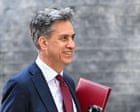
- Ed Miliband: The veteran progressive. Currently the energy secretary, he wants to use the power of the state to build a green industrial revolution. He is close to Burnham’s own radical instincts. He isn't afraid to borrow to invest, believing that failing to build for the future is the greatest risk of all.
- Wes Streeting: The darling of the party's pragmatic wing. He is the candidate who makes the city feel safe. If Burnham wants to soothe the anxieties of the bond markets—the international investors who buy government debt—Streeting is the shield.
Choosing a chancellor is the first real test of a prime minister’s character. It is the moment they reveal whether they govern by hope or by fear.
The Watchers in the City
Imagine sitting at a trading desk in the City of London or Wall Street. You don't care about Labour party mythology. You don't care about Miliband’s redemption arc or Burnham’s northern soul. You care about yields. You care about risk.
Britain is already stretching its borrowing limits. The tax burden is at historical highs, yet public services are starving. When Burnham’s chief economic adviser, Jim O'Neill—a former Goldman Sachs chief economist—suggested the next government should borrow billions more for infrastructure, those trading screens flickered with anxiety.
The markets are sentient, nervous things. They remember the chaos of previous economic shocks. They are waiting to see if a Burnham government will be fiscally loose.
If Burnham chooses Miliband, he is signaling a radical break from the past. He is telling the world that the old rules are broken, and the state must step in to build. But it is a massive gamble. Some within the party are genuinely terrified that putting Miliband in Number Eleven will spook the markets, driving up borrowing costs and sinking the administration before it even begins.
The Human Cost of Policy
It is easy to get lost in the jargon of fiscal rules and bond yields. But these abstract concepts hit the ground in very real ways.
Think of a small engineering firm in the North of England, waiting to see if a proposed high-speed rail link will ever reach their town, bringing the contracts that will allow them to hire ten more apprentices. Or think of a mother in a drafty terrace house, looking at an energy bill she cannot pay, hoping the government's net-zero transition will actually lower her costs rather than leave her stranded.
That is what this argument is about.
Powell’s attempt to shut down the tittle-tattle is understandable. To the public, politicians arguing over who gets which office looks narcissistic while the country struggles. But the tittle-tattle is the policy. The person who holds the keys to the Treasury decides which of those lives gets investment and which gets left behind.
The tension within the Labour party isn't a sign of weakness; it is a sign of life. It is the friction that happens when a party realizes it is about to take power and must finally choose between the comfort of caution and the danger of ambition.
Andy Burnham is standing at the curtain, waiting to walk out and define his era. Behind him, the factions are pulling at his sleeves. In the center stands Ed Miliband, a man who has already lost the top job once, now being beckoned toward the most powerful economic lever in the kingdom.
The stage is set, the players are rehearsed, and the market is watching, finger hovering over the sell button.