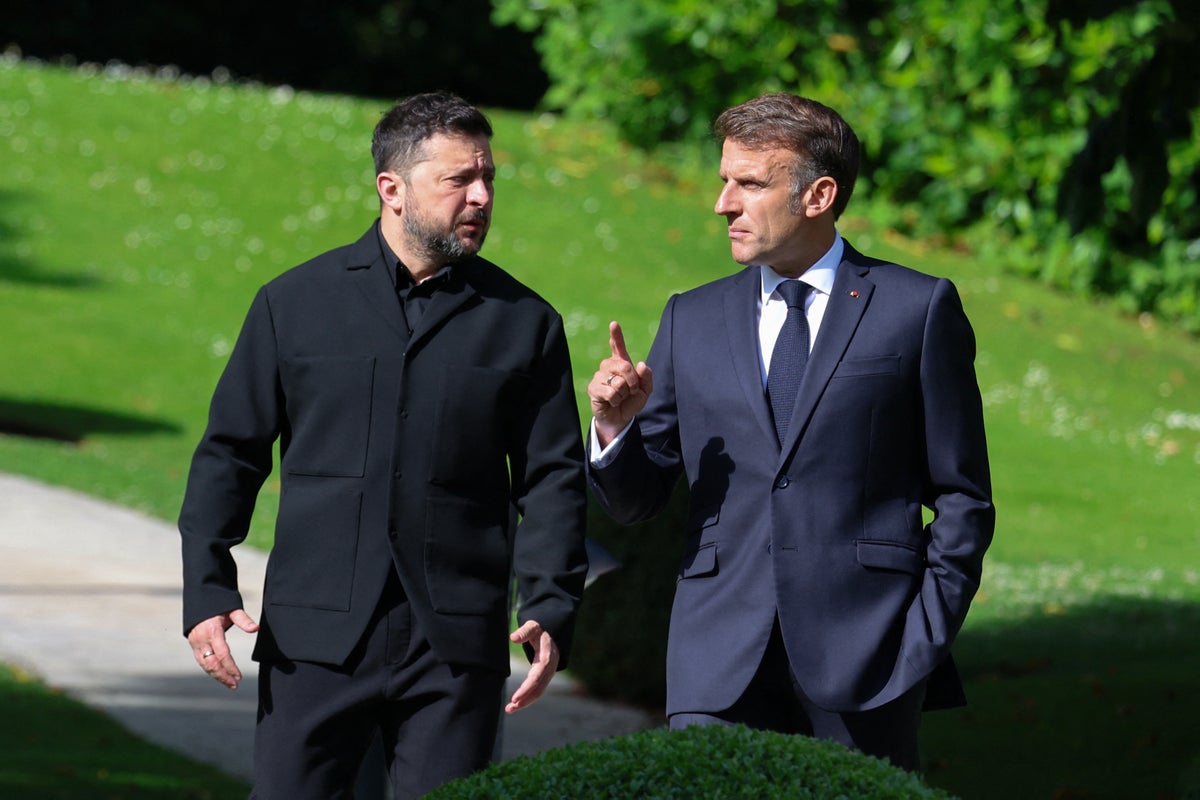
Mainstream media is currently choking on its own optimism. Following the latest G7 summit, headlines are ablaze with Volodymyr Zelensky’s declaration that a three-way phone call between himself, Donald Trump, and Emmanuel Macron "could change a great deal." The narrative being spun is classic diplomatic theater: a breakthrough is whispered, alignments are shifting, and a sudden, elegant diplomatic resolution is just one high-level conversation away.
It is a comforting fantasy. It is also entirely wrong.
The belief that personal chemistry or a single triad of leaders can fundamentally alter the structural realities of the Ukraine-Russia war ignores the brutal mechanics of geopolitics. This is not a corporate boardroom where three executives can hammer out a merger over a conference call. The lazy consensus assumes that Western political will is the only variable that matters. In reality, the conflict is dictated by industrial capacity, entrenched defensive lines, and irreconcilable strategic objectives that a phone call cannot touch.
The Myth of the Maverick Dealmaker
The core flaw in the current media frenzy is the overestimation of individual agency, specifically regarding Donald Trump’s promised intervention. The public narrative suggests that Trump can simply walk into a room, threaten to cut off aid, and force Kyiv and Moscow to sign a piece of paper.
Geopolitical shifts do not happen because three men chat on an encrypted line. Having analyzed foreign policy execution for two decades, I have watched administrations of every political stripe fall into the trap of believing their own rhetoric about personal diplomacy.
Consider the structural constraints. If Trump curtails US military assistance, he does not automatically force a Ukrainian capitulation; instead, he triggers a chaotic security vacuum in Europe. France and its continental neighbors are fundamentally incapable of filling the immediate logistical gap left by the US military-industrial complex, regardless of Macron’s strategic ambitions.
Furthermore, Vladimir Putin’s objectives are not subject to American electoral cycles. Moscow’s strategy is predicated on a long-term war of attrition designed to fracture NATO's resolve and permanently neutralize Ukraine's Western integration. A telephone call does not alter the Kremlin's calculation that time is on its side.
The Industrial Reality vs. Diplomatic Theater
Let us dismantle the premise of the "game-changing" conversation by looking at raw output rather than press releases. Warsaw, Washington, and Paris can issue all the joint communiqués they want, but diplomacy cannot manufacture artillery shells out of thin air.
+------------------------+-----------------------------------+
| Metric                 | The Harsh Reality                 |
+------------------------+-----------------------------------+
| Russian Shell Production| Est. 4-4.5 million rounds per year|
+------------------------+-----------------------------------+
| Combined Western Supply| Failing to meet 2 million target  |
+------------------------+-----------------------------------+
The war is currently defined by a grueling material asymmetry. Russia has successfully transitioned to a wartime economy, supplemented by supply lines from North Korea and Iran. The West, conversely, is still treating defense procurement as a peacetime budgetary debate.
When Macron talks about strategic autonomy or a European response, he is fighting against decades of underinvestment. French industrial capacity cannot scale fast enough to dictate terms to either Kyiv or Moscow within the timeframe of a political cycle. Therefore, any diplomatic framework proposed during these high-level calls is immediately undermined by the physical realities on the ground. You cannot negotiate a position of strength when your ammunition depots are empty.
Dismantling the "People Also Ask" Delusions
The public discourse surrounding these diplomatic summits is filled with flawed assumptions. It is time to answer these common questions with brutal honesty.
Can Trump end the war in 24 hours?
No. The premise assumes that both combatants are merely waiting for an excuse to stop fighting. For Ukraine, ceding territory under duress is an existential threat that guarantees future aggression. For Russia, anything short of a neutralized, demilitarized Ukraine is a failure that threatens the regime's internal stability. A forced freeze creates a frozen conflict, not a peace treaty.
Will European boots on the ground change the calculus?
Macron has repeatedly floated this trial balloon to signal resolve. It is a bluff, and the Kremlin knows it. Without full NATO backing—which Washington has explicitly ruled out to avoid direct escalation—a limited European deployment would lack the air superiority and logistical depth required to alter the frontline dynamics. It serves as political posture, not military strategy.
Is a partitioned Ukraine the most likely outcome?
While commentators frequently point to the Korean Peninsula model as a realistic blueprint, the comparison fails fundamentally. The Korean armistice was backed by a massive, permanent US military presence and a hard, heavily fortified demilitarized zone. A partition line in Ukraine, absent legally binding Western security guarantees that include Article 5 protections, is merely a pause button for the next phase of conventional warfare.
The Perils of the Counter-Intuitive Approach
Advocating for a cold-blooded assessment of the conflict is a deeply unpopular stance. The downside of rejecting the optimistic diplomatic narrative is that it offers no easy answers. It forces us to accept that the conflict is likely to remain a protracted, multi-year war of attrition with massive human and economic costs.
Acknowledging this reality means admitting that current Western strategies—characterized by incremental weapon deliveries and symbolic diplomatic summits—are designed to prevent a Ukrainian defeat rather than secure a decisive victory. It is far easier for leaders to schedule a high-profile phone call and promise a breakthrough than it is to look their electorates in the eye and explain the massive, long-term economic sacrifices required to match Russia's wartime industrial output.
The upcoming discussions between Trump, Macron, and Zelensky will undoubtedly produce a flurry of op-eds predicting a new era of negotiations. Do not buy into the hype. The lines of control are carved in trenches and minefields, not phone logs. The belief that a conflict of this scale can be solved by executive decree is the ultimate vanity of the political class. Stop watching the podiums. Watch the factory floors. That is where the war is decided.


