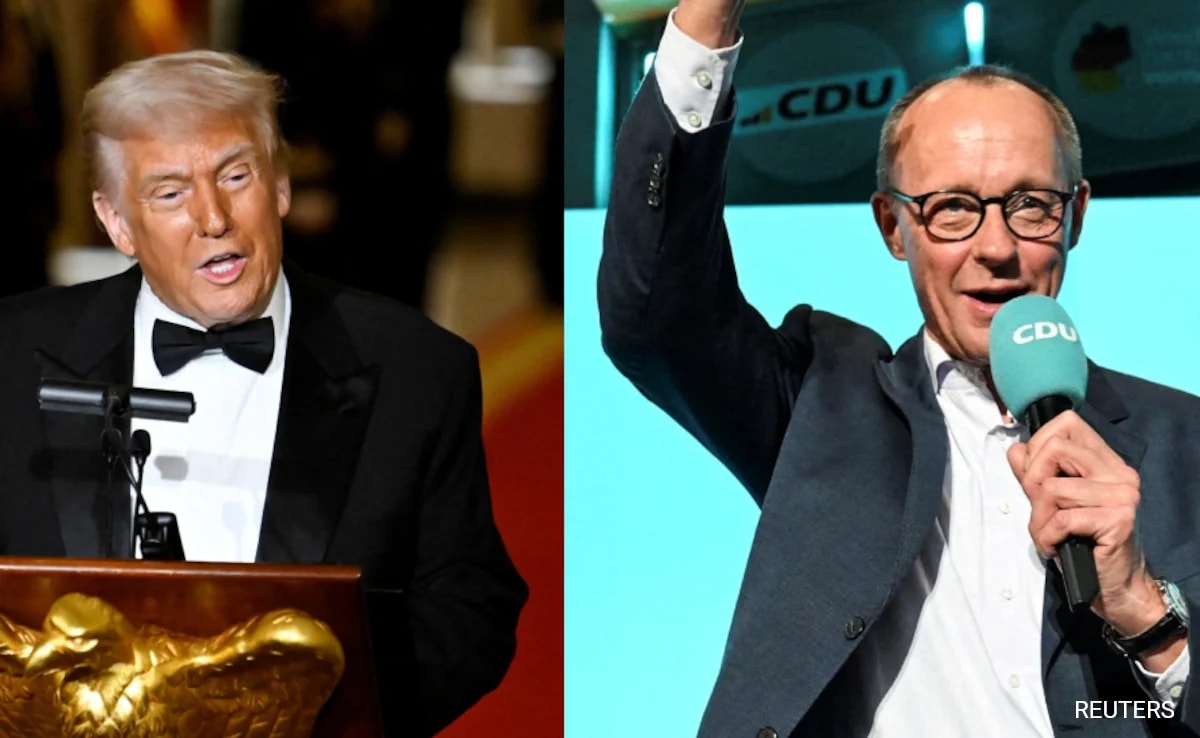
Friedrich Merz says his relationship with Donald Trump is "as good as ever," but don't let the polite press releases fool you. We're watching a slow-motion car crash in transatlantic relations. The German Chancellor spent Wednesday trying to perform a delicate balancing act: criticizing the White House's strategy in the Iran war while insisting there’s no blood in the water between him and the President. It's a bold move, and honestly, it might be a massive miscalculation.
The friction started when Merz basically told a group of students in Marsberg that the U.S. is being "humiliated" by Tehran. He didn't stop there. He claimed the Trump administration lacks a clear exit strategy and is being outplayed by the Revolutionary Guards. Trump, never one to take a hit quietly, fired back on Truth Social, accusing Merz of being soft on nuclear weapons and not knowing "what he's talking about." If you liked this article, you might want to look at: this related article.
Despite this public mudslinging, Merz is doubling down on the idea that they’re still on good terms. "From my perspective, my personal relationship with the U.S. President remains good," Merz told reporters. But you have to wonder how long that "good" relationship lasts when one partner is publicly calling the other's war effort a failure.
The economic price of the Iran war
Merz isn't just complaining for the sake of it. Germany is feeling the heat. The closure of the Strait of Hormuz has sent shockwaves through the European economy. Energy prices are spiking, and for an industrial powerhouse like Germany, that's a nightmare scenario. For another look on this development, see the recent update from USA Today.
- Energy Security: With the Strait virtually shut since March, Germany’s energy supply is under direct threat.
- Economic Performance: The industrial sector is bracing for a hit that could derail the modest growth Merz promised during his campaign.
- The Exit Strategy: Berlin is desperate for a diplomatic solution, but Washington seems committed to a blockade that Merz thinks is going nowhere.
The Chancellor’s shift in tone is jarring. Only a few weeks ago, he was Trump’s biggest cheerleader in Europe. Now, he’s sounding more like Spain’s Pedro Sánchez, who’s been a thorn in Trump’s side for months. This 180-degree turn suggests that the domestic pressure in Germany—driven by high petrol prices and a nervous manufacturing sector—is becoming louder than the desire to keep Trump happy.
A strategy of humiliation or just reality
Merz’s "humiliation" comment is what really stung the White House. He pointed out that Iranian negotiators are "very skillful at not negotiating." They’re letting U.S. officials fly all the way to Islamabad for talks, only to send them home with nothing. It’s a classic stalling tactic, and Merz is calling it out.
But Trump’s team sees it differently. They think they hold all the cards. Trump’s counter-blockade is designed to squeeze Iran until the regime collapses or surrenders its nuclear ambitions. From the White House perspective, Merz’s public doubts only give Tehran more hope that the Western alliance will crack.
The "nuclear weapon" accusation from Trump is particularly sharp. Merz has consistently said Iran must never have a nuke, but Trump is framing any call for de-escalation as a green light for Tehran. It’s a classic "with us or against us" maneuver that leaves very little room for the kind of nuanced diplomacy Germany prefers.
Why the transatlantic rift is widening
This isn't just about two leaders having a tiff. It’s a fundamental disagreement on how the world should work. Germany and its European allies are still clinging to the idea of a rules-based international order and negotiated settlements. Trump’s "maximum pressure" 2.0 is a different beast entirely.
The reality is that Europe’s influence on U.S. foreign policy is at an all-time low. Trump has already shown he’s willing to ignore NATO allies when it comes to trade, Ukraine, and now Iran. Merz’s attempt to play the "honest broker" who remains friends with the President while critiquing his wars is looking increasingly naive.
What this means for the global economy
If the Strait of Hormuz stays closed for another few months, we aren't just looking at high gas prices. We’re looking at a global recession. Merz knows this. His "doubts from the start" about the war aren't just moral; they're mathematical.
Germany has refused to participate in any military action or even join a naval mission to secure navigation in the Strait. That’s a massive point of contention for Trump, who has criticized allies for not pulling their weight. Merz is trying to protect German interests without getting dragged into a desert quagmire, but the middle ground is disappearing fast.
Stop expecting a return to normal
If you’re waiting for the "old" transatlantic relationship to come back, stop. It’s gone. Even if Merz and Trump patch things up tomorrow, the underlying tension remains. Nations are acting on their own interests now more than ever.
Germany is looking for ways to reduce its dependence on the U.S. security umbrella because it’s becoming too unpredictable. Meanwhile, the U.S. is increasingly frustrated with European "wimpishness."
If you're tracking the markets or following the geopolitical fallout, pay less attention to the "we're still friends" quotes and more to the actual policy shifts. Look for Germany to push harder for an EU-led diplomatic channel with Tehran—even if it drives a permanent wedge between Berlin and the White House. Watch the energy markets closely; if Merz can't get that Strait open soon, his political capital at home will evaporate faster than a Truth Social post.