The marble corridors of legislative buildings are designed to amplify sound, turning footsteps into echoes and whispers into declarations. For a local lawmaker working out of a crowded office, those echoes usually carry the weight of neighborhood budgets, transit lines, and zoning laws. But sometimes, the global paradigm shifts so violently that the distance between a state assembly district and the international court at The Hague suddenly shrinks to nothing.
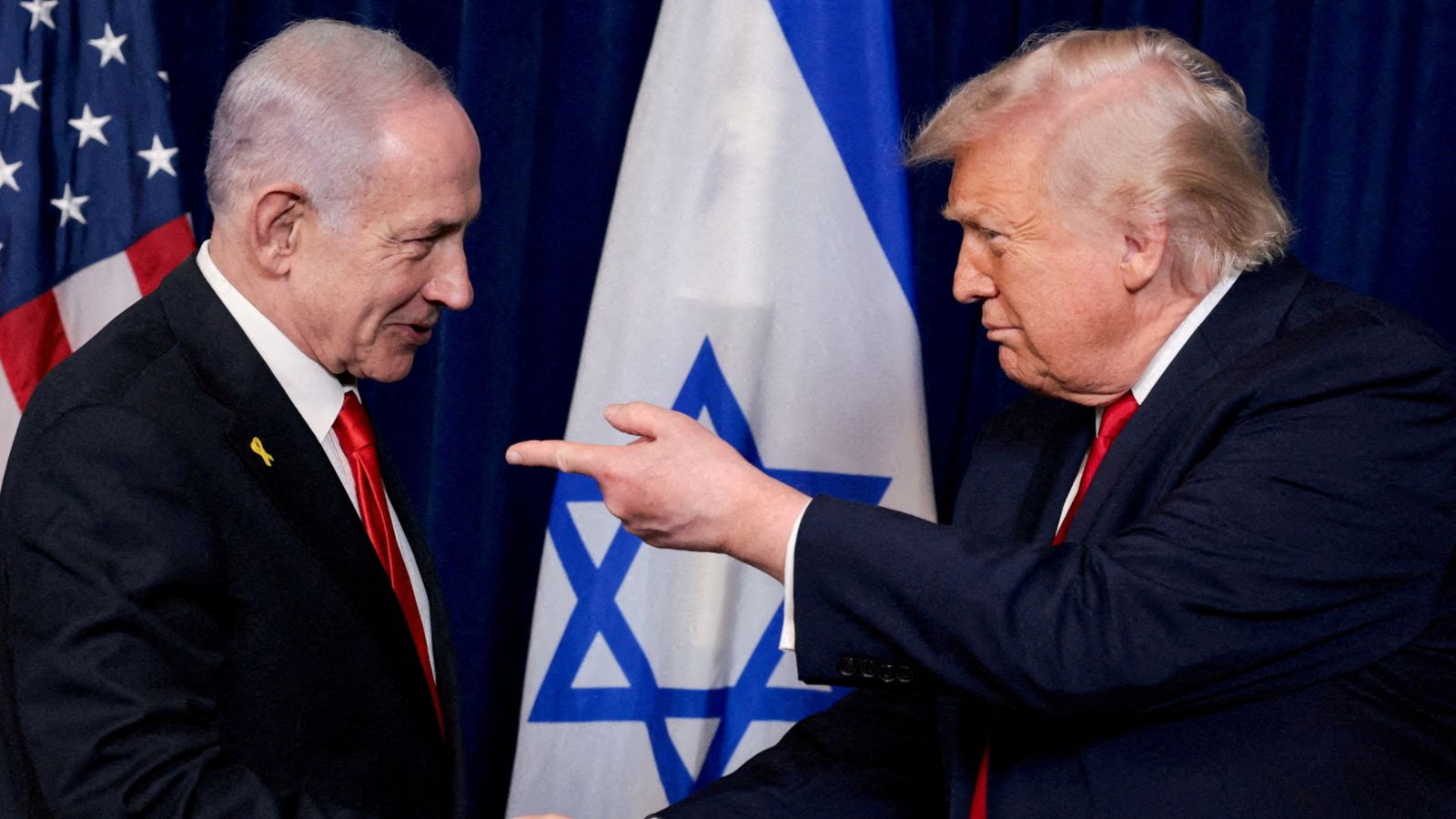
When news broke that Donald Trump had explicitly guaranteed Benjamin Netanyahu would face no risk of arrest on American soil, it felt to many like the closing of a heavy steel door. For months, international legal bodies had been spinning a web of warrants and declarations, testing whether the framework of global justice could actually bind a sitting head of government. The answer from the highest level of American power was swift, loud, and definitive. Not here. Not on our watch. You might also find this similar coverage insightful: The Clock That Ticks Quietly in the Resolute Desk.
But law is rarely just a matter of sweeping executive decrees. It lives in the friction of the fine print.
In New York, Zohran Mamdani looked at the same map and saw something else entirely. Where Washington saw an absolute shield, a handful of local legislators and human rights lawyers saw a complex matrix of state jurisdictions, municipal police powers, and statutory obligations. The question hanging in the air was no longer just about international diplomacy. It was a raw, granular question of mechanics. What happens when a state-level representative decides to test the boundaries of an empire’s protection? As extensively documented in latest reports by BBC News, the implications are notable.
The Weight of the Paper
To understand the tension, consider a hypothetical traveler arriving at a secure terminal. Under normal circumstances, a visiting head of state moves through an invisible cocoon of diplomatic immunity. This immunity is not an innate human trait; it is a legal fiction we all agree to believe in so that governments can speak to one another without throwing each other’s envoys into dungeons. It works because everyone plays along.
But what happens when the global consensus fractures?
The International Criminal Court issues a piece of paper. To some, that paper is a sacred mandate, the culmination of post-World War II promises that whispered never again. To others, it is a political weapon, a bureaucratic overreach by a court without an army. When that paper arrives on the shores of a nation that never ratified the treaty governing the court, it becomes a ghost. It exists, but it has no hands to grab anyone.
The executive branch in Washington holds the keys to the border. They decide who is an honored guest and who is an undesirable alien. By declaring that the Israeli Prime Minister would enjoy absolute safe passage, the administration sought to draw a clear line in the sand. The message was unmistakable: international warrants stop at the Atlantic Ocean.
Yet, American power is notoriously fractured. The federal government does not command every police officer on every street corner. State laws matter. Local authorities have their own mandates. This is the crack in the pavement where the legal counter-offensive begins.
The City Beneath the Shield
Step inside a local legislative office in New York. The desks are piled high with paperwork regarding rent stabilization, community health initiatives, and constituent grievances. It is a world removed from the high-stakes theater of global summits. Yet, the people living in these communities are tied by blood, grief, and conviction to the very conflicts being debated on the floor of the United Nations.
When a government leader steps off a plane in New York, they do not remain in a federal vacuum. They drive on state roads. They are protected by local police forces funded by city taxpayers. They walk through neighborhoods where the anger over geopolitical violence is not an abstract debate, but a living, breathing ache.
The strategy being weighed by dissenting lawmakers like Mamdani is not about launching a sudden, dramatic raid with local police. That is the stuff of political thrillers, not reality. Instead, it is an exploration of domestic legal leverage. Can a state court be petitioned to recognize an international mandate? Can local resources be legally barred from providing security or logistical support to an individual facing international charges?
It is an uphill battle fought with motions, injunctions, and statutory interpretations. The goal is not necessarily to achieve a physical arrest, which remains a near-impossible logistical feat given the scale of federal federal protection. The goal is to make the visit so legally complicated, so fraught with bureaucratic resistance, that the illusion of total immunity begins to crack.
Consider what happens next when the machinery of state law is weaponized against federal foreign policy. A local prosecutor receives a formal complaint. A judge is forced to hold a hearing on whether state funds are being used in violation of international covenants. Even if the petition is dismissed, the headlines shift. The narrative changes from an unshakeable alliance to a deeply contested domestic dispute.
The Human Cost of Absolute Immunity
The debate over who can be arrested and where is often treated like a game of high-stakes chess. Analysts talk about diplomatic leverage, strategic partnerships, and geopolitical stability. They use clean, sanitized language to describe decisions that have immediate, messy consequences on the ground.
But for the families watching from living rooms in Queens, Brooklyn, or the Bronx, this is not a game. They see the declarations of immunity as a statement about whose lives matter and whose suffering can be legally bypassed. When a government asserts that a leader is entirely above the reach of the law, it simultaneously tells the victims of that leader’s policies that their grievances have no recognized forum.
This is the emotional core that drives the legal maneuvers. It is a refusal to accept that power is a one-way street. The attempt to find a legal avenue for enforcement, no matter how narrow or experimental, is an act of defiance against the cynicism of realpolitik. It is an assertion that the law should belong to the people it affects, not just the leaders who sign the treaties.
The conflict between the federal executive and local dissenters exposes a deeper truth about the modern world. We are living in an era where the local and the global are hopelessly tangled. A decision made in Washington ripples through a village in the Middle East, which in turn sparks a legal strategy in a state assembly office in Albany. The old boundaries are dissolving.
The Limits of the Decree
A presidential declaration can clear the runway. It can command the Secret Service and instruct the State Department. It can project an aura of absolute control. But it cannot quiet the dissent that simmers beneath the surface of American civic life.
The legal options being weighed by advocates are a reminder that authority is constantly being negotiated. Every time a leader relies on raw executive power to bypass international norms, they invite a counter-reaction from those who believe those norms are the only things keeping the world from sliding back into total lawlessness. The challenge from local lawmakers may face immense institutional hurdles, but its true power lies in its ability to expose the vulnerability of the powerful.
The story is far from over. As schedules are coordinated and visits are planned, the legal teams on both sides are combing through statutes, looking for the next point of leverage. The world watches the grand stage of international diplomacy, but the real test of accountability is happening in the quiet, stubborn persistence of those who refuse to let the paper warrants disappear into the wind.