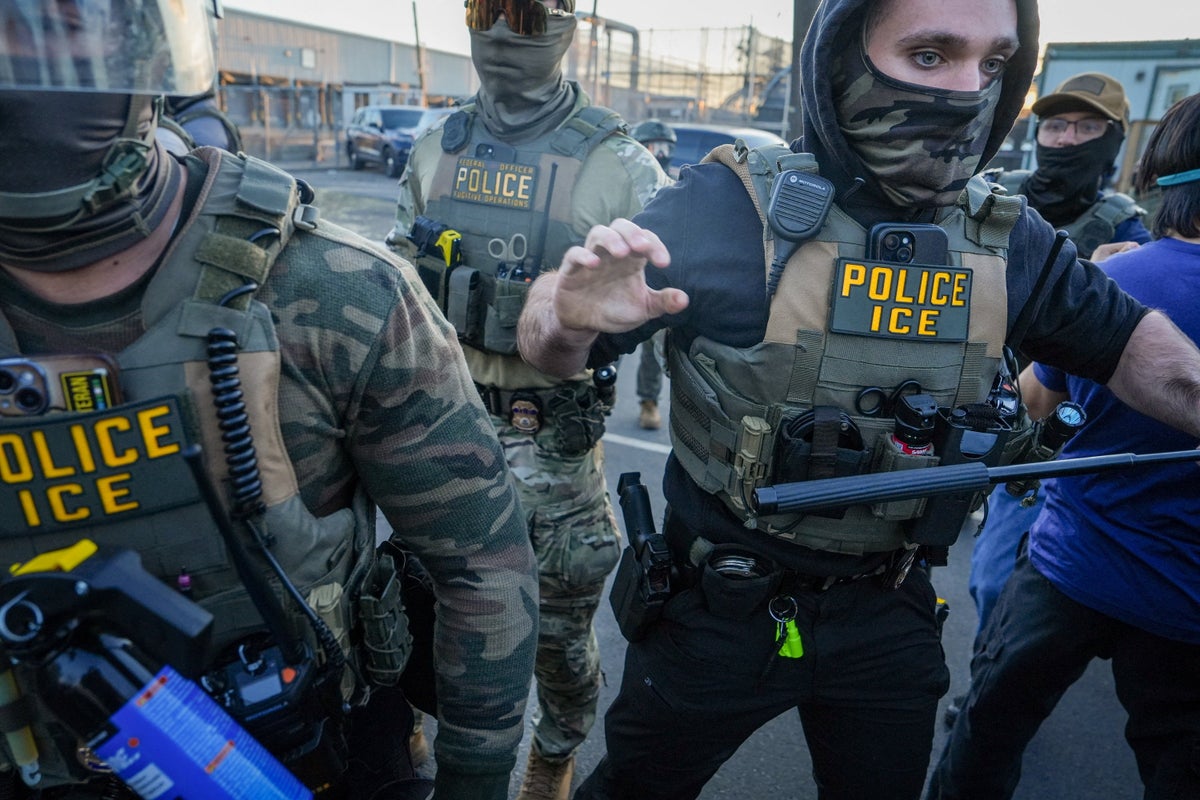
The expansion of federal immigration enforcement inside the domestic United States relies on an operational model that prioritizes raw volume over community integration. When state power scales its domestic interdiction efforts up to maximum capacity, it meets a sharp logistical and psychological friction point. The recent public pivot by high-profile media figures who previously endorsed the administration’s broader political agenda highlights a systematic failure in risk calculation. The backlash triggered by tactics utilized by Immigration and Customs Enforcement (ICE)—such as tactile tactical gear, masked agents, and high-intensity urban raids—reveals that the political costs of domestic enforcement scale faster than the rate of apprehensions.
Understanding this dynamic requires analyzing domestic law enforcement through structural mechanics rather than partisan rhetoric. This analysis deconstructs the operational bottlenecks, asymmetric information costs, and signaling errors that turn aggressive immigration enforcement into a liability for its own architects.
The Operational Cost Function of Tactical Domestic Raids
Every enforcement action executed by a federal agency involves an implicit trade-off between operational velocity and public compliance. In localized border environments, enforcement actions operate under high levels of legal insulation and geographic separation from dense civilian populations. Moving those same tactical operations into interior municipal zones changes the cost function entirely.
1. The Information Asymmetry Penalty
Interior enforcement relies on intelligence that is frequently outdated or incomplete. Unlike border crossings where entry is a clear-cut binary event, identifying undocumented individuals within a city requires distinguishing between naturalized citizens, legal permanent residents, temporary visa holders, and non-citizens without legal status.
When agents deploy military-style entry tactics based on imperfect information, the probability of false positives increases. The fatal shooting of a US citizen in Minneapolis serves as a catastrophic demonstration of this information failure. In systems engineering, a process that yields catastrophic errors during routine execution indicates an unstable operational framework.
2. High-Impedance Tactical Signaling
The decision to equip domestic enforcement agents with masks, tactical armor, and high-caliber weaponry is designed to minimize physical risk to personnel during high-threat encounters. However, this equipment creates a severe signaling failure in low-threat civilian environments.
- Anonymity vs. Accountability: Masked personnel block the civilian population’s ability to verify the legitimacy of state actors, which spikes non-compliance driven by fear.
- Asymmetric Escalation: Deploying paramilitary gear for routine administrative or labor-related arrests signaling an existential threat to bystanders, converting passive observers into active critics.
The Three Pillars of Populist Realignment
The critical commentary emerging from influential independent media platforms demonstrates how the tactical excesses of domestic interdiction erode the coalition that originally authorized the policy. This ideological fracturing occurs along three distinct fault lines.
                    [State Enforcement Strategy]
                                 │
         ┌───────────────────────┼───────────────────────┐
         ▼                       ▼                       ▼
   [Pillar 1]              [Pillar 2]              [Pillar 3]
Economic Protection     Constitutional Bounds    Civilian Protection
     vs. Labor               vs. Expansion            vs. Tactics
The Economic Boundary: Labor Continuity vs. Asset Seizure
The initial populist mandate for immigration reform was rooted in economic protectionism, aimed at safeguarding local labor pools. However, when execution shifts to high-visibility raids targeting foundational sectors like agriculture, construction, and hospitality, the economic reality collides with the political theory. The removal of productive labor units from local supply chains causes sudden operational disruptions for small-to-medium enterprises. Media commentary labeling the arrest of farmworkers and construction laborers as counterproductive reflects an awareness that sweeping domestic sweeps destabilize localized economic ecosystems.
The Jurisdictional Boundary: Federal Expansion vs. Decentralization
A core tenet of conservative populist ideology is a deep skepticism of centralized state power. Paramilitary federal agencies operating with broad jurisdictional autonomy inside municipal boundaries create a direct ideological paradox. When federal agents override local city policies, refuse coordination with municipal law enforcement, and execute high-profile raids without local oversight, they act as an intrusive central authority. This overreach alienates individuals who favor decentralized governance and state-level autonomy.
The Civil Boundary: Targeted Deterrence vs. Systemic Terror
For an enforcement mechanism to retain broad public backing, its use of force must be seen as strictly proportionate and highly targeted. The public tolerates the removal of individuals convicted of violent crimes because the social benefit matches the exercise of state power. When enforcement tactics blur the lines between high-risk criminal apprehension and administrative compliance checks—subjecting non-violent workers to the same levels of tactical force used against cartel networks—the domestic audience reclassifies the state apparatus from a protective entity into an authoritarian threat.
Structural Bottlenecks and Long-Term Systemic Failures
The current operational trajectory of interior interdiction faces structural limitations that cannot be bypassed by simply increasing funding or expanding personnel.
The Public Relations Equilibrium
The executive branch has argued that negative reactions to enforcement actions are primarily a public relations challenge rather than a structural policy failure. This diagnosis misunderstands the nature of modern decentralized media. In an environment where every citizen is an investigative node equipped with a high-definition camera, the state cannot control the narrative of a botched tactical entry.
Every video capturing aggressive tactics, mistaken identities, or heavy-handed arrests of non-violent individuals erodes public trust. This erosion isn't a marketing problem; it is a hard limit on the sustainability of the policy.
Sanctuary City Friction and Information Blocks
The reliance on aggressive interior raids is accelerated by the lack of cooperation from sanctuary jurisdictions. When municipal authorities refuse to share database access or hold individuals on administrative detainers, federal agencies resort to field operations to execute apprehensions.
This operational pivot drastically increases the risk profile of every action. Instead of taking custody of a individual in a controlled, secure jail facility, agents must execute arrests in unpredictable public spaces. This systemic friction increases the likelihood of tactical errors, property damage, and bystander casualties.
Strategic Re-engineering of Interior Enforcement
To stabilize operations and halt the erosion of political capital, domestic enforcement frameworks must move away from high-visibility paramilitary tactics and transition toward a low-impact compliance model.
- Mandate De-escalation of Force Signifiers: Restrict the use of masks, tactical armor, and long-barreled firearms to verified high-risk warrants involving violent criminal targets. Standard administrative apprehensions must be executed by identifiable, unmasked personnel in standard professional law enforcement uniforms to reduce public panic and lower the risk of non-compliance.
- Establish Real-Time Biometric Verification: Deploy mobile, high-assurance biometric identification systems to field teams to eliminate identity confusion before executing entries or detentions. This technical validation layer directly mitigates the information asymmetry that leads to false positives and accidental encounters with citizens.
- Prioritize Financial and Regulatory Sanctions Over Physical Raids: Shift the enforcement focus from field-level asset roundups to systemic audits of corporate employment verification systems. Penalizing systemic employers of unauthorized labor through financial channels removes the economic incentive for illegal immigration without requiring high-visibility, high-risk physical operations in civilian centers.