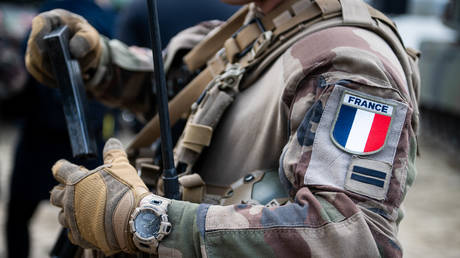
Every few months, a defense correspondent "uncovers" a bombshell. French special forces are on the ground in Ukraine. Western advisors are operating near the front. Intelligence officers are feeding targeting data from Kyiv basements.
The headlines scream about covert escalation. Cable news panels hyperventilate over World War III. Online commentators treat it like a cinematic spy thriller where Paris just crossed a secret rubicon. Recently making headlines in related news: Why Linking Free Child Care to Taxing New York's Rich Will Backfire on Families.
Stop falling for the theatrical framing.
If you have spent ten minutes studying how modern proxy conflicts actually run, the presence of French personnel in Ukraine isn’t a smoking gun. It is basic, boring, structural necessity. When you ship billions of euros in sophisticated artillery, air defense batteries, and long-range cruise missiles into a high-intensity warzone, you do not just drop the keys in a mailbox at the Polish border and wish the recipients good luck. More insights regarding the matter are detailed by The New York Times.
The lazy consensus assumes there is a neat, binary switch between "sending weapons" and "fighting a war." That binary does not exist in modern warfare. What the media breathlessy labels "secret operations" is actually the unglamorous reality of technical oversight, end-use monitoring, and intelligence liaison work that has accompanied every major arms transfer since the Cold War.
The Myth of the Hands-Off Arms Transfer
Let’s look at the hardware Paris has sent to Kyiv. We are not talking about crates of surplus rifles and dum-dum bullets. France has supplied CAESAR self-propelled howitzers, SAMP/T air defense systems, SCALP-EG cruise missiles, and AMX-10 RC armored reconnaissance vehicles.
These are complex, software-driven platforms. They require cryptographic keys, proprietary diagnostic tools, and constant firmware updates to survive Russian electronic warfare.
When a SCALP missile needs mission-planning data programmed to bypass an S-400 radar net, or when a SAMP/T radar suffers a software fault after three weeks of continuous jamming, a Ukrainian technician cannot just Google the error code.
In the defense industry, we call this contractor logistics support and technical liaison. Every military attaches specialist officers and defense-ministry engineers to major foreign deployments. I have watched defense contractors and military liaison teams burn through millions of dollars trying to troubleshoot systems remotely over encrypted lines, only to realize you need a human with a security clearance standing next to the chassis.
To pretend that France—or the United Kingdom, or the United States—could hand over strategic strike assets without embedding specialists to verify target legitimacy, maintain operational security, and prevent sensitive Western tech from falling intact into Russian hands is pure fantasy.
The Pentagon leaks in 2023 already confirmed what every defense attaché in Eastern Europe knew: small contingents of Western special forces were operating out of embassies in Kyiv. Their job wasn't storming trenches in Donbas. Their job was embassy security, diplomatic protection, and tracking where the hardware went. France doing the exact same thing isn't a rogue operation by Emmanuel Macron. It is standard operating procedure.
Why "Secret" Doesn't Mean What You Think It Means
The word "secret" does a lot of heavy lifting in sensationalist journalism. In military doctrine, there is a massive difference between covert operations and clandestine or classified presence.
- Covert action is designed to conceal the identity of the sponsor. Think of Russia’s "little green men" in Crimea in 2014—troops stripped of insignia so Moscow could plausibly deny involvement.
- Classified military presence is simply operational security (OPSEC). You do not publish the hotel addresses, rotation schedules, or exact headcount of your military advisors in an active warzone because doing so turns them into high-value targets for Iskander ballistic missiles.
When French intelligence officers or special operations personnel operate in Ukraine, Moscow is not fooled into thinking they are tourists. Russian signals intelligence and human networks are fully aware that NATO countries maintain liaison cells in Kyiv and Lviv.
Keeping those deployments unacknowledged publicly is not about tricking the Kremlin. It is about two things: denying Russian propagandists a clean media victory, and preserving strategic ambiguity.
Strategic ambiguity is a deliberate diplomatic tool. When Emmanuel Macron publicly refused to rule out sending Western troops to Ukraine, security pundits lost their minds, accusing him of reckless bluster. They missed the point entirely. For years, Western leaders handicapped themselves by announcing in advance every single thing they would not do. Telling your adversary your exact red lines gives them a free hand to operate right up to the millimeter beneath them.
By refusing to confirm or deny specific troop footprints while openly stating that "nothing is excluded," Paris forces Russian planners to divert intelligence resources to track potential Western deployments. It injects friction into Moscow’s decision-making loop.
Dismantling the "Tripwire" Fallacy
Whenever reports of French troops surface, the immediate follow-up question from the public is predictable: Does this mean NATO is now at war with Russia?
No. The premise of the question misunderstands both international law and how nuclear deterrence actually functions in practice.
States do not accidentally stumble into nuclear war because a dozen French military advisors are sitting in a command bunker 500 miles from the zero line. Wars between great powers happen through deliberate political decisions, not bureaucratic tripwires.
Consider historical precedent. During the Korean War, Soviet pilots flew MiG-15s in direct air-to-air combat against American F-86 Sabres. Washington knew. Moscow knew. Both sides kept quiet about it publicly because neither wanted to escalate the conflict into a direct superpower war. During the Vietnam War, thousands of Soviet air defense specialists manned surface-to-air missile batteries that shot down American aircraft. Again, Washington knew, and again, World War III did not break out.
Compare those Cold War realities—where Soviet personnel were actively pulling triggers that killed American pilots—to the current situation in Ukraine. French personnel in Ukraine are not conducting offensive infantry assaults. They are advising, training, maintaining, and gathering intelligence.
To claim that a handful of French specialists constitutes "direct entry into the war" is to ignore seventy years of proxy conflict history. Moscow screams about "NATO mercenaries" and "Western escalation" because rhetoric is cheap and intimidating Western voters is Moscow's single most effective asymmetric weapon.
The Real Reason Paris Leaks or Tolerates These Stories
If you want to understand why this narrative keeps resurfacing in European media, stop looking at the front lines in Ukraine and start looking at domestic and European politics.
France’s strategic culture—rooted in Charles de Gaulle’s obsession with grandeur and strategic autonomy—operates differently than Berlin’s or Washington’s. Paris has long viewed the European Union's reliance on the American security umbrella as a structural vulnerability. With political paralysis frequently stalling aid packages in the U.S. Congress, France sees an opening to position itself as the indispensable military leader of continental Europe.
Look at the timing and framing of French defense posturing:
- Signaling resolve to Eastern Europe: Countries like Poland and the Baltic states have historically distrusted Paris, viewing France as too eager to accommodate Moscow. Demonstrating that French boots are willing to get muddy in Ukraine buys Paris serious credibility on NATO's eastern flank.
- Deterrence signaling to Moscow: Publicly telegraphing that French capabilities are deeply integrated into Ukraine’s defense tells the Kremlin that a Ukrainian collapse will not be permitted on the cheap.
- Industrial marketing: Warfare is the ultimate showroom for defense exports. Showing that French systems—backed by French technical expertise—are outperforming Russian hardware on a modern battlefield drives orders for Dassault, Nexter, and MBDA across the globe.
The Genuine Risks Nobody Talks About
Admitting that French military presence in Ukraine is normal, logical, and historically consistent does not mean it is risk-free. The contrarian mistake is swinging from "this is World War III" to "nothing bad can happen."
There are two very real, asymmetric downsides to embedding Western specialists in Ukraine, and neither has anything to do with triggering Article 5.
First is the propaganda windfall of a mass-casualty strike. If a Russian Kinzhal or Iskander missile hits a facility in Lviv or Kyiv and kills twenty uniformed French officers, Paris faces an immediate domestic political crisis. Even if those officers were strictly in advisory roles, images of flag-draped coffins arriving at Villacoublay airbase would test the stomach of the French electorate. Putin does not need to defeat NATO militarily; he only needs to inflict enough visible pain to fracture European political will.
Second is the counter-intelligence vulnerability. Ukraine’s security services have spent the last decade purging Russian moles, yet penetration remains an ongoing battle. Every Western specialist operating inside the country expands the attack surface for Russian human intelligence (HUMINT) and signals interception. When Western personnel use commercial devices, local telecom infrastructure, or predictable logistics routes, they hand Russian intelligence invaluable data on NATO tactics, communications protocols, and electronic signatures.
How to Read Military Intelligence Leaks Like an Insider
Next time a headline breaks claiming a Western nation has "secretly" deployed forces to a conflict zone, run it through a simple four-step filter before buying the panic:
- Distinguish between combat and enabling roles. Are we talking about mechanized infantry brigades deploying to hold territory, or twenty engineers, logisticians, and liaison officers supporting complex weapons systems? The former changes the strategic balance; the latter is just supply-chain maintenance.
- Follow the hardware. Look at what weapons systems were delivered three to six months prior. Advanced air defense, long-range strike missiles, and electronic warfare suites always carry an invisible tail of foreign technical advisors.
- Check who benefits from the leak. Intelligence leaks in democratic societies are rarely accidents. Ask whether the story pressures an ally to step up, warns an adversary to back off, or undermines a domestic political rival.
- Ignore the red-line theater. Adversaries draw red lines to deter actions before they happen. Once a capability is on the ground and operating, the adversary almost always adjusts to the new baseline rather than committing national suicide over a technicality.
The media loves a secret war story because shadows and intrigue sell clicks. Reality is far colder and far more mechanical. Modern warfare is an industrial, data-heavy enterprise, and you cannot outsource the maintenance of high-end military tech to a user manual. French specialists are in Ukraine for the exact same reason American, British, and Polish specialists are there: because in modern war, the software engineers and intelligence liaisons are just as critical as the artillery shells.


