Every time French university students barricade a campus gate or clash with riot police in Paris, the international press dust off the exact same headline. They invoke the ghost of May 1968. It is lazy journalism, and it fundamentally misunderstands modern French politics. While today's student demonstrations borrow the aesthetic, slogans, and street tactics of the famous 1968 uprising, the underlying economic realities, political alliances, and institutional stakes are completely different.
In May 1968, students ignited a nationwide general strike that paralyzed France, brought ten million workers into the streets, and nearly toppled Charles de Gaulle's government. Today, student protests remain largely isolated skirmishes over pension reforms, tuition hikes, university selection criteria, or geopolitical crises. The historical parallel is a comforting myth for protesters and a convenient shorthand for commentators. Beneath the surface, however, the machinery of French dissent has changed beyond recognition. Expanding on this topic, you can also read: Executive Attrition and Power Consolidation in the 2026 White House.
The Anatomy of a Historical Myth
To understand why the 1968 comparison persists, you have to look at how deeply that spring is embedded in the French national psyche. May 1968 was not just a political event; it was a cultural rupture that reshaped French family dynamics, labor laws, and higher education. When students occupy the Sorbonne or Sciences Po today, they are walking through the exact same stone courtyards where Daniel Cohn-Bendit and his peers debated revolutionary theory over half a century ago.
The visual continuity is undeniable. You see the same hand-painted banners hanging from neoclassical balconies. You hear the same chants echoing off Haussmannian facades. Even the police response follows a familiar choreography, pitting mobile gendarmerie units and the CRS against tightly packed columns of demonstrators. Analysts at TIME have provided expertise on this trend.
Yet visual echoes do not equal historical repetition. In 1968, the student movement acted as a detonator for a massive, pent-up social explosion. France had experienced decades of rapid postwar economic growth—known as the Trente Glorieuses—but its social institutions remained rigidly authoritarian, patriarchal, and out of step with a booming youth demographic. When police violently cleared the Sorbonne on May 3, 1968, the public outrage was immediate and cross-generational. Factory workers, teachers, civil servants, and journalists walked off the job in solidarity, shutting down the entire country within weeks.
Modern student protesters operate in a vastly different environment. When campuses shut down today, the rest of France mostly watches from a distance, often with a mix of indifference and irritation. The automatic transmission belt between the lecture hall and the factory floor is broken.
Why the Worker-Student Alliance Fractured
The defining feature of May 1968 was the convergence of struggles—what the French call la convergence des luttes. Students and industrial workers briefly overcame their mutual suspicion to confront a common state apparatus. That alliance was fragile even then, and over the past five decades, structural shifts in the French economy have made it nearly impossible to recreate.
Consider the numbers. In 1968, France was an industrial powerhouse with a massive, concentrated manufacturing workforce. Millions of blue-collar workers labored in giant automotive, steel, and textile plants on the outskirts of major cities. Trade unions like the CGT held enormous organizational power and could bring the economy to its knees with a single directive.
Today, France is a post-industrial, service-driven economy. Traditional manufacturing has shrunk dramatically, replaced by fragmented service sectors, gig economy platforms, and suburban logistics hubs. Union density in France has fallen to roughly ten percent of the workforce—one of the lowest rates in the developed world, even if French unions retain high mobilization capacity during major pension battles.
Furthermore, the social class of the protesters has shifted. In 1968, university attendance was still relatively elite, yet students actively sought to shed their bourgeois origins and join the proletariat. Today, higher education in France has expanded massively, producing millions of degree-holders who face precarious entry-level job markets, soaring urban rents, and stagnant wages. At the same time, working-class voters in rural and post-industrial regions have increasingly drifted toward the populist right, viewing urban university students not as allies, but as privileged metropolitan elites out of touch with everyday economic survival.
When students block access to a university building today, they are rarely joined by delivery drivers, retail clerks, or healthcare workers. Without that broader economic chokehold, a student blockade remains a localized disruption rather than an existential threat to the state.
What Modern French Students Actually Fight For
Another major flaw in the 1968 narrative lies in the nature of the demands. The revolutionaries of 1968 wanted to dismantle bourgeois capitalism, overthrow Gaullist authoritarianism, and reimagine human existence. Their slogans were famously utopian. "Be realistic, demand the impossible," read one wall in Paris. "Beneath the paving stones, the beach," declared another.
Modern French student protests are far more defensive, pragmatic, and fragmented. Rather than trying to build a utopia, today's students are largely fighting to prevent the erosion of existing social protections and public services.
Look at the major flashpoints of the past decade:
- University Admissions and Funding: In 2018, students occupied campuses across France to protest Parcoursup, a centralized online platform introduced by Emmanuel Macron's government to manage university admissions. Historically, any French student who passed the baccalauréat high school exam had the constitutional right to enroll in almost any public university program. Parcoursup introduced ranking and selection criteria, which students viewed as the backdoor privatization and elitism of higher education.
- Tuition Fees for International Students: In late 2018 and 2019, protests erupted over the government's decision to dramatically raise tuition fees for non-European Union international students, breaking with France's long-standing tradition of nearly free public higher education for all.
- Pension and Labor Reforms: During the massive protests against raising the retirement age from 62 to 64 in 2023, university students joined street marches alongside unions. Their motivation was defensive: a belief that working longer would clog the labor market and block young graduates from securing stable jobs.
- Geopolitical and Campus Politics: More recently, demonstrations at elite institutions like Sciences Po have centered on foreign policy, human rights, and institutional investments, mirroring protests on American university campuses rather than traditional French labor disputes.
These are concrete, policy-driven grievances. They reflect genuine anxiety about downward social mobility in a country where youth unemployment consistently hovers well above the national average. The protesters are not demanding the impossible. They are demanding a functioning welfare state, affordable housing, and a predictable career path.
The Transformation of State Policing and Campus Governance
If the protesters have changed, the state's response has evolved even more dramatically. In 1968, the French government was caught completely off guard. Communication was slow, intelligence gathering on student networks was rudimentary, and police tactics often escalated minor skirmishes into full-scale urban riots. When police charged students in the Latin Quarter in May 1968, images of bloodied teenagers broadcast on television and radio turned public opinion decisively against the government.
Modern French administrations treat campus unrest as a routine public-order management problem. Over the past twenty years, the French Interior Ministry has refined its crowd-control doctrines, deploying specialized mobile units, plainclothes arrest teams, and extensive aerial surveillance via drones and helicopters.
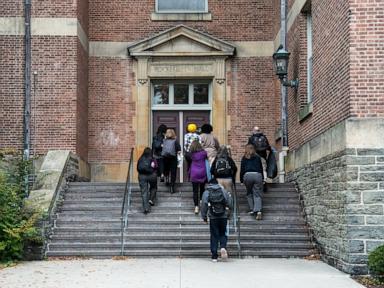
University administrators have also gained new legal and procedural tools to neutralize occupations before they gain momentum. When a student assembly votes to blockade a campus building—a traditional practice known as a blocage—university presidents now routinely switch classes to online instruction within hours.
This single technological shift has gutted the traditional leverage of a campus strike. In 1968, locking the doors of a university halted education entirely, forcing administrators and politicians to negotiate. Today, locking the doors simply sends students home to their laptops, depriving the organizers of a captive audience and eroding the critical mass needed to sustain a prolonged occupation.
The Role of Social Media and Fragmented Leadership
In 1968, movements were built through marathon, face-to-face general assemblies (assemblées générales) where thousands of students debated for hours and voted by a show of hands. Charismatic leaders emerged from these assemblies, giving the movement recognizable voices and clear strategic direction.
Modern student activism is organized through encrypted messaging apps, Instagram infographics, and TikTok videos. While digital tools allow organizers to mobilize hundreds of people within minutes, they also create brittle, leaderless networks. Without deep organizational roots or disciplined union backing, online outrage flares brightly for a few days and then dissipates just as quickly once exams approach or police clear the perimeter.
Furthermore, the French student union movement itself has splintered. Historic organizations like UNEF (the National Union of Students of France) have suffered from internal factionalism, declining membership, and public scandals, leaving a vacuum filled by smaller, more radical local collectives that often refuse to negotiate with authorities on principle.
The Political Calculus of the Elysée Palace
For French presidents—whether Nicolas Sarkozy, François Hollande, or Emmanuel Macron—student protests represent a calculated political risk rather than an existential nightmare. There is one notable exception in modern French history: the 2006 protests against the First Employment Contract (CPE).
In 2006, Prime Minister Dominique de Villepin attempted to introduce a new labor contract that made it easier for employers to fire workers under the age of 26 during their first two years on the job. Millions of students and union members flooded the streets for two months, forcing President Jacques Chirac to scrap the law entirely.
The 2006 CPE victory proved that students can still win when two specific conditions are met: the issue directly threatens the immediate economic security of all young people, and the major trade unions commit their full organizational weight to the fight.
Since 2006, French governments have studied that failure carefully. Modern administrations rarely drop a single, sweeping youth-targeted bomb like the CPE. Instead, they pursue incremental reforms, split up opposition coalitions, and rely on constitutional mechanisms—such as Article 49.3, which allows the government to pass bills without a parliamentary vote—to push legislation through before street protests can reach critical mass.
Politicians also recognize that tough policing against disruptive protests often plays well with older, conservative voters who form the most reliable electorate in France. While images of riot police dragging students out of a university courtyard provoke outrage on the left, they frequently reinforce a government's image of firmness and authority among suburban and rural voters.
Looking Beyond the Nostalgia
Clinging to the memory of May 1968 actually does a disservice to understanding contemporary France. It obscures the real, structural pressures weighing on young French citizens today.
Young people in France face an acute housing crisis in major university cities, where finding a tiny studio apartment requires exorbitant guarantees and eats up the majority of a student's budget. They confront a two-tier labor market that traps millions of twenty-somethings in endless cycles of temporary contracts (CDD) and unpaid internships before they can ever secure a permanent position (CDI). They are inheriting a public pension and healthcare system strained by an aging population, alongside deep anxieties about climate change and economic stagnation.
These issues are serious, systemic, and volatile. They generate genuine anger that spills into the streets with predictable regularity.
But anger is not revolution. A barricade made of trash cans outside a lecture hall in Nanterre or Rennes is not the opening act of a general strike that will bring down the Fifth Republic. When observers force every modern protest into the mold of May 1968, they miss what is actually happening on the ground: a generation fighting a rear-guard action to preserve a social model that is slowly slipping out of reach, using the theatrical props of a revolution that ended fifty-eight years ago.