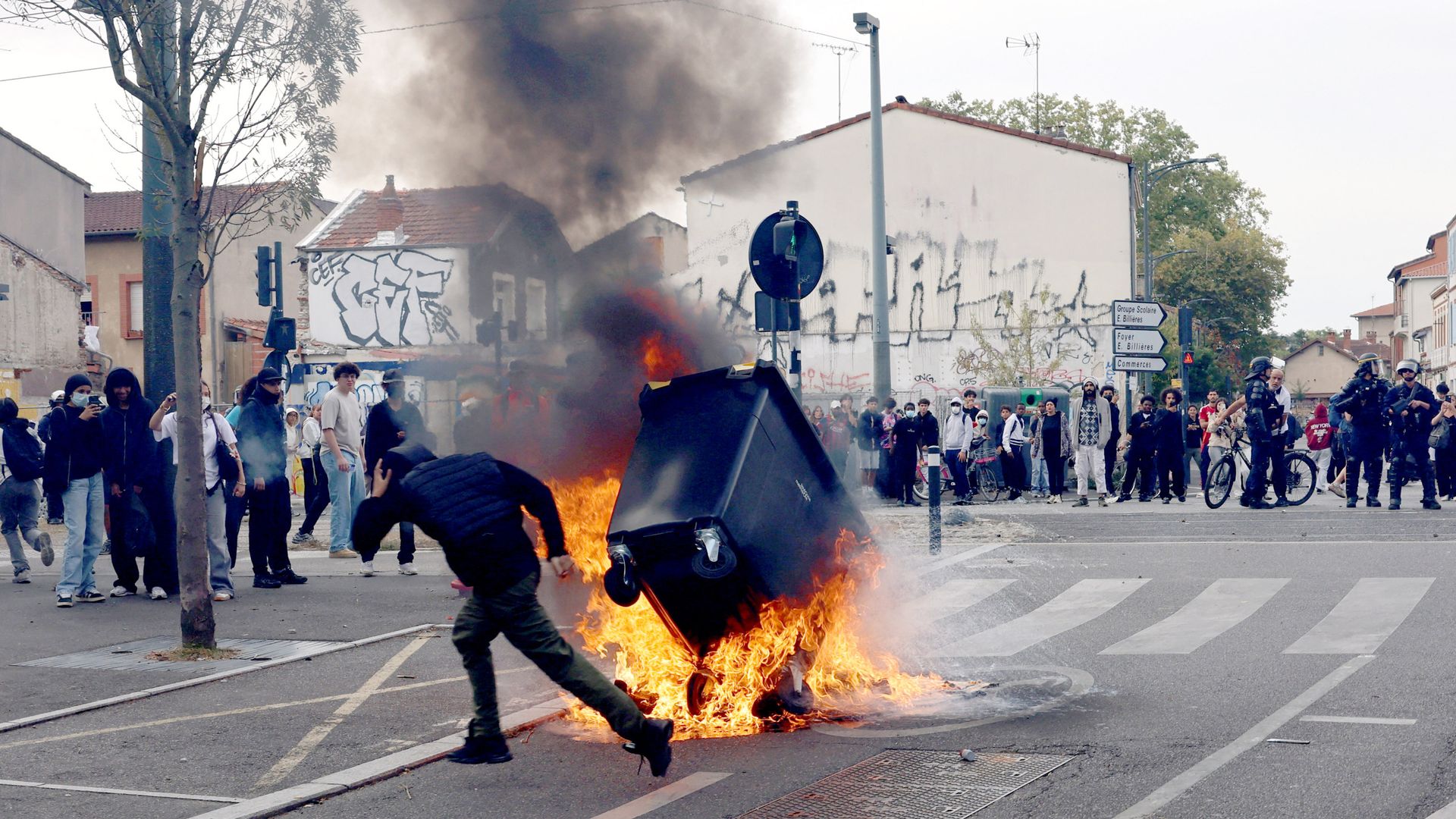
Tear gas fills the air around Parisian boulevards. Dumpster fires light up the pavement while riot police charge shields raised. If you follow international headlines, you've seen this exact scene play out across France dozens of times. Student protests in France rarely start quietly and they almost never end with a polite petition dropped off at a government office. They escalate fast. Smoke clears, windows shatter, and the political establishment scrambles to respond.
Understanding why French youth take to the streets with such intensity requires looking past the breaking news footage of burning barricades. It isn't just about youthful rebellion or chaotic vandalism. It's about a deeply ingrained cultural tradition of political resistance that treats disruption as a legitimate civic duty. When university lecture halls empty and teenagers block high school gates, the rest of the country pays attention because history proves they can actually force the government to back down. For a different view, read: this related article.
The Cultural Roots of French Street Resistance
To foreign observers, throwing cobblestones at police looks like civil breakdown. In France, it's basically a rite of passage. The French republic was forged through revolution, and citizens view the streets as an extension of parliament. When economic reforms threaten job security or education budgets shrink, students don't write strongly worded emails. They strike.
Public universities and high schools act as incubators for political theory and collective action. Unions organize early, student federations mobilize networks across cities, and walkouts happen within hours of a controversial policy announcement. You're looking at a population that believes the social contract requires constant defense. If the state tries to pass labor laws making it easier to fire young workers or cuts funding for public education, students treat it as a direct attack on their future. Related reporting on the subject has been published by TIME.
Critics call it reckless. Participants call it necessary. The tension between public order and public protest defines modern French politics. Police forces deploy specialized mobile units like the CRS because they expect violence. Students wear goggles and vinegar-soaked cloths to combat tear gas because they expect a confrontation.
When Reform Meets Rage
Flashpoints usually ignite over specific government policies. Past decades saw massive student movements shut down controversial labor contracts like the CPE, which would have made it easier for employers to lay off workers under 26. More recently, pension reforms, university selection processes, and climate inaction have driven crowds into the streets.
When thousands of teenagers and young adults merge with striking sanitation workers or railway employees, the dynamic changes instantly. A peaceful march organized by student unions often attracts splinter groups of radical agitators—frequently referred to as the casseurs—whose sole goal is property destruction and clashes with police.
Security forces respond with heavy-handed tactics. Tear gas canisters bounce down avenues, flash-bangs echo off Haussmann-style facades, and water cannons wash away debris. The government defends these measures as essential to protect public safety and maintain order. Protesters argue that aggressive policing violates civil liberties and criminalizes dissent. Both sides dig in, creating a cycle of escalation that plays out on evening news broadcasts worldwide.
The Economic and Social Toll
Protests carry a heavy price tag. Burnt vehicles, smashed storefront windows, and delayed public transit cost cities millions of euros in cleanup and repairs. Small business owners near protest routes dread the announcements of national days of action because boarded-up windows mean zero revenue.
Yet, the disruptions yield results. French presidents know that ignoring a united front of students and labor unions risks national paralysis. Entire sectors grind to a halt when fuel refineries block operations and universities close their doors for weeks. Governments have amended, delayed, or completely scrapped major legislative packages because the cost of social unrest outweighed the benefits of the reform.
This dynamic creates a frustrating paradox. The system responds to disruption, which encourages more disruption. Why negotiate quietly for months when a week of burning barricades forces a cabinet minister to negotiate on television?
What the Global Media Misses
International coverage often paints French youth as hotheaded troublemakers looking for an excuse to riot. That framing ignores the sophisticated organization behind the chaos. Walk through a blocked university campus during a strike and you'll find student assemblies debating voting strategies, organizing food distributions, and coordinating legal aid for arrested demonstrators.
They study political science, history, and sociology not just in lecture halls, but in real time. They know their rights, they know labor history, and they know the exact political leverage they hold.
The fires on French streets will burn again. As long as economic uncertainty plagues Europe and governments push unpopular reforms, students will answer with smoke, chants, and resistance. It's messy, disruptive, and loud. It's also entirely French.