France is entering its third consecutive weekend of nationwide protests because the underlying friction between a centralized executive branch and a decentralized, economically squeezed electorate remains entirely unresolved. While surface-level reporting focuses on shattered storefront glass, police deployment numbers, and immediate policy triggers, the reality on the ground is far more structural. The third weekend of demonstrations marks a critical threshold in French civil unrest—the exact point where spontaneous outrage hardens into an organized, attritional campaign designed to outlast political willpower.
To understand why tensions persist across France right now, you have to look past the immediate headlines and examine the mechanics of the Fifth Republic. When a government pushes through unpopular economic or social measures without broad parliamentary consensus, the street effectively becomes the primary opposition party. By the time a protest movement reaches its third weekend, the initial shock has worn off, the casual observers have stayed home, and the remaining demonstrators are hardened veterans of French labor and civic activism. Discover more on a similar topic: this related article.
The Anatomy of the Third Weekend
In French political history, a single weekend of protests is an expression of annoyance. Two weekends indicate a serious policy miscalculation by the Élysée Palace. A third weekend signals a structural crisis of legitimacy.
Look at the numbers and the logistics. Organizing mass demonstrations across Paris, Lyon, Marseille, Nantes, and smaller provincial towns requires immense coordination. By week three, labor unions, student organizations, and grassroots collectives have established supply lines, legal defense funds, and communication networks that bypass traditional media. They are no longer reacting to a government announcement; they are executing a sustained siege on public order and economic normality. Additional analysis by BBC News explores comparable perspectives on this issue.
The geography of these protests also shifts by the third weekend. Early demonstrations usually concentrate on iconic Parisian boulevards—Bastille, République, Nation—where international television cameras are guaranteed to capture the drama. As tensions persist, the unrest decentralizes. Roundabouts in rural departments, regional prefectures, and critical logistics hubs become the new front lines. This geographic spread is deliberate. It stretches the Compagnies Républicaines de Sécurité (CRS) and the mobile gendarmerie to their absolute operational limits.
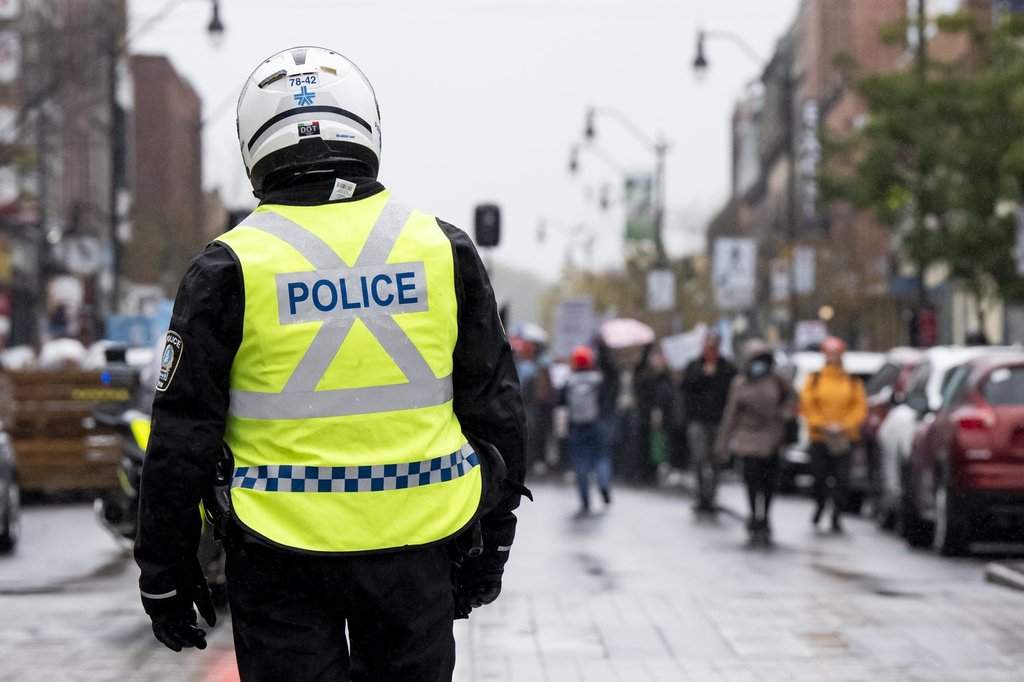
Police fatigue is an underreported factor in how these crises evolve. Riot police units deployed across three straight weekends face grueling shifts, constant verbal and physical hostility, and acute sleep deprivation. Historically, when law enforcement reaches this level of exhaustion, tactical discipline frays. Minor provocations escalate rapidly into heavy-handed crowd control, which in turn generates viral footage of police brutality, recruiting thousands of previously undecided citizens to the protesters' cause for weekend number four.
The Structural Flaw in French Governance
Why does France routinely descend into this cycle while neighboring European democracies manage comparable economic pressures through parliamentary negotiation? The answer lies in the constitutional design of 1958.
Charles de Gaulle engineered the Fifth Republic to end the chronic instability of the post-war Fourth Republic, where coalition governments collapsed every few months. He succeeded, perhaps too well. The modern French presidency concentrates extraordinary executive power in a single office, supported by constitutional mechanisms—most notoriously Article 49.3—that allow the government to pass legislation without a formal parliamentary vote unless the opposition can muster an absolute majority to bring down the entire cabinet.
This system creates a dangerous pressure cooker. When voters feel their elected representatives in the National Assembly are bypassed or rendered irrelevant by executive decrees, the democratic safety valve breaks. Citizens conclude that ballot boxes only matter once every five years, leaving direct action in the streets as the only viable mechanism to force a policy reversal.
Consider a hypothetical example of how this plays out in a mid-sized French manufacturing town. Imagine a regional factory worker watching her purchasing power erode due to inflation and rising energy costs, while the government simultaneously announces a restructuring of unemployment benefits or pension eligibility. Her local deputy votes against the measure, yet the law passes anyway through procedural maneuvering in Paris. For that worker, standing at a blockade on a Saturday morning isn't an act of rebellion; it is the only remaining form of democratic participation.
The Convergence of Struggles
The greatest nightmare for any French Minister of the Interior is what activists call the convergence of struggles (convergence des luttes). This occurs when distinct groups with entirely different grievances realize they share a common adversary in the central government.
During the first weekend of unrest, protests are usually dominated by a single demographic—transport workers, farmers, students, or public sector employees. By the third weekend, those boundaries dissolve. Banners representing hospital nurses appear alongside those of railway unions, environmental activists, and anti-capitalist youth groups.
The Role of Provincial France
Mainstream coverage overwhelmingly focuses on Paris, creating a distorted view of the movement. Paris is wealthy, globally connected, and buffered from many of the economic shocks hitting the rest of the country. The true staying power of French protest movements resides in peripheral France—the small towns, semi-rural suburbs, and deindustrialized zones where public services have steadily retreated over the past three decades.
When local post offices close, maternity wards consolidate into distant cities, and train lines are cut, the social contract frays. Residents in these areas pay some of the highest taxes in the developed world while watching their daily infrastructure vanish. Consequently, when tensions erupt, provincial protesters bring a deep, simmering resentment that cannot be appeased by minor budgetary tweaks or televised presidential addresses.
The Radical Fringe and the Black Bloc
Every sustained French protest movement faces an internal battle over tactics. Alongside peaceful union marchers and families sits the Black Bloc—loosely organized groups of militant anarchists and anti-capitalists who view property destruction and direct confrontation with police as legitimate political tools.
Their presence creates a profound strategic dilemma for legitimate organizers. When masked individuals smash bank windows, burn luxury vehicles, and hurl paving stones at police lines, government spokespeople immediately seize on the violence to delegitimize the entire movement. Moderate citizens who support the protesters' core demands are alienated by the chaos. Yet, union stewards often lack the authority or the physical capacity to police the fringes of a 100,000-person march. The state uses the violence to justify aggressive policing, and the aggressive policing fuels further radicalization.
The Economic Toll of Attritional Unrest
While politicians debate ideology, the French economy absorbs a punishing blow every time tensions spill into the streets. The financial damage of a multi-weekend protest cycle extends far beyond broken glass and burned barricades.
Retailers, hoteliers, and restaurant owners in major urban centers bear the immediate brunt. Saturdays are traditionally the most lucrative day of the week for French commerce. When city centers are locked down by police cordons, tear gas drifts through shopping districts, and public transit lines are shuttered for security reasons, consumer foot traffic collapses. Small business owners, many still carrying debt from previous economic disruptions, watch their profit margins evaporate week after week.
Beyond local retail, sustained unrest damages France's international reputation as a stable destination for foreign investment and tourism. International conferences are postponed, hotel bookings are canceled, and logistics networks suffer costly delays when protesters blockade fuel depots or highway tollbooths.
| Sector Impacted | Immediate Operational Disruption | Long-Term Structural Consequence |
|---|---|---|
| Urban Retail & Hospitality | Weekend lockdowns, transit closures, physical property damage | Accelerated small business bankruptcies in city centers |
| Logistics & Supply Chain | Highway blockades, refinery strikes, port delays | Rerouting of European freight away from French corridors |
| Public Finances | Massive overtime pay for security forces, municipal repair costs | Widening budget deficits limiting future social spending |
| Tourism | Flight and hotel cancellations, closure of major monuments | Lingering perception of instability among international travelers |
Why Government Concessions Often Backfire
Faced with a third weekend of escalating tensions, the French government typically reaches into a familiar playbook: announce a national dialogue, deploy emergency financial subsidies to targeted groups, or promise a minor legislative adjustment.
More often than not, these tactics fail to clear the streets. Once a protest movement survives into its third week, its demands inevitably expand. What began as opposition to a specific tax, labor reform, or regulatory change morphs into a broader referendum on the president's leadership and the perceived arrogance of the political elite.
Offering piecemeal concessions at this stage is frequently interpreted by protesters not as good-faith compromise, but as a sign of executive weakness. It validates the street's core thesis: that the government only listens when forced to do so through economic disruption and civil disobedience. As a result, concessions often embolden demonstrators to push harder rather than pack up their banners.
Conversely, doubling down on law-and-order rhetoric carries equal risk. Framing complex socioeconomic grievances strictly as a security issue allows the state to deploy overwhelming force, yet it does nothing to address the material anxieties driving ordinary people into the cold on a Saturday afternoon. You cannot baton-charge your way out of a cost-of-living crisis.
The Information War on Social Media
Modern French protests are fought as fiercely on encrypted messaging apps and short-form video platforms as they are on the boulevards. The relationship between protesters, the state, and the media has fundamentally changed.
In previous decades, major television networks and national newspapers held a near-monopoly on framing civil unrest. Today, thousands of citizen journalists, independent livestreamers, and activist collectives broadcast raw, unfiltered footage directly from the front lines. Viewers see the exact moment a police kettle tightens around a crowd, or the precise second a projectile is thrown from behind a barricade, unedited and stripped of studio commentary.
This decentralized information ecosystem makes it nearly impossible for the Ministry of the Interior to control the narrative. Official statements claiming "proportional force" are routinely contradicted within minutes by dozens of high-definition smartphone videos uploaded from multiple angles. At the same time, misinformation and out-of-context clips circulate rapidly, inflaming passions on both sides and ensuring that every minor skirmish becomes a national flashpoint before the tear gas has even cleared.
Historical Echoes and the Limits of Endurance
To gauge where this third weekend leads, look at the precedent of the Gilets Jaunes (Yellow Vests) movement that erupted in late 2018. What started as an online petition against a fuel tax hike evolved into months of consecutive Saturday demonstrations that shook the French state to its core.
The Yellow Vests proved that a leaderless, decentralized movement could survive without traditional union backing, enduring harsh winter weather, mass arrests, and severe injuries. Yet, their trajectory also reveals the natural limits of street protest. Over time, internal ideological divisions fractured the movement. The persistent violence on the fringes alienated broader public sympathy, and sheer physical and financial exhaustion eventually thinned the crowds.
Every protest cycle in France is a race between two forms of exhaustion: the exhaustion of the protesters who must sacrifice their weekends, wages, and physical safety to keep marching, and the exhaustion of a government watching its approval ratings plummet and its legislative agenda grind to a halt.
When the barricades go up this weekend, watch the composition of the crowds rather than just the size. If the marches are still drawing families, retirees, and white-collar workers alongside the union regulars, the government is facing a prolonged crisis that will define the remainder of its term. If the crowds shrink to a core of hardcore militants and professional activists, the state knows it can simply wait them out, absorbing the weekend chaos until the political temperature naturally drops. Either way, the underlying fissures in French society—between Paris and the provinces, between executive power and democratic representation, between economic reality and social expectation—will remain untouched, waiting for the next spark to ignite the streets all over again.