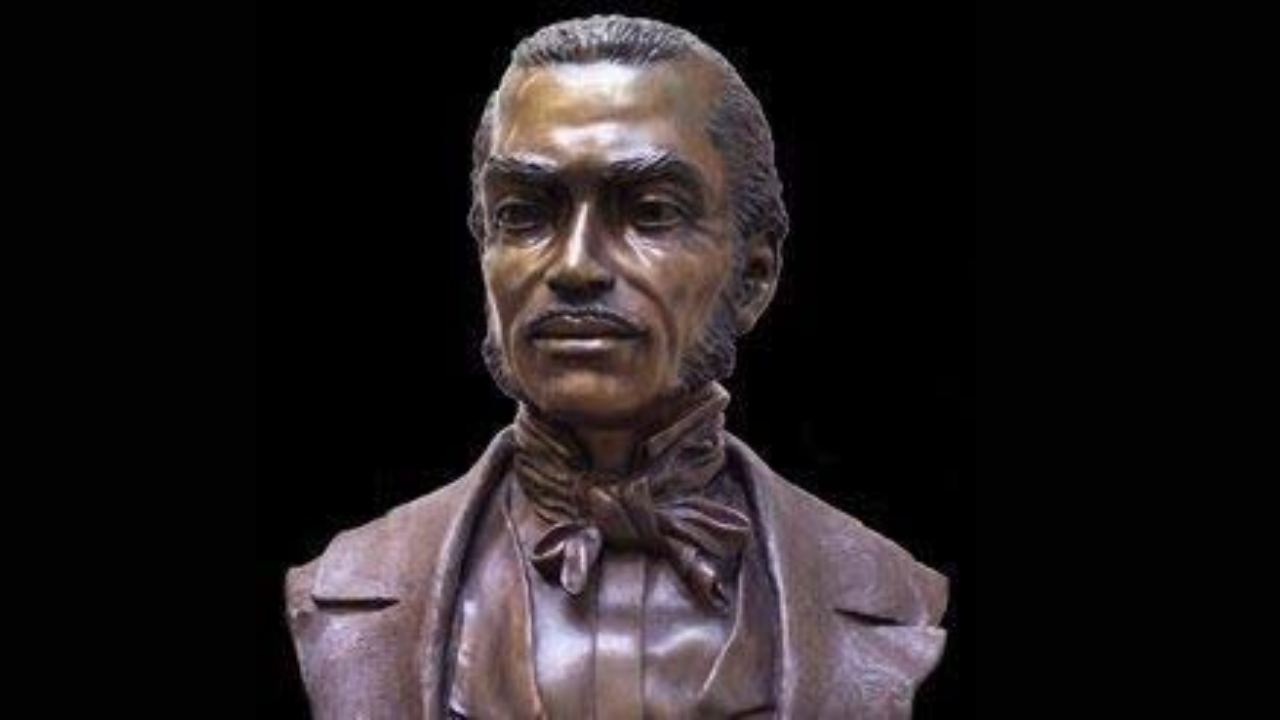
History loves a warm bedtime story. We are fed a diet of comforting historical tropes about Free Frank McWorter, the formerly enslaved man who dropped one hundred dollars in 1835 for eighty acres of Illinois dirt and founded New Philadelphia. The lazy consensus frames this as an inspiring tale of grit, homesteading pluck, and frontier romance.
It is a comfortable narrative. It is also entirely wrong about what actually happened.
McWorter did not move to the Illinois Military Tract to grow corn and live off the land. He executed a multi-decade corporate restructuring of his family's liabilities using high-yield asset conversion, regulatory arbitrage, and urban subdivision. He was operating as a ruthless, highly disciplined capitalist in a hostile environment, treating human bondage not just as an emotional tragedy to endure, but as a hostile creditor to be systematically bought out through cash flow optimization.
If you view McWorter through the soft lens of historical sentimentality, you miss the cold, tactical brilliance of his execution. Let us look at the mechanics of what he actually pulled off.
The Capital Structure of Bondage
The standard telling treats McWorter's ability to earn cash while enslaved in Kentucky as a lucky break. His enslaver permitted him to manage a saltpeter mining operation. The conventional analysis stops at "he worked hard and saved his pennies."
That is an amateur read on cash flow.
McWorter was running an outsourced manufacturing business with zero corporate overhead. By paying his absentee owner a fixed return on production, McWorter captured 100 percent of the marginal upside above that hurdle rate. He did not have a job; he had a franchise model. He took the surplus from saltpeter production during the War of 1812 and deployed it into the single most important asset class available: family equity.
His first major capital allocation decision exposes the entire strategy. In 1817, he spent eight hundred dollars to buy his wife Lucy’s freedom. Under the brutal legal doctrine of partus sequitur ventrem, a child’s legal status followed the mother's. By freeing Lucy first instead of himself, McWorter slammed the door shut on future liabilities. Every child she bore after that date was born free at zero additional cost.
Most people buy themselves out first out of ego. McWorter secured the balance sheet first. That is not sentimental romance. That is risk management of the highest order.
Regulatory Arbitrage on the Frontier
When McWorter set his sights on Illinois, he faced a massive regulatory wall. Illinois entered the Union as a free state in 1818, but immediately enacted punishing Black Codes to keep free Black settlers out. Specifically, the state passed a law requiring a steep one-thousand-dollar bond for non-property owners entering the jurisdiction.
A standard migrant would have panicked, protested, or tried to slip across the border unnoticed. McWorter looked at the statute, found the loophole, and exploited it.
The thousand-dollar bond applied exclusively to non-property owners. McWorter's counter-move was simple: he bought land in Illinois before he physically relocated his family. By securing property through a local physician, he legally transformed his status from an immigrating laborer into an established landowner before he ever crossed the state line. He bypassed a prohibitive state tax through pre-emptive asset acquisition.
That is not homesteading. That is regulatory arbitrage.
The Pivot From Agriculture to Real Estate Development
Once on the ground in Pike County, McWorter quickly realized that subsistence farming was a low-margin trap. Farming produces income slowly, scaling strictly in proportion to manual labor hours. To scale his acquisition of family members still trapped in Kentucky, he needed exponential velocity, not linear crop yields.
So, in 1835, he secured an additional eighty-acre tract directly from the federal government for one hundred dollars. A year later, he didn't plant corn on it. He carved forty-two of those acres into a grid of one hundred forty-four residential and commercial lots, creating New Philadelphia.
This was the masterstroke. McWorter became the first African American in United States history to legally plat and register a town.
Subdivision produces capital quickly, decoupled from the limits of manual labor. He sold lots to both Black and white settlers, turning raw dirt into liquid capital. Every lot sold went directly into a sinking fund designated for a single purpose: buying the freedom of remaining relatives. Over his lifetime, he spent the equivalent of a small fortune—nearly fourteen thousand dollars across decades—extricating sixteen family members from bondage.
The Cost of Scale
Every aggressive growth strategy carries downside risk, and McWorter’s model was no exception. His entire operation relied on self-funding and personal liquidity because he had zero access to traditional institutional credit or legal protections. When unexpected shocks hit—such as the state legislature requiring a formal petition and fourteen white character witnesses just to secure his legal surname and property rights in 1837—he had to absorb the blow entirely out of retained earnings.
Worse still, towns built on real estate speculation live and die by infrastructure. In the late 1860s, railroads bypassed New Philadelphia by over half a mile, killing its commercial viability. The town withered, eventually reverting to farmland.
Yet focusing on the eventual decline of New Philadelphia misses the point entirely. McWorter did not build a permanent municipal empire; he built a liquidity engine to achieve a specific financial and human objective. By the time he died in 1854, the mission was structurally complete.
Stop viewing historical figures through the blurry haze of inspirational folklore. Free Frank McWorter did not win because he was a humble pioneer. He won because he was a master strategist who out-thought, out-planned, and out-capitalized the legal system built to crush him.



