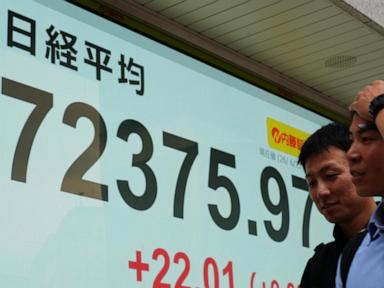
Asian equity markets are flashing green, but the celebration is premature. A sudden surge in technology shares has lifted major regional indexes, while a concurrent drop in crude oil prices is being cheered as a reprieve for energy-dependent economies. This double stroke of apparent good fortune looks like a economic turnaround. It is not.
The reality is far more precarious. The upward movement in regional tech stocks is a lagging reflex to Wall Street momentum, built on concentrated bets rather than broad economic health. Meanwhile, falling oil prices do not signal a structural easing of inflation. They reflect a sharp slowdown in global manufacturing demand, particularly from China. Investors buying into this rally are mistaking a temporary alignment of market technicals for genuine macroeconomic strength.
The Mirage of the Regional Bull Market
To understand why this rebound is built on sand, one must look at where the capital is actually flowing. The headline gains in Tokyo, Seoul, and Taipei suggest a sweeping vote of confidence in Asian industry.
The numbers tell a different story.
A tiny handful of semiconductor giants and hardware manufacturers are doing all the heavy lifting. The broader market remains sluggish. When a handful of mega-cap stocks dictate the direction of an entire index, it creates an illusion of widespread prosperity.
This concentration risk exposes the vulnerability of Asian markets to shifts in foreign capital sentiment. The current influx of money is largely passive, driven by global index funds rebalancing after a tech-led surge in New York. It is not patient, long-term investment in regional fundamentals. If American tech giants stumble under the weight of their own massive valuations, the capital fleeing those positions will pull out of Asian suppliers just as quickly as it arrived.
Why Falling Oil Is a Warning, Not a Relief
The conventional market playbook dictates that lower energy costs are a net positive for Asian economies. Countries like Japan, South Korea, and India import the vast majority of their oil. A drop in crude prices should, in theory, reduce import bills, improve trade balances, and give central banks room to breathe on interest rates.
That playbook is outdated.
Oil prices are dropping primarily because global industrial demand is faltering. China, the locomotive of regional trade, is grappling with a prolonged real estate crisis and weak domestic consumption. Refineries across Asia are cutting run rates because their margins have collapsed. When the world’s largest manufacturing hub stops buying energy, prices drop.
For export-reliant Asian nations, the meager savings on their energy bills will not offset the drop in orders for their manufactured goods. A cheap barrel of oil is cold comfort when your primary trading partners are stopping their factories.
The Semiconductor Trap
The current enthusiasm for Asian technology shares centers almost entirely on the artificial intelligence supply chain. Advanced packaging firms in Taiwan and memory chip makers in South Korea have seen their valuations stretched to historic highs.
The Capex Conundrum
Silicon Valley tech giants are spending tens of billions of dollars on hardware. They are doing this before proving that their software can generate enough revenue to justify the expense. Asian component manufacturers are booking massive short-term profits from this capital expenditure boom. But this creates a dangerous dependency.
If the software monetization wave fails to materialize, those American tech companies will abruptly freeze their capital spending. The Asian suppliers sitting at the end of that whip cracked supply chain will bear the brunt of the pain. They are building out expensive fabrication capacity today for orders that might vanish tomorrow.
The Geopolitical Squeeze
National security policies are increasingly overriding market logic. The US-China tech rivalry means that Asian chipmakers are operating under a web of export controls and shifting regulations. Winning a larger slice of today's market requires navigating a minefield of sanctions that can cut off access to vital customers overnight. The current stock rally completely ignores this political friction, pricing in flawless execution in an environment that is inherently unstable.
The Divergence in Domestic Economies
While index levels look healthy, the domestic economic realities across the region are starkly different. High interest rates have left a legacy of stressed household balance sheets and muted consumer spending that a tech stock rally cannot fix.
- South Korea: Household debt remains among the highest in the developed world, restraining domestic demand even as electronics exports show surface-level strength.
- Japan: The yen's historic volatility has complicated corporate planning, making the apparent gains in the Nikkei a function of currency devaluation rather than structural growth.
- Taiwan: Economic gains are heavily bifurcated, with wealth concentrating in the technology sector while traditional industries and wage growth lag behind.
This imbalance creates an economy with two distinct speeds. The export-facing tech sector operates in a globalized bubble, while the domestic service and retail sectors struggle under the weight of stubborn inflation and high borrowing costs.
The Margin Compression Nobody is Talking About
There is a mechanical flaw in the argument that lower commodity prices will immediately boost corporate earnings. Most major manufacturing corporations hedge their energy and raw material costs months in advance.
The high-priced oil contracted during the previous quarter is what is flowing through factories today. Companies will not see the financial benefit of cheaper crude on their balance sheets for at least another two quarters. By the time those lower costs finally register, the broader economic slowdown that caused the price drop in the first place will likely have eroded their top-line revenue.
Moving Past the Surface Metrics
Institutional investors are already quietly rotating out of cyclical tech names and into defensive assets, even as retail capital chases the headline-grabbing index gains. They recognize that a market propped up by a few hardware manufacturers and a deflationary drop in oil is a defensive crouch, not a victory lap.
Relying on index averages to gauge economic health is a mistake. The underlying data suggests that the global manufacturing cycle is cooling, consumer demand is fragile, and the tech sector is priced for absolute perfection in an imperfect world. The smart money is watching the volume of global trade and regional shipping rates, both of which paint a far more sober picture than the green tickers on the Tokyo or Seoul exchanges.


