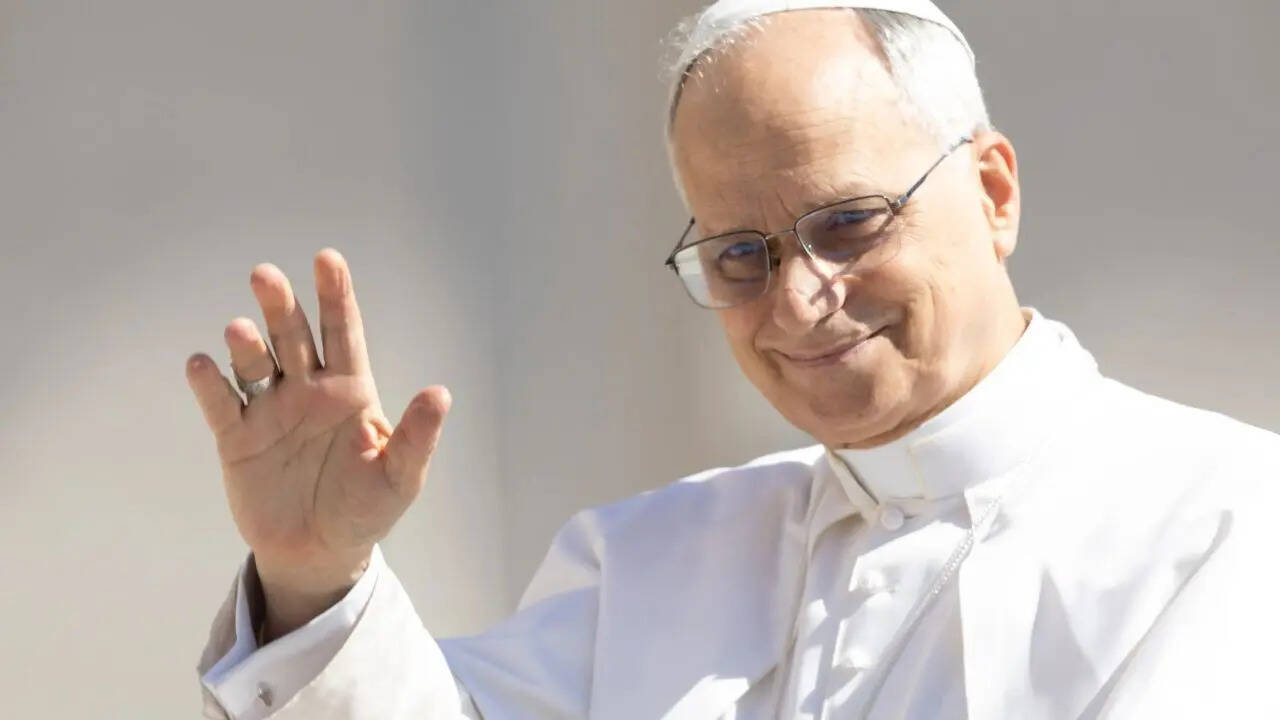
The Vatican is currently navigating its most significant internal upheaval since the 1960s. For centuries, the Roman Catholic Church stood as an immovable object in a rapidly changing world, but the recent shift in rhetoric regarding LGBTQ+ believers has cracked that facade of absolute certainty. Pope Francis has moved beyond mere atmospheric changes, introducing formal pathways for the blessing of same-sex couples and shifting the tone of the Holy Office. However, this isn't a simple story of progress or a sudden embrace of liberal values. It is a calculated, high-stakes attempt to keep a global institution from fracturing under the weight of its own contradictions.
To understand the current state of the Church, one must look past the headlines of "inclusion." The primary driver here isn't just social justice; it is survival. In Western Europe and North America, the pews are emptying. In the Global South, where the Church is growing, the culture remains deeply conservative. Pope Francis is attempting to thread a needle that might not actually have an eye. By allowing "pastoral blessings" for those in "irregular situations," the Vatican is trying to signal a warmer welcome to the West without technically altering the underlying dogma that defines marriage as a union between one man and one woman.
The Mechanism of Fiducia Supplicans
In late 2023, the Dicastery for the Doctrine of the Faith released a document titled Fiducia Supplicans. This was the smoking gun for traditionalists. It allowed priests to bless same-sex couples, provided the blessing was not part of a formal liturgy and did not resemble a wedding. This distinction is the technical loophole the Vatican is using to maintain its theological stance while pivoting its social one.
A blessing, in Catholic terms, is an invocation of God’s help. By detaching this from the "state of sin," the Vatican has essentially argued that everyone deserves help, regardless of their lifestyle. Critics within the Church see this as a Trojan horse. They argue that once you bless the couple—rather than the individuals—you are implicitly validating the relationship. This is the friction point. The Vatican insists the doctrine hasn't changed, but for the person in the pew, the experience of the Church has shifted entirely.
[Image of the Vatican City and St. Peter's Basilica]
The Global North versus the Global South
The Church is not a monolith, and the reaction to these changes has exposed a massive geographical divide. In Germany, bishops have been pushing for even more radical changes, including the ordination of women and a complete rewrite of sexual ethics. They see the Vatican’s moves as a necessary first step that doesn't go nearly far enough. To them, the Church is a "dying brand" that needs a total overhaul to remain relevant to younger generations.
Contrast this with the Church in Africa and parts of Eastern Europe. Cardinal Fridolin Ambongo of Kinshasa, representing the bishops of Africa, made it clear that these blessings would not be happening on his continent. He argued that such moves are a form of "cultural imperialism" from a decadent West. This is the Vatican's nightmare scenario. If the Pope leans too far into the liberal camp, he risks a formal schism with the fastest-growing part of his flock. If he retreats, he loses the West forever.
The Power Dynamics of the Roman Curia
The "how" behind this shift is found in the personnel. Pope Francis has spent a decade slowly replacing the old guard with figures who prioritize "pastoral accompaniment" over legalistic enforcement. The appointment of Cardinal Víctor Manuel Fernández to head the Dicastery for the Doctrine of the Faith was the final piece of the puzzle. Fernández is the ghostwriter behind many of the Pope’s most controversial documents. He represents a shift from the Church as a "judge" to the Church as a "field hospital."
This change in leadership has stripped the traditionalist wing of its institutional power. Figures like the late Cardinal Pell or the sidelined Cardinal Burke were once the gatekeepers of orthodoxy. Now, they are the opposition. This internal power struggle is brutal and often plays out in leaked memos and sharp-tongued interviews. The Vatican is currently a house divided, with the bureaucracy itself working at cross-purposes.
The Problem of Ambiguity
The Vatican’s strategy relies heavily on ambiguity. In diplomacy, this is a tool; in theology, it is often seen as a failure. By not being explicit about what these blessings mean for the long-term future of Church law, the Pope has created a vacuum.
Nature hates a vacuum, and so does canon law.
Without clear boundaries, individual priests are making their own rules. In some parishes in New York or London, these blessings look very much like weddings. In parishes in Poland or Nigeria, LGBTQ+ Catholics are still often met with silence or outright condemnation. This inconsistency undermines the "universal" nature of the Catholic Church. If the faith means something different in Berlin than it does in Nairobi, is it still the same faith?
The Financial and Social Stakes
There is an overlooked economic factor in this religious pivot. The Catholic Church is one of the largest landowners and healthcare providers on the planet. In the West, many of its institutions rely on government funding and private donations from a donor class that is increasingly socially liberal. Organizations that discriminate openly against LGBTQ+ individuals face mounting legal challenges and the loss of tax-exempt status in certain jurisdictions.
While the Vatican would never admit that "money" is a factor in doctrine, the administrative reality is that the Church cannot afford to be a pariah in the global economy. Aligning its rhetoric—if not its core laws—with modern human rights standards is a pragmatic necessity for an institution that manages billions in assets and employs millions of people.
Resistance and the Traditionalist Underground
The backlash has been fierce. A growing movement of "traditionalist" Catholics, many of them young and tech-savvy, has rejected these changes. They are flocking to the Latin Mass and supporting "cancelled" priests who speak out against the Pope. This group sees the softening on LGBTQ+ issues as a surrender to the secular world.
They argue that the Church’s only value is its distinctness. If the Church simply echoes the values of the secular culture, why should anyone belong to it? This group is small but highly motivated and financially generous. They represent a significant "internal pressure" that prevents the Vatican from going all-in on reform. Every step the Pope takes toward the center-left results in a hardening of the right.
The Reality of the "Welcome"
For LGBTQ+ Catholics themselves, the reality is a mixed bag. For some, the Pope’s words are a lifeline, a sign that they are no longer viewed as "intrinsically disordered"—a term used in the 1986 letter on the pastoral care of homosexual persons. For others, it feels like crumbs from the table. Being told you can have a "spontaneous blessing" but never a "sacramental marriage" is, for many, a distinction without a meaningful difference.
The Church is attempting to offer a middle ground in a world that has largely moved beyond middle grounds. On the issue of identity and sexuality, the modern world demands a "yes" or a "no." The Vatican is trying to offer a "maybe, but let’s talk about it." This satisfies the bureaucrats and the diplomats, but it leaves the people in the pews in a state of perpetual limbo.
The Institutional Risk
The ultimate risk for the Vatican is not just a schism, but irrelevance. By trying to please everyone, the Church risks pleasing no one. The progressive wing sees the current changes as cowardly and slow. The conservative wing sees them as heretical and dangerous. In the middle, the vast majority of "cultural Catholics" are simply drifting away, bored by the infighting and confused by the shifting messages.
The Vatican's softening is not a sign of a new, settled consensus. It is a sign of a massive institution in the middle of a nervous breakdown. The struggle to define what the Church is in the 21st century is being fought over the bodies and lives of LGBTQ+ people, but the stakes go far beyond sexual ethics. This is a battle for the soul of the oldest institution in the West, and the cracks are showing.
The Pope’s strategy of "synodality"—talking and listening—is designed to slow down the conflict, to buy time. But time is the one thing the Church might be running out of. As the demographic shift continues and the cultural divide deepens, the "big tent" of Catholicism is being stretched to its breaking point. The Vatican has opened the door, but it hasn't decided what to do with the people who are walking through it.
Those waiting for a definitive resolution will be disappointed. The Church moves in centuries, not news cycles. What we are seeing now is not the end of the conversation, but the messy, painful beginning of a long-term realignment. The Vatican has admitted that the old way of doing things is no longer sustainable, but it has yet to build a new foundation that can hold the weight of its global diversity.
Stop looking for a "win" for either side. In a conflict this deep, the only certainty is more friction.